半两钱

Search documents
这件出土文物为你揭秘
Xin Lang Cai Jing· 2026-01-25 17:15
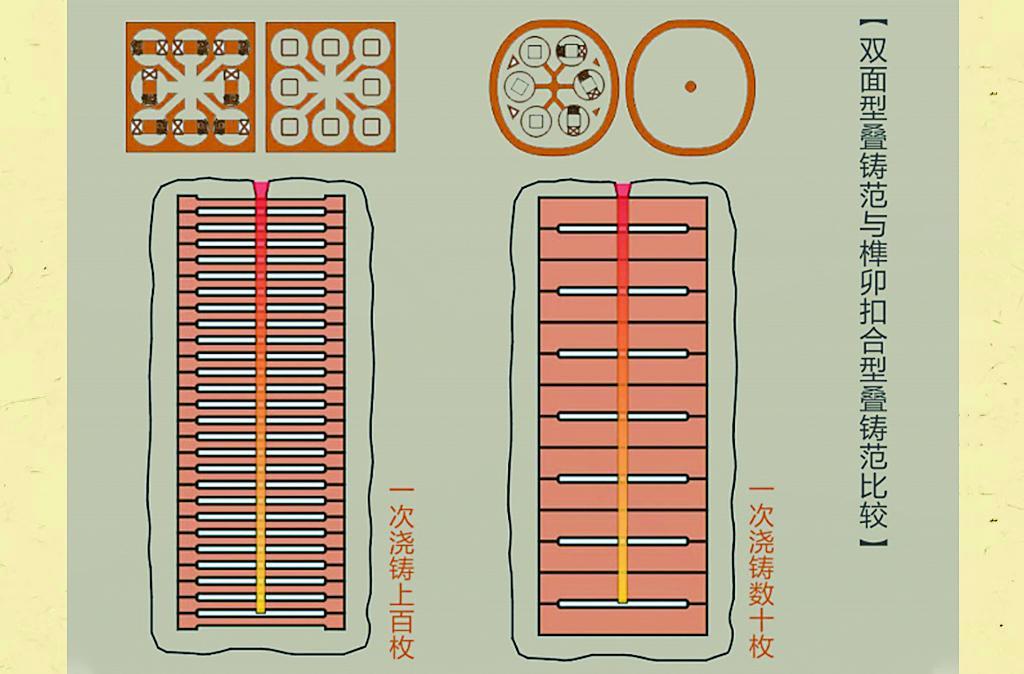
Core Viewpoint - The article presents a new perspective on a recently discovered ancient artifact from the Han Dynasty, suggesting it is a rare example of "stacked casting copper coins" rather than a mold or decorative object, highlighting the advanced coin minting techniques of ancient China [9][12]. Group 1: Discovery and Description - The artifact, extracted from a Han tomb in the Fuling region, consists of a central copper pillar surrounded by layers of copper coins, resembling a tree with over 40 layers of coins [8][11]. - Initially misidentified as a "copper coin mold" or "money tree," experts concluded it is an unfinished piece of "stacked casting copper coins," representing a unique moment in the coin minting process [9][12]. Group 2: Historical Significance of Stacked Casting - Stacked casting technology, developed in the early Western Han Dynasty, marked a significant advancement in the coin minting process, allowing for mass production and efficiency compared to previous methods [13][19]. - The process involved creating a complex mold structure that enabled multiple coins to be cast simultaneously, representing a leap in industrial capabilities of the time [14][15]. Group 3: Economic and Political Implications - The distribution of ancient coin molds illustrates the transition from decentralized coin minting in the pre-Qin era to a centralized system during the Qin and Han dynasties, reflecting the consolidation of state power [17][18]. - The article emphasizes that the stacked casting technique aligns with the central government's efforts to standardize currency, enhancing control over the economy and ensuring uniformity in coin production [19].

这里“钱”味儿十足
Xin Lang Cai Jing· 2026-01-11 05:54
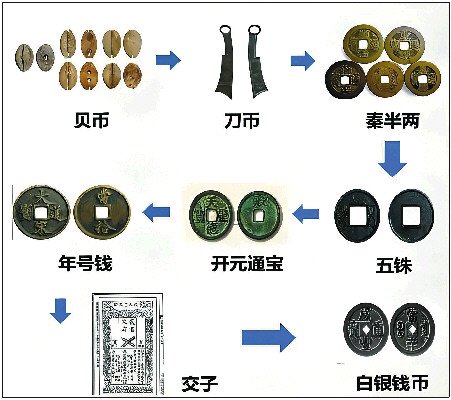
Core Theme - The article explores the historical significance and evolution of currency in China, highlighting the cultural and economic implications of various forms of money throughout different dynasties [1][2][3][4][5] Group 1: Historical Context - The China Currency Museum, established in 1992, serves as a showcase for the rich history and cultural significance of currency in China, located in a former financial center [1] - The use of shells as a medium of exchange dates back to the Shang and Zhou dynasties, symbolizing wealth and preciousness, leading to the term "宝贝" [1] - The evolution of currency forms, such as the transition from shell money to metal coins, reflects the development of Chinese civilization and economic practices [2][3] Group 2: Currency Forms and Innovations - The "布币" (cloth money) is closely related to agricultural tools, illustrating the connection between currency and the agrarian society of ancient China [2] - The "方孔圆钱" (square hole round coins) was chosen for its aesthetic appeal and practical advantages in manufacturing and usage [3] - The "金错刀" (gold-inlaid knife coin) exemplifies innovative currency design aimed at enhancing value and acceptance [3] Group 3: Economic Implications - The historical context of currency stability is emphasized through the example of the 1948 currency reform in Nanjing, which led to severe inflation and loss of purchasing power [2] - The significance of silver as a currency material during the Ming and Qing dynasties is highlighted, establishing a silver standard that facilitated international trade [4] - The issuance of small denomination currency during the Anti-Japanese War reflects the adaptability of currency systems in response to economic challenges [5] Group 4: Cultural Significance - The political and economic dimensions of currency are intertwined, as seen in historical artworks like "清明上河图" (Along the River During the Qingming Festival), which depict the vibrancy of the economy [4] - The development of the world's earliest paper currency, "交子" (jiaozi), marks a significant leap in currency forms, showcasing China's innovative contributions to global monetary systems [4][5] - The transition to digital currency represents the latest evolution in China's monetary landscape, expanding the reach of the Renminbi globally [5]
一枚硬币有两面 爱恨交织“孔方兄”
Xin Lang Cai Jing· 2026-01-09 17:40
Core Perspective - The evolution of currency in China reflects a complex interplay of political power, economic life, technological breakthroughs, and philosophical ideas, illustrating how the nation built its intricate exchange system and credit world over time [2]. Group 1: Historical Development of Currency - The concept of currency began with primitive barter systems, which were inefficient, leading to the emergence of primitive money, such as shells, as a medium of exchange [3]. - The first significant currency in China was sea shells, which became a recognized measure of wealth and facilitated large transactions during the Xia and Shang dynasties [4]. - The transition from natural objects to metal coins began with the introduction of bronze shells during the Shang dynasty, marking the start of artificial currency manufacturing [4]. Group 2: Currency in the Warring States Period - The Spring and Autumn and Warring States periods saw diverse currency forms reflecting regional cultures, such as cloth coins in the agricultural core and knife coins in martial regions [6]. - The use of gold emerged as a high-value international currency, providing a stable anchor in a fragmented monetary system [6]. Group 3: Standardization under the Qin Dynasty - The unification of China under Qin Shi Huang led to the standardization of currency, with the introduction of the "half tael" coin and the iconic round coin with a square hole [7]. - This design change not only served practical purposes but also carried cultural significance, symbolizing the connection between heaven and earth [7]. Group 4: The Han and Tang Dynasties - The Han dynasty improved upon the Qin currency system with the introduction of the "Wuzhu" coin, which became the most successful and longest-used currency in Chinese history [8]. - The Tang dynasty introduced the "Kaiyuan Tongbao," marking a shift in currency philosophy and establishing a model for future coinage that influenced East Asia [8][9]. Group 5: The Rise of Paper Currency - The Song dynasty initiated a revolutionary experiment with credit currency through the invention of "Jiaozi," a paper currency that emerged from the need for a more efficient payment system [10]. - The Yuan dynasty expanded the use of paper currency, achieving a pure paper economy, although it later faced issues of hyperinflation due to excessive issuance [10]. Group 6: The Silver Era - The Ming dynasty saw the rise of silver as a dominant currency, facilitated by global trade, particularly through the maritime Silk Road, which integrated China into the early global economy [11]. - The Qing dynasty continued the dual currency system of silver and copper coins, while also introducing official paper currency to address market challenges [12]. Group 7: The Evolution of Currency and Credit - The history of currency in China illustrates a transition from tangible objects to abstract symbols, reflecting the increasing complexity of economic exchanges and the state's role in controlling monetary systems [13]. - The evolution of currency highlights the enduring human pursuit of reliable and efficient value exchange systems, from ancient shells to modern digital payments [13].