
古代判词

Search documents
读《判词经典:从上古到南宋》有感
Xin Lang Cai Jing· 2025-12-27 18:42
Core Viewpoint - The article emphasizes the significance of ancient judicial writings, known as verdicts, in understanding legal principles and cultural values, suggesting that they can provide valuable insights for modern legal document reforms [1] Group 1: Ancient Verdicts and Their Functions - Ancient verdicts served not only to announce judgments but also to explain legal reasoning, educate the public, and maintain social moral order [1] - These writings reflect ancient understandings of fairness and justice, as well as the application of legal reasoning and argumentation [1] Group 2: Analysis of Specific Verdicts - The first verdict discusses a case where a son accidentally injures his father while trying to defend him, concluding that the son should not be punished due to the lack of malicious intent, aligning with modern legal principles of subjective and objective considerations [2] - The second verdict addresses a dispute between a cow and a horse, emphasizing the need for context in legal judgments and suggesting that compensation should be adjusted based on circumstances, thus integrating law, reason, and social ethics [3] - The third verdict outlines a case of a wife seeking divorce after her husband has been absent for six years, clearly stating the legal basis for her request and demonstrating a structured approach to legal reasoning [5] Group 3: Lessons for Modern Legal Practices - The article suggests that studying ancient verdicts can inspire contemporary legal writing, emphasizing the importance of logical coherence, thorough reasoning, and clarity in legal documents [5] - It highlights the need for legal documents to not only address legal relationships but also to consider human emotions and social contexts, aiming for a balance between legal rigor and moral persuasion [5]
判词之妙寸心知:古代“法庭裁判文书”中的绝妙好文
Bei Jing Ri Bao Ke Hu Duan· 2025-11-11 10:58
Core Viewpoint - The article explores the evolution and literary significance of ancient Chinese judicial writings, particularly focusing on the artistry of verdicts known as "判词" (judicial verdicts) from various historical periods, highlighting their cultural and legal importance [1][4][12]. Group 1: Historical Development - The earliest known verdicts date back to the late Western Zhou period, showcasing a blend of narrative and commentary [4]. - During the Tang Dynasty, the practice of writing verdicts became a means of showcasing literary talent, with a focus on stylistic beauty and rhetorical techniques [4][5]. - The Song Dynasty marked a shift towards more straightforward language in verdicts, breaking away from the rigid parallelism of earlier styles [7][8]. Group 2: Notable Examples - A famous Tang Dynasty case involved a divorce where the judge, Yan Zhenqing, crafted a poignant verdict that combined literary flair with moral lessons, setting a precedent for future judicial writings [5]. - In the Song Dynasty, Wang Hui's use of prose in verdicts represented a significant departure from traditional forms, allowing for more expressive and relatable language [8]. - The Ming and Qing Dynasties saw a flourishing of verdicts as literary works, with officials like Fang Guozhen and Yu Chenglong producing notable examples that blended legal reasoning with poetic expression [12][15]. Group 3: Cultural Significance - The article emphasizes that these judicial writings are not only legal documents but also cultural artifacts that reflect the values and aesthetics of their time, contributing to the broader literary heritage of China [12][15]. - The integration of moral teachings and literary beauty in verdicts illustrates the dual role of judges as both legal authorities and cultural figures [5][12].

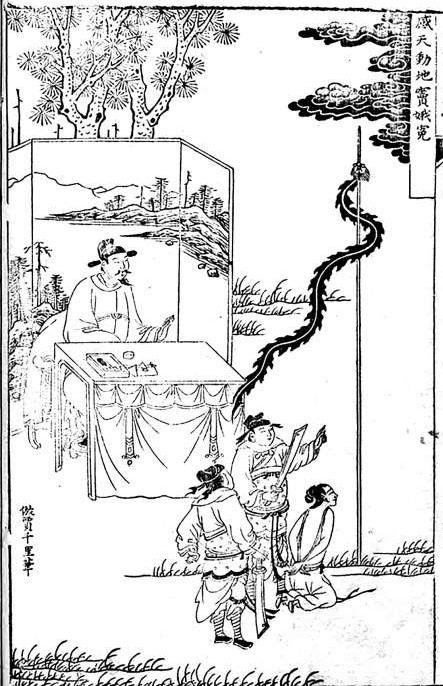
判词之妙寸心知
Bei Jing Wan Bao· 2025-11-10 07:55
Core Viewpoint - The article explores the literary and historical significance of ancient Chinese judicial writings, particularly focusing on the beauty and depth of 判词 (judicial verdicts) from various dynasties, highlighting their role in blending legal reasoning with literary expression [1][4][10]. Group 1: Historical Development of 判词 - The earliest 判词 can be traced back to the late Western Zhou period, showcasing a blend of narrative and commentary [4]. - During the Tang Dynasty, 判词 evolved to emphasize literary quality, with officials like 颜真卿 producing renowned verdicts that combined legal judgment with poetic expression [5][6]. - The Song Dynasty marked a shift towards plain language in 判词, breaking away from the rigid parallelism of earlier styles, as exemplified by 王回's innovative use of prose [6][10]. Group 2: Notable Examples of 判词 - 颜真卿's verdict in a divorce case is celebrated for its eloquence and moral reasoning, serving as a model for future judicial writings [5][11]. - In the Song Dynasty, a case involving a minor theft was resolved with a succinct and impactful verdict that highlighted the cumulative nature of small thefts, demonstrating the cleverness of the judge [7][8]. - The Ming and Qing Dynasties saw a flourishing of 判词, with officials crafting verdicts that were not only legally sound but also artistically rich, such as 方国珍's poetic judgment in a case involving a monk [10][11][12]. Group 3: Cultural and Literary Significance - The 判词 of ancient China are considered treasures of both legal culture and literary heritage, reflecting the intellectual and artistic achievements of their time [13]. - The blending of legal reasoning with literary aesthetics in 判词 serves to educate and influence societal values, making them exemplary works of moral and cultural instruction [5][12][13].
