古代晚期

Search documents
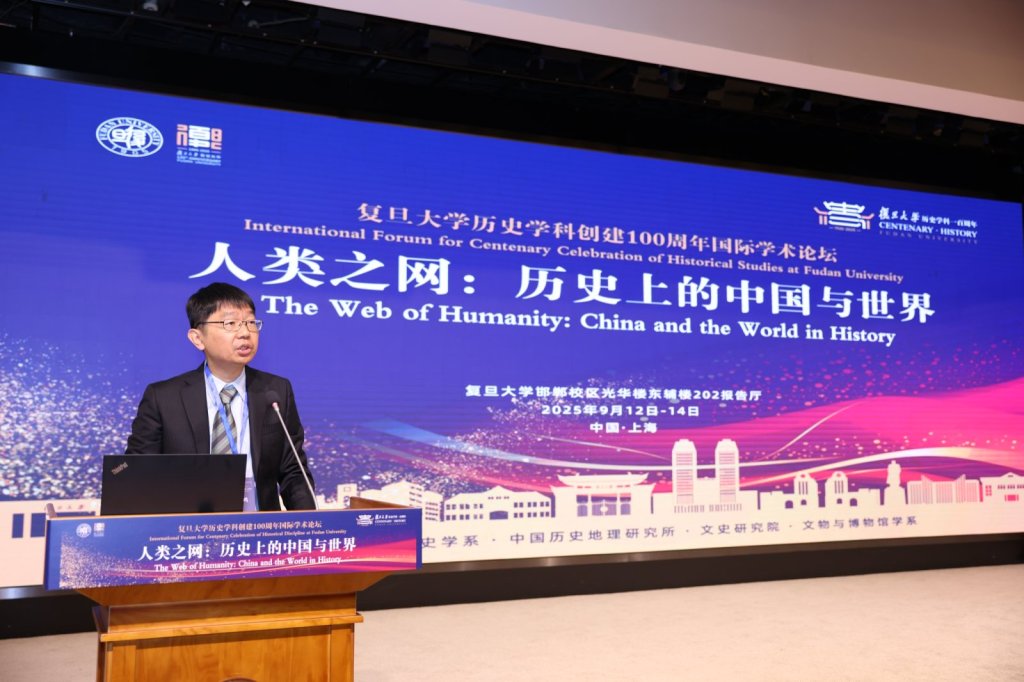
复旦史学百年︱“人类之网:历史上的中国与世界”国际学术论坛纪要
Xin Lang Cai Jing· 2025-09-16 02:20
Core Points - The Fudan University International Academic Forum celebrating the 100th anniversary of its history department was successfully held from September 12 to 14, focusing on the theme "The Web of Humanity: China and the World in History" [1][32] - The forum featured experts and scholars from over ten universities and research institutions, including Harvard University, Peking University, and Tokyo University, who presented various reports [1][32] Group 1 - The opening ceremony was hosted by Professor Qiu Luming, the director of the Fudan University History Department, with a welcoming speech by Jin Li, the president of Fudan University, who emphasized the forum as a showcase of the department's achievements and a new starting point for future academic collaboration [2][3] - The first session included presentations on "Historical Space," with notable contributions from Peter K. Bol of Harvard University, who discussed geographical patterns in Chinese history, and other scholars who explored regional theories and the significance of geographical contexts in understanding history [5][6][7] Group 2 - The afternoon sessions featured discussions on the Silk Road and cultural exchanges between China and the West, highlighting the long-term impacts of the Silk Road on Chinese society and the continuous nature of these exchanges despite historical interruptions [7][8] - Scholars also examined the historical significance of trade and its role in shaping interactions between China and Europe, particularly during the 18th century, emphasizing the dual nature of trade as both a peaceful and conflictual force [17][18] Group 3 - The forum included discussions on the evolution of Chinese thought and its interactions with global ideas, with presentations addressing the historical transformations in Chinese philosophy and the implications of these changes for modern Chinese identity [23][24][25] - The final sessions focused on the historical context of modern revolutions, particularly the American Revolution, and its influence on subsequent revolutionary movements, emphasizing the importance of understanding these events within a broader historical framework [30][31]