古村保护与开发

Search documents
(走进中国乡村)昆明彝族古村:老宅+新业化身网红打卡地
Zhong Guo Xin Wen Wang· 2026-01-14 05:26
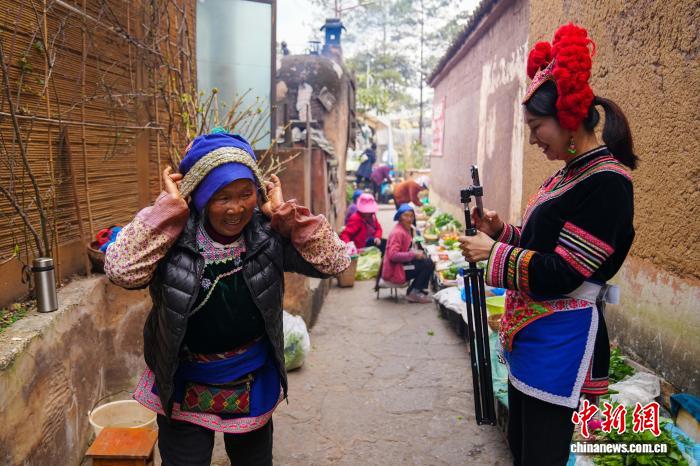
Core Insights - The article highlights the transformation of Leju Village in Kunming from an "hollow village" to a popular tourist destination, driven by local initiatives and social media influence [1][5]. Group 1: Village Background and Historical Context - Leju Village, a 600-year-old Yi ethnic village, has 217 households and a population of 985, comprising multiple ethnic groups including Yi, Bai, Han, and Miao [3]. - The village experienced a significant decline in population due to urbanization in the 1990s, with an occupancy rate of old houses dropping to 95% [3][5]. Group 2: Revitalization Efforts - In 2008, the local government initiated a project to involve social capital in the protection and development of the village, leading to the restoration of 85 ancient buildings [5]. - Leju Village was recognized as a key historical and cultural village in Yunnan Province and was included in the second batch of traditional Chinese villages in 2013 [5]. Group 3: Economic Impact and New Business Models - The introduction of a bakery in 2019, which utilized local ingredients, significantly increased visitor traffic, with vehicles lining up 200 meters outside the village [5]. - The village has seen the emergence of various new business models, including homestays, local cuisine, and artisan workshops, contributing to a vibrant local economy [5][6]. Group 4: Community Engagement and Future Prospects - Many young people, inspired by the village's revival, have returned to start their own businesses, with over 120 new residents engaging in various entrepreneurial activities [6]. - By 2025, Leju Village is projected to receive 545,000 visitors, generating approximately 22.34 million yuan in tourism revenue and a 15% increase in agricultural product sales [6].

活力中国调研行|守住生态和文化,古村焕发新活力
Xin Hua She· 2025-07-12 03:06
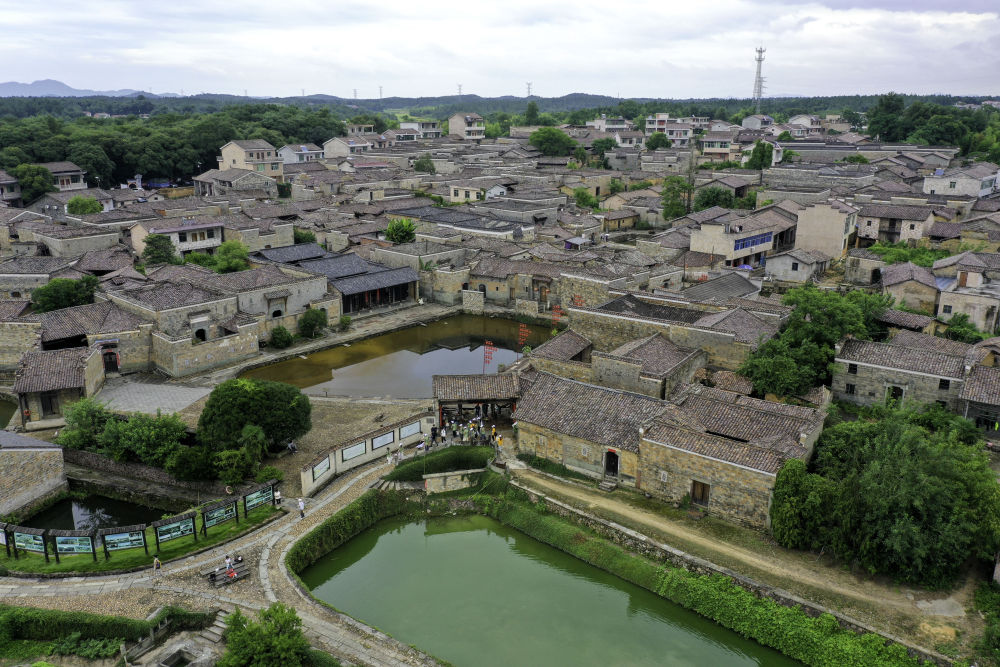
Group 1 - The core viewpoint of the articles highlights the revitalization of rural areas in Jiangxi Province, particularly through the transformation of previously quiet villages into vibrant tourist destinations, driven by government initiatives and community involvement [1][2][3] - Lake Pi Village has seen a significant increase in visitors, with the village being referred to as "the Alashan of Jiangxi," showcasing its unique ecological resources and improved infrastructure [1][2] - The collective income of Lake Pi Village has grown from 5,000 yuan in 2016 to approximately 700,000 yuan in 2024, indicating a successful economic transformation [2] Group 2 - Bamboo Bridge Village in Jinxian County has preserved over 100 ancient buildings and has implemented various projects to enhance infrastructure and promote cultural tourism, leading to increased visitor numbers [3][5] - The local government has established organizations to protect and develop ancient villages, employing over 100 rural party members as cultural heritage protectors and forming construction teams for restoration [5] - Policies have been introduced to support entrepreneurship in ancient villages, including rent reductions and funding subsidies, fostering the growth of new business models such as e-commerce and cultural performances [5]