古气候变化

Search documents
【新华社】约8600万年前的恐龙蛋有了“出生证明”
Xin Hua She· 2025-09-12 01:34
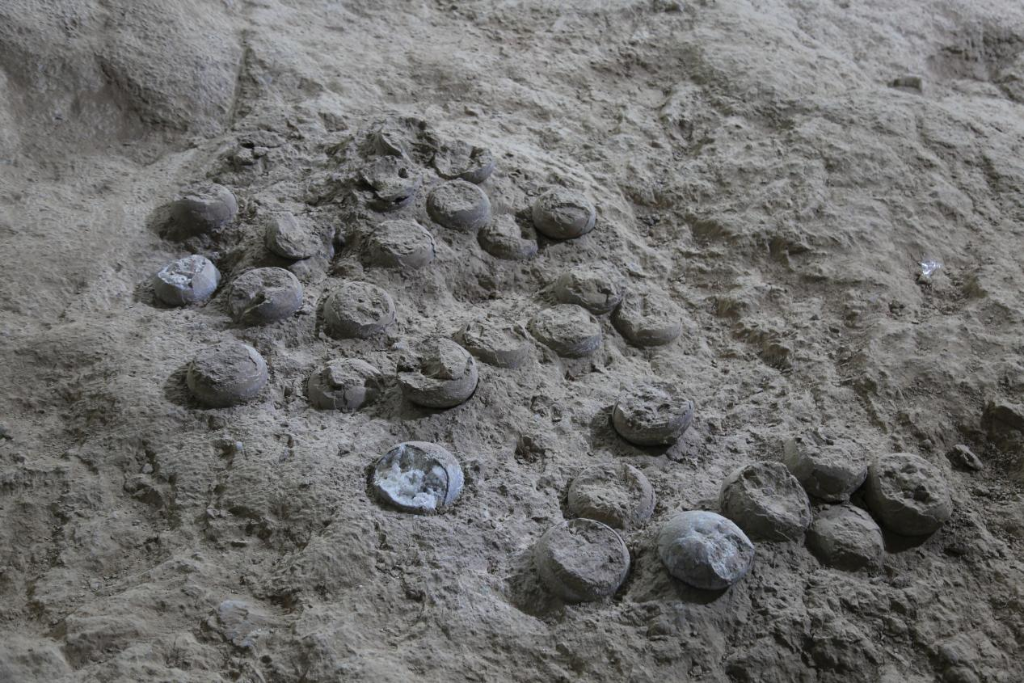
Group 1 - The dinosaur egg fossils in the Qinba Mountains of Hubei, China, have been dated to approximately 86 million years ago, marking a significant discovery in paleontology [2] - The research team successfully applied carbonate dating techniques to determine the age of the egg fossils, revealing that the formation of the eggs occurred during a global cooling period [2][3] - The study was published in the authoritative journal "Frontiers in Earth Science," providing a "birth certificate" for the dinosaur egg fossils [2] Group 2 - The research indicates that the dinosaur egg-laying event in the Qinglongshan area coincided with notable global climate changes, transitioning from a typical greenhouse climate to a cooler period [2] - Although the study has not yet covered all layers of the buried dinosaur egg fossils, it opens new avenues for understanding the evolution of dinosaur eggs and the timeline of their development [3] - This research provides a new theoretical tool for exploring significant scientific questions related to ancient climate changes, dinosaur evolution, and extinction mysteries [3]

约8600万年前的恐龙蛋有了“出生证明”
Xin Hua She· 2025-09-11 22:21
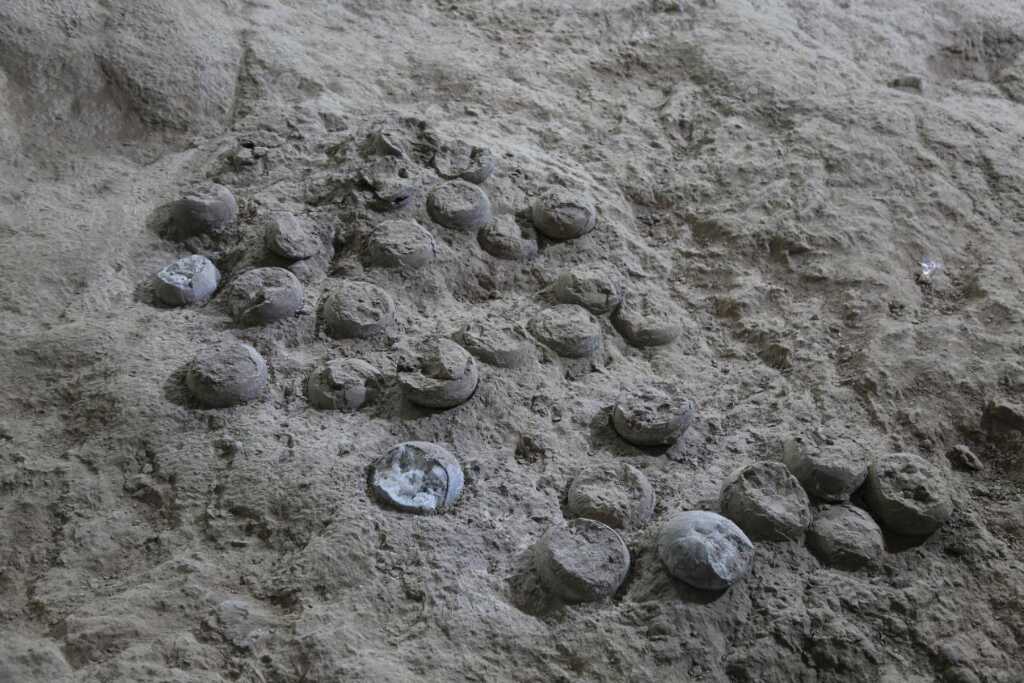
Core Viewpoint - A research team has confirmed the age of dinosaur egg fossils found in the Qinba Mountains of Hubei Province, dating them to approximately 86 million years ago, providing significant insights into the climatic conditions during that period [1]. Group 1: Research Findings - The research utilized carbonate dating technology for the first time in the study of Cretaceous dinosaur eggs, determining the age of the biogenic calcite within the egg shells to be between 87.65 million and 84.17 million years ago [1]. - The findings indicate that the dinosaur egg-laying events occurred during a global cooling period that began around 93 million years ago, marking a significant climatic transition [1]. Group 2: Historical Context - Dinosaur egg fossils were first discovered in the Qinglong Mountain area in the 1990s, leading to the establishment of a national nature reserve in 2001, which currently protects over 3,000 dinosaur egg fossils [1]. - Despite the discoveries, the specific age of these dinosaur eggs had remained a mystery until this recent research [1]. Group 3: Future Research Implications - The current study does not cover all layers of the buried dinosaur egg fossils, indicating that further research is needed to fully reconstruct the egg-laying events and establish a timeline for the evolution of dinosaur egg morphology in the region [3]. - This research provides a new approach for determining the burial times of different dinosaur egg fossils globally and offers theoretical tools for exploring ancient climate changes and the mysteries of dinosaur evolution and extinction [3].