古海洋环境重建

Search documents
解读“地球化学密码”,我国科研人员有了新发现!
中国能源报· 2025-11-19 11:23
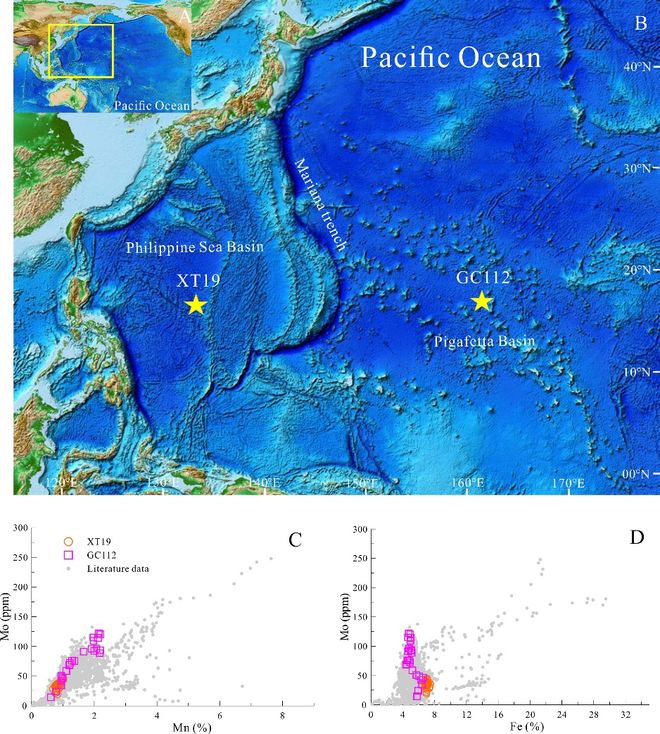
Core Viewpoint - The research conducted by Chinese scientists on deep-sea sediment has provided new scientific evidence for understanding the evolution of Earth's habitability and addressing future environmental changes [1][6]. Group 1: Research Findings - The research team discovered a significant increase in molybdenum isotope composition with depth in two deep-sea sediment cores from the western Pacific, indicating a potential global universality of this trend [1][5]. - Molybdenum (Mo) is a sensitive element to redox conditions, and its isotopic composition is widely used to trace the redox history of ancient oceans. However, understanding the modern ocean's molybdenum sources, sinks, and isotopic balance mechanisms is crucial for accurate interpretations [2][5]. - The updated model suggests that previous studies may have significantly overestimated the distribution of "euxinic" basins in ancient oceans, indicating that early marine environments may have been more "ventilated" than previously thought, which could have facilitated the evolution and flourishing of early life [6][8]. Group 2: Implications for Earth Sciences - The research enhances the understanding of deep-sea oxidative sediments' critical role in the global molybdenum cycle and improves the accuracy of reconstructing historical environmental changes based on geochemical indicators [6][8]. - This study provides key insights into the backdrop of life's evolution, contributing to the understanding of fundamental scientific questions regarding the origins of life on Earth [6].

深海沉积研究助力精准重建古海洋环境
Huan Qiu Wang Zi Xun· 2025-11-19 02:36
Core Insights - The research team from the Guangzhou Institute of Geochemistry and the Qingdao Institute of Marine Geology has conducted a systematic study on deep-sea sediment cores from the western Pacific, revealing a significant upward trend in molybdenum isotope composition with increasing depth, suggesting a potential global universality of this pattern [1][4]. Group 1: Research Findings - Molybdenum (Mo) is a sensitive element to redox conditions and its isotopic composition is widely used to trace the redox history of ancient oceans, making it crucial for understanding the geological history of oceanic and atmospheric oxygen levels [1]. - The study indicates that previous assumptions about the sources and isotopic balance of molybdenum in modern oceans need reevaluation, as the focus has been primarily on iron-manganese nodules, which represent only a small fraction of oceanic sediments [1][4]. Group 2: Implications of the Study - The updated model suggests that previous research may have significantly overestimated the distribution of euxinic basins in ancient oceans, indicating that early marine environments were likely more oxygenated than previously thought, which could have facilitated the evolution and proliferation of early life [5]. - This research provides critical insights into the role of deep-sea oxidized sediments in the global molybdenum cycle and enhances the accuracy of reconstructing historical environmental changes based on geochemical indicators, contributing to a better understanding of Earth's habitability evolution and future environmental changes [5].