
古罗马文明

Search documents
罗马 罗马:从奥林匹斯到卡皮托利
Jing Ji Guan Cha Bao· 2026-01-11 00:53
Group 1 - The exhibition "Rome: From Olympus to Capitol" is a collaboration between the Shanghai Expo Museum and the National Museums Liverpool, marking the conclusion of a trilogy of Western classical art exhibitions [1] - The exhibition features 131 pieces from the National Museums Liverpool, including significant sculptures such as a 2.27-meter Zeus statue, a bust of Emperor Augustus, and a head of Poseidon, with nearly 20 large sculptures making their debut in Shanghai [1] - The exhibition is organized into three thematic units: "Legends of the Gods," "Glory of the Empire," and "Feasts of Life," showcasing a diverse range of artifacts including sculptures, pottery, glassware, gemstones, and sarcophagus reliefs [1] Group 2 - The exhibition runs from now until May 3, 2026, at the Shanghai Expo Museum [2]
赴罗马之约!来世博会博物馆解锁“罗马假日”
Xin Lang Cai Jing· 2025-12-27 17:39
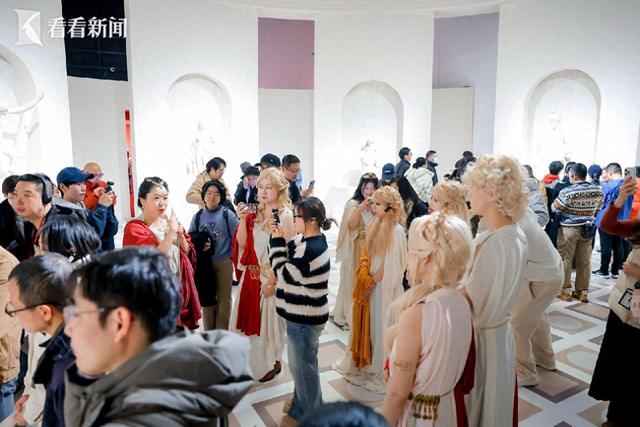
Core Viewpoint - The "Roman Holiday" themed event at the Expo Museum invites visitors to immerse themselves in ancient Roman culture, encouraging participation through costumes and interactive experiences, running from December 27, 2025, to January 3, 2026 [3][4][6]. Group 1: Event Details - The event emphasizes "universal participation and deep immersion," transforming spectators into participants by encouraging them to wear ancient Roman attire [3]. - Visitors can receive a special "Roman Holiday gift" by taking photos and sharing them on social media during the event [4]. - On December 27 and January 3, the event will feature interactions with NPCs portraying ancient Roman characters, enhancing the immersive experience [4]. Group 2: Exhibition Information - The "Roman: From Olympus to Capitol" exhibition, co-created with the National Museum of Liverpool, showcases 131 valuable artifacts, marking their first appearance in Shanghai since its opening on November 11 [8]. - The exhibition is structured around three main themes: "Legends of the Gods," "Glory of the Empire," and "Feasts of Life," presenting a comprehensive narrative of ancient Roman civilization [10]. - The exhibition aims to integrate classical civilization into contemporary life through educational activities and creative transformations, running until May 5, 2026 [10]. Group 3: Cultural Significance - The Expo Museum promotes cultural exchange, aligning with the idea that the vitality of civilization lies in interaction and integration [6]. - The event and exhibition serve to bring ancient Roman civilization into everyday life, allowing visitors to experience the charm of this historical culture during the holiday season [6].

意大利庞贝文物特展亮相广西 103件/套珍品再现古罗马文明
Zhong Guo Xin Wen Wang· 2025-05-11 01:30
Core Viewpoint - The exhibition "Frozen Time: Special Exhibition of Pompeii Relics from the National Archaeological Museum of Naples, Italy" showcases 103 precious artifacts in Guangxi Museum, marking the 55th anniversary of Sino-Italian diplomatic relations [1][2]. Group 1: Exhibition Details - The exhibition features a variety of artifacts including statues, frescoes, and gold and silver items, all of which are subject to strict management regulations during their temporary entry into China [1]. - The artifacts were transported in temperature-controlled vehicles and underwent thorough customs procedures at Shenzhen Bay before arriving at Guangxi Museum [1]. - The exhibition will run from May 16 to August 24, making it the first exhibition of Roman civilization in Guangxi [3]. Group 2: Artifact Significance - A notable highlight of the exhibition is a large-sized precious fresco that will be making its debut in China, providing a new visual experience for visitors [2]. - The exhibition also includes significant archaeological findings from Pompeii presented in high-definition digital format, allowing visitors to experience the historical essence of the ancient city [2]. - Each artifact reflects the grandeur of ancient Roman civilization and offers insights into the social life, cultural arts, and religious beliefs of that era [2].