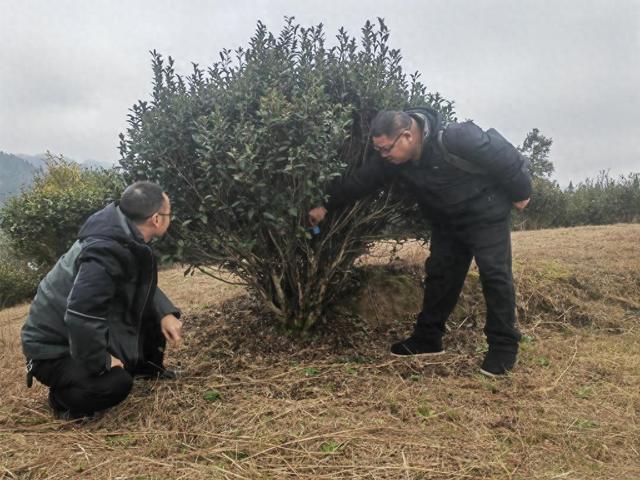
古茶树管护

Search documents
“中国苔茶之乡”何以实现“古树生金”?
Xin Lang Cai Jing· 2026-01-31 14:19
Core Insights - The tea industry in Shiqian County, particularly in the Pingshan Gelao and Dong ethnic township, is experiencing significant growth due to improved cultivation techniques and the management of ancient tea trees, which are over a hundred years old [1][3][5]. Group 1: Tea Cultivation and Management - Local tea farmers are actively engaged in the maintenance of ancient tea trees, with practices such as pruning and weed removal leading to increased yields, with some farmers reporting annual income of over 8,000 yuan per mu [1][3]. - The township has approximately 34,000 ancient tea trees, primarily of the Camellia sinensis variety, contributing to the region's reputation as "the hometown of Camellia tea" [1][3]. - The introduction of identification tags for ancient tea trees has enhanced awareness and care among farmers, leading to better preservation of these valuable resources [1]. Group 2: Economic Impact and Market Potential - The tea industry has become a pillar for local economic development, with 21 tea processing factories established in the township, significantly boosting income for local farmers [3][5]. - The price of fresh tea leaves can reach 70-80 yuan per jin, while dried tea can average around 500 yuan per jin, with high-quality handmade red tea fetching up to 2,000 yuan per jin [3]. - The region is expanding its market reach, with plans for international exports, including a shipment of 30 tons of Shiqian tea to Thailand, indicating a growing presence in the global market [5].