
古DNA分析技术

Search documents
基因破解千年悬棺主人与现存人群遗传关系
Xin Hua Wang· 2025-11-25 06:27
Core Insights - A recent study confirms that the modern "Bai" population in Qiubei County, Yunnan, is a direct descendant of the ancient hanging coffin burial practitioners, providing a scientific answer to the long-standing mystery of the origins of the hanging coffins and the Bai people [1][2] Group 1: Research Findings - The study, led by the Kunming Institute of Zoology, Chinese Academy of Sciences, utilized ancient genomic analysis to establish a direct genetic link between the modern Bai population and the ancient hanging coffin individuals, with approximately 43%-79% of the modern genome traceable to the Zhaotong hanging coffin population [2] - The research also reconstructed the origin and diffusion path of the hanging coffin burial practice, suggesting it originated from the southeastern coastal region of China, with Wuyi Mountain in Fujian likely being the source [2] Group 2: Cultural Insights - The study indicates that the hanging coffin custom spread westward along the Yangtze River and its tributaries to the Yungui Plateau, and further south to Southeast Asia, highlighting the migration of populations alongside the cultural practice [2] - Notably, two ancient remains from the Washi hanging coffin site in Weixin County, Zhaotong, show genetic components from both the Yellow River agricultural populations and ancient Northeast Asian groups, reflecting significant cultural inclusivity and population integration during the Tang Dynasty [2]

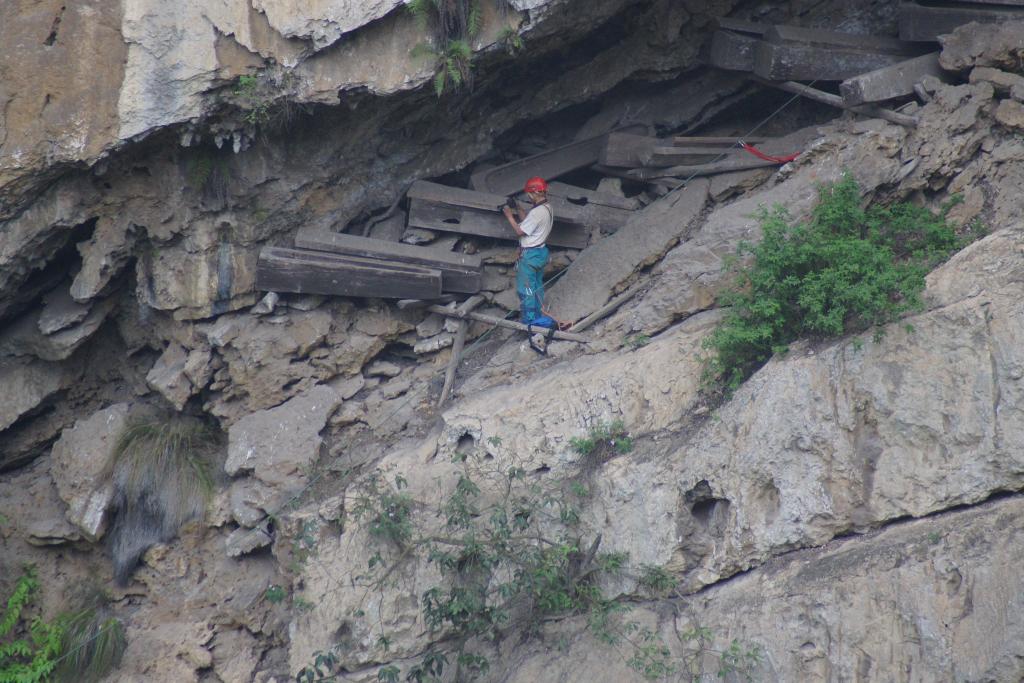
中国科学家领衔破解千年悬棺与僰人血脉之谜
Zhong Guo Xin Wen Wang· 2025-11-24 01:55
Core Insights - A recent study led by the Kunming Institute of Zoology has revealed a genetic link between the modern "Boni" people and the ancient "hanging coffin" burial customs, confirming that today's Boni are direct descendants of the ancient practitioners of this tradition [1][2][3] - The research utilized advanced ancient DNA analysis and modern genomics to trace the lineage and cultural practices of the Boni people, marking a significant breakthrough in understanding the historical mystery surrounding the "hanging coffins" [1][3] Group 1: Research Findings - The study found that modern Boni share a high genetic similarity with ancient hanging coffin populations, with 43% to 79% of their genetic makeup traceable to these ancestors [3] - The origins and diffusion of the hanging coffin burial practice were traced back to Neolithic populations in southeastern China, supporting the theory that Wuyi Mountain in Fujian is the cultural birthplace of this tradition [3] - The research indicates that the practice spread along the Yangtze River and its tributaries to the Yungui Plateau and further into Southeast Asia, suggesting substantial population migrations rather than mere cultural diffusion [3] Group 2: Cultural and Historical Significance - This interdisciplinary study bridges anthropology, archaeology, and ethnology, providing solid scientific evidence for narratives in Chinese history [3] - By utilizing genetic data, the research aims to reconnect with the history of a "disappeared ethnic group," contributing to the understanding of the integration of multiple ethnic civilizations in China [3] - The findings support the development of the "cultural-genetic corridor" theory, offering a new paradigm for understanding the historical interactions among diverse ethnic groups in China [3]