
古基因组研究

Search documents
古基因组重建中国最大史前城址社会结构
Ke Ji Ri Bao· 2025-11-28 03:17
Core Insights - The research reveals the origins and social structure of the Shijia culture, indicating a complex early state formation in China, based on a large-scale ancient genomic study published in *Nature* [1][2]. Group 1: Key Discoveries - The study achieved precise tracing of the Shijia culture's population roots, confirming that the main population originated from local Yangshao late-period residents in northern Shaanxi, demonstrating clear genetic continuity [2]. - Genetic components from northern grassland populations and southern coastal agricultural groups were detected, illustrating a dynamic picture of cultural integration and the multi-faceted nature of early Chinese civilization [2]. Group 2: Interaction Patterns - The research clarifies the interaction modes among populations, showing that the Shijia culture had significant genetic exchanges with groups from the Central Plains, northern grasslands, and southern coastal areas, while lacking connections with populations from Eurasian western grasslands and Central Asia [3]. - The findings suggest that the Shijia site served as a regional political and military center, as well as a cultural and trade hub during prehistoric times [3]. Group 3: Social Structure Insights - The study reconstructs the kinship ties and social organization of the early state, revealing a patrilineal hierarchical society with significant social stratification [4]. - The analysis of burial practices indicates a complex social structure, with variations in sacrificial practices reflecting class distinctions within the Shijia culture [4]. - This research marks a shift from material studies to a more precise understanding of human and social dynamics in the context of early Chinese civilization [4].
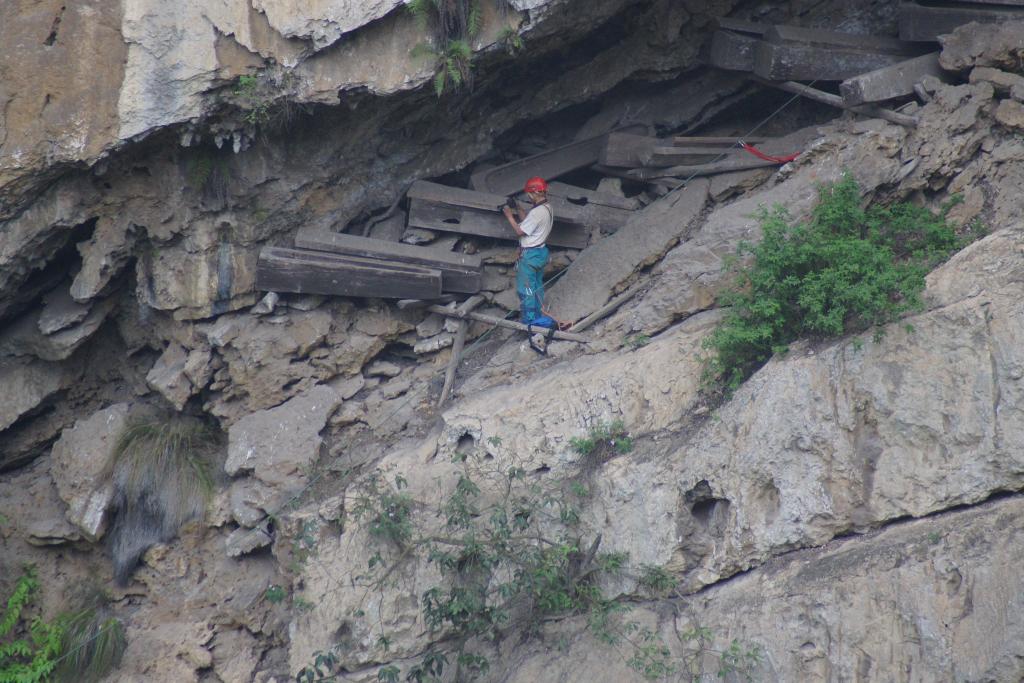
基因破解千年悬棺主人与现存人群遗传关系
Xin Hua Wang· 2025-11-25 06:27
Core Insights - A recent study confirms that the modern "Bai" population in Qiubei County, Yunnan, is a direct descendant of the ancient hanging coffin burial practitioners, providing a scientific answer to the long-standing mystery of the origins of the hanging coffins and the Bai people [1][2] Group 1: Research Findings - The study, led by the Kunming Institute of Zoology, Chinese Academy of Sciences, utilized ancient genomic analysis to establish a direct genetic link between the modern Bai population and the ancient hanging coffin individuals, with approximately 43%-79% of the modern genome traceable to the Zhaotong hanging coffin population [2] - The research also reconstructed the origin and diffusion path of the hanging coffin burial practice, suggesting it originated from the southeastern coastal region of China, with Wuyi Mountain in Fujian likely being the source [2] Group 2: Cultural Insights - The study indicates that the hanging coffin custom spread westward along the Yangtze River and its tributaries to the Yungui Plateau, and further south to Southeast Asia, highlighting the migration of populations alongside the cultural practice [2] - Notably, two ancient remains from the Washi hanging coffin site in Weixin County, Zhaotong, show genetic components from both the Yellow River agricultural populations and ancient Northeast Asian groups, reflecting significant cultural inclusivity and population integration during the Tang Dynasty [2]

【科技日报】古基因组研究揭示家犬同人类共迁徙历史
Ke Ji Ri Bao· 2025-11-20 01:21
Core Insights - The research led by Wang Guodong and 35 international teams has successfully sequenced the genomes of 17 ancient dogs, contributing to a total of 73 ancient dog genomes, which illustrate the evolutionary lineage of domestic dogs from East Asia to the Eurasian steppe and their co-migration with humans [1][2] Group 1: Research Findings - The study reveals that a unique ancient lineage of domestic dogs existed in China 5,000 years ago, which was later supplemented by ancient dog lineages from Siberia and the West over the following millennia [1] - The ancient East Asian ancestors of Chinese domestic dogs also spread widely across various regions of the Eurasian steppe [1] - The research indicates that multiple infiltration events of domestic dogs correspond closely with human migrations over the past 10,000 years, highlighting the intimate relationship between dogs and humans [2] Group 2: Historical Context - In the Hexi Corridor region, the increase of Northeast Asian ancestry in dog genomes aligns with the influx of Northeast Asian ancestry in human populations [2] - The rise of Western ancestry in Eurasian steppe dogs corresponds with the historical migrations of ancient humans, linking dogs to both Eastern European hunter-gatherers in the Neolithic and Iranian agriculturalists in the Bronze Age [2] - The study emphasizes that the bloodline movement of domestic dogs over millennia reflects the interconnectedness of ancient civilizations from the Eurasian steppe to the Hexi Corridor [2] Group 3: Methodology and Implications - The ancient genome analysis methods used in this research can serve as a reference for uncovering the roles of other domesticated animals, such as horses, cattle, and sheep, in human history [2] - This research provides a solid theoretical foundation for the development and utilization of animal genetic resources, highlighting the potential of domesticated animals [2]