
台风生成原因

Search documents
“桦加沙”“博罗依”之后还有台风 今年为何扎堆出没?
Yang Shi Xin Wen· 2025-09-27 13:31
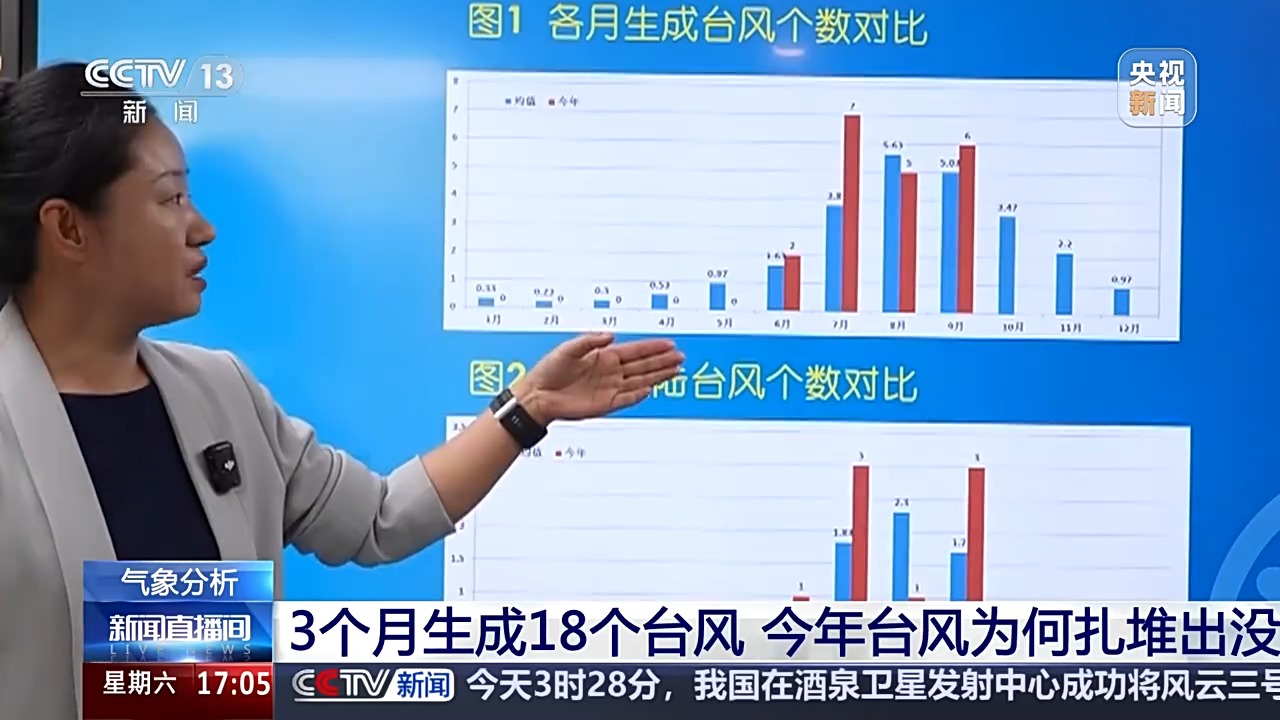
Core Insights - The current typhoon season in China has seen an increase in both the number of typhoons generated and those making landfall compared to historical averages, particularly concentrated in the months of July to September [1][3]. Group 1: Typhoon Generation and Landfall - The number of typhoons generated from January to September is approximately 1.53 more than the average, while the number of landfalls is about 1.5 more than usual, with a significant concentration in the July to September period [1][3]. - The generation of typhoons has been delayed this year, with only two typhoons formed before the end of June, while the majority occurred between July and September [3]. Group 2: Factors Influencing Typhoon Activity - The increase in typhoon activity is influenced by several factors, including the position and strength of the subtropical high pressure, monsoon currents, and sea surface temperatures [3]. - In July and September, the subtropical high pressure was generally stronger and positioned more to the north and west than usual, providing favorable conditions for typhoon formation [3]. - High sea surface temperatures have also contributed to the generation and development of typhoons [3]. Group 3: Current Typhoon Activity - Currently, two typhoons are active in the Northwest Pacific and South China Sea, with Typhoon "Bolaoi" being particularly noteworthy as it has intensified and is expected to impact regions such as Hainan [8][9]. - The expected weather conditions from Typhoon "Bolaoi" include strong winds and significant rainfall, with potential accumulations of 250 to 400 millimeters in affected areas [9]. Group 4: Future Typhoon Developments - There is a possibility of another typhoon or tropical depression forming in the Northwest Pacific, with developments expected around October 3, which may subsequently approach the South China Sea [10][12]. - The potential new disturbance could impact parts of South China, necessitating heightened awareness and safety measures for maritime activities in the South China Sea and coastal areas [12].

今年第1号台风为何“姗姗来迟”?
Hai Nan Ri Bao· 2025-06-13 01:35
Group 1 - The first typhoon of the year, "Butterfly," is expected to make landfall in the coastal area between Sanya and Dongfang on the morning of June 13, marking it as the first typhoon to land in China this year [1][2] - The average formation date for the first typhoon in the Northwest Pacific and South China Sea is March 25, but this year, "Butterfly" formed on June 11, indicating a significant delay [1][2] - Three main reasons for the late formation of the typhoon include lower than average sea temperatures in the South China Sea, a persistent strong subtropical high in the Western Pacific suppressing tropical convection, and abnormal activity of the tropical convergence zone and monsoon [1] Group 2 - The frequency of typhoons making landfall in Hainan Island in June has been increasing, with only one recorded from 1991 to 2012, compared to three from 2013 to 2020, averaging less than one every three years [2] - Typhoons that land in June are generally weaker, with an average intensity of strong tropical storm level, and the strongest recorded June typhoon reached typhoon level [2] - Since 1949, only one first typhoon, "Raccoon," made landfall in Hainan on April 18, 2008, making "Butterfly" potentially the second recorded first typhoon to land in Hainan Island [2]
台风“蝴蝶”来袭 为何今年第1号台风“姗姗来迟”?
Xin Hua Wang· 2025-06-12 07:51
Core Viewpoint - The first typhoon of the year, "Butterfly," has formed later than usual, with implications for both risks and benefits in affected regions [1][2] Group 1: Typhoon Formation and Characteristics - Typhoon "Butterfly" formed on June 11 and is expected to make landfall in Hainan Island on June 13, moving towards Guangdong and Guangxi thereafter [1] - Historically, the average formation date for the first typhoon is March 25, indicating that this year's formation is over two months late [1] - The delay in typhoon formation is attributed to a larger and stronger subtropical high-pressure system, which has suppressed the necessary tropical convection for typhoon development [1] Group 2: Impacts and Preparedness - The late arrival of the typhoon may reduce the risk of compounded disasters from earlier typhoons, benefiting agricultural stability and fishing operations [2] - However, Typhoon "Butterfly" is predicted to make landfall as a strong tropical storm, bringing significant rainfall to Guangdong from June 13 to 15, with potential for heavy to extreme rainfall in various regions [2] - Local authorities in Hainan, Guangdong, and Guangxi are actively preparing for the typhoon, ensuring safety measures for maritime activities and coastal tourism [2]