味道哲学

Search documents
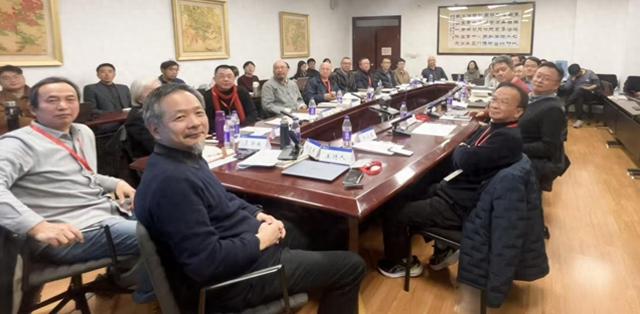
由味入道——“中国哲学的味道”工作坊会议纪要
Xin Lang Cai Jing· 2026-01-17 02:20
Core Viewpoint - The workshop on "The Taste of Chinese Philosophy" aims to explore the possibility of constructing an autonomous knowledge system in Chinese philosophy based on taste and flavor, led by Professor Gong Huanan [2][4]. Group 1: Philosophical Foundations - Professor Gong Huanan introduces the concept of "taste philosophy" as a means to understand and reconstruct the methodology of Chinese philosophy, emphasizing the need to concretize intuition into sensory experiences, ultimately focusing on taste [4]. - He argues that Chinese culture can be understood as a "taste-centered culture," contrasting it with Greek and Hebrew cultures that prioritize visual and auditory experiences respectively [4][5]. - The evolution of Chinese thought is framed as a transition from visual perception to tasting the world, suggesting a shift in how knowledge and experience are processed [4][5]. Group 2: Academic Contributions - Professor Xie Xialing highlights Gong Huanan's significant contributions to the understanding of taste in Chinese philosophy, noting its historical presence and its connections to moral judgment and practical wisdom [7]. - Professor Xiao Yang emphasizes the need to read Gong's works as a cohesive whole, suggesting that they represent a unique contribution to contemporary consciousness studies and the understanding of subjective experience [9]. - Professor Lin Hongxing asserts that Gong Huanan's work establishes a distinctive theoretical system centered on taste, challenging the visual-centric paradigms of Western philosophy [10]. Group 3: Methodological Insights - Professor Fan Zhihui points out that taste philosophy should not only serve as a landmark but also guide contemporary thought, emphasizing the need for cultural and communal support in transforming personal sensations into universal ideas [13]. - Professor Yu Zhiping suggests that Gong Huanan's approach transcends Western visual-centric thinking, advocating for a more nuanced understanding of sensory experiences in philosophical discourse [14]. - Professor Xu Guoli emphasizes the potential of taste as both a methodological and ontological category in Chinese philosophy, advocating for its role in enriching philosophical frameworks [16]. Group 4: Future Directions - Professor Wu Meng discusses the dual aspects of taste, both as a sensory function and as a philosophical concept, stressing the importance of integrating these dimensions for a comprehensive understanding of taste philosophy [24]. - Professor Cai Qinghua raises concerns about the linear hierarchy of sensory experiences proposed by Gong, suggesting a need for a more nuanced understanding of the coexistence of multiple sensory modalities in Chinese thought [25]. - Professor Xu Yuan expresses the need for further exploration of the relationship between taste and other sensory experiences, advocating for a broader dialogue that includes Buddhist and consciousness studies [28].