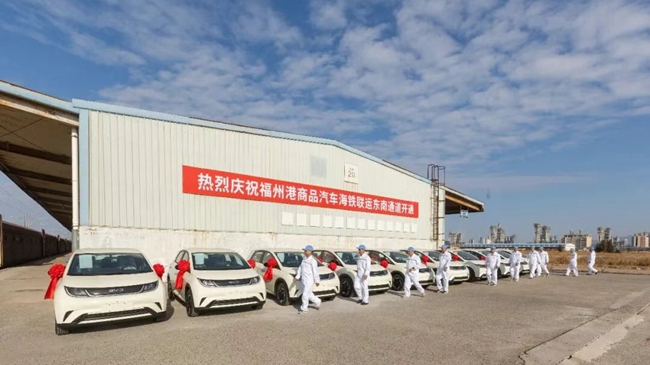
商品汽车海铁联运港站一体运营模式

Search documents
正式开通!“中国汽车”从福清这里出海
Ren Min Wang· 2026-01-19 09:21
Core Insights - The Fuzhou Port's automobile sea-rail intermodal Southeast Corridor officially opened on January 15, marking the launch of a pioneering "arrival at station, immediate port" operation model for automobile logistics in China [1][2] Group 1: Infrastructure and Efficiency - Fuzhou Port's Jiangyin Port Area is strategically positioned to develop a roll-on/roll-off (RoRo) export channel for automobiles, featuring nine all-weather container berths and a container port performance index ranking second globally [2] - The port area has a vehicle storage space of nearly 500,000 square meters and a railway station within 2 kilometers, facilitating efficient "port-station ground connection" [2] - The average loading and unloading efficiency for automobile RoRo operations is 210 vehicles per hour, with a peak of 277 vehicles per hour, showcasing the port's operational capabilities [2] Group 2: Collaboration and Policy Support - A themed salon was held to enhance collaboration among ports, shipping companies, automobile manufacturers, and logistics firms, aiming to establish an efficient automobile export channel [3] - The Fuzhou Port Development Center is set to release the "Fuzhou Port Production Support Policy (2026-2028)," which includes special support measures for RoRo automobile exports [3] - Representatives from major automobile manufacturers and shipping companies expressed strong interest in using Jiangyin Port as a preferred export outlet for automobiles, culminating in a cooperative initiative to build the automobile export corridor [3][5] Group 3: Growth Metrics - By 2025, Jiangyin Port is projected to complete 20 voyages for complete vehicle roll-on/roll-off exports, with an annual export volume of 20,000 vehicles, reflecting a 37% increase [4] - The successful salon event solidified a consensus among stakeholders to enhance RoRo shipping routes, optimize port-rail intermodal efficiency, and strengthen service guarantees across the supply chain [4][5]