喀斯特地貌

Search documents
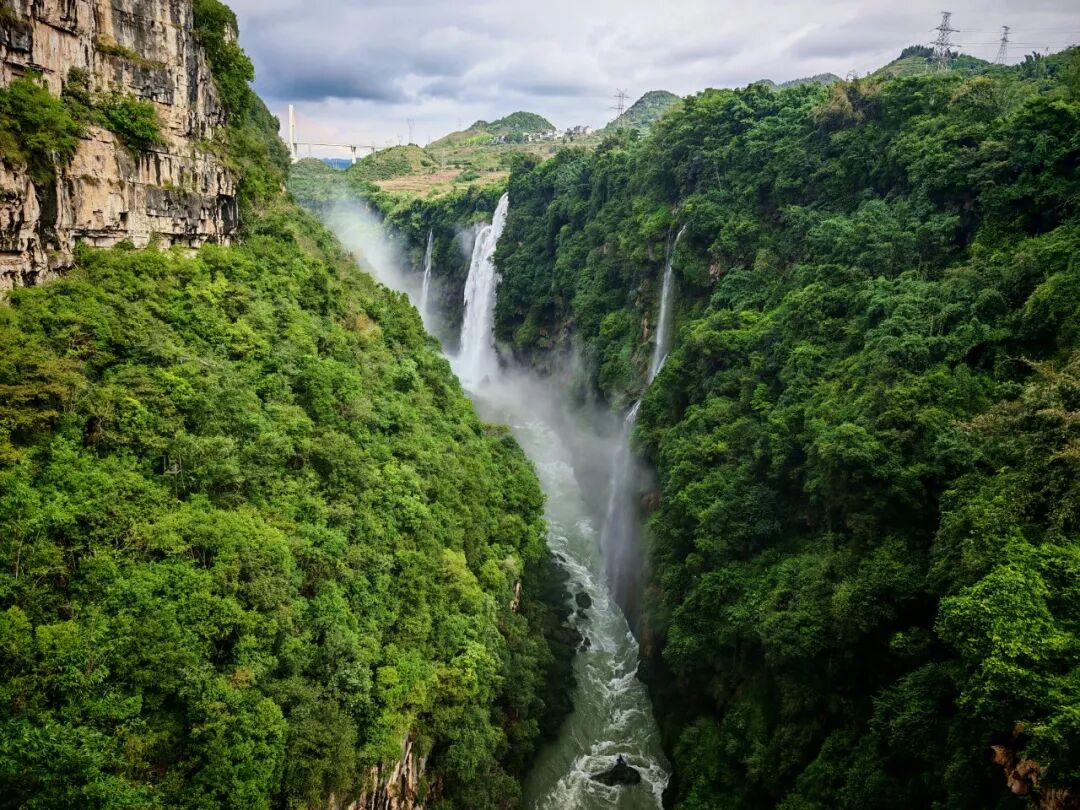
马年寻“贵马”丨去这个峡谷秘境,体验万马奔腾的震撼
Xin Lang Cai Jing· 2026-02-18 02:53
Core Viewpoint - The article highlights the beauty and geological significance of the Malin River Canyon in Guizhou, China, emphasizing its unique karst landscape and natural attractions [1][3]. Group 1: Geological and Natural Features - The Malin River Canyon is approximately 15 kilometers long and is recognized for its stunning karst topography, featuring prominent peaks and deep valleys shaped by millions of years of erosion [1]. - It is home to the largest biocalcite waterfall group in China, characterized by "growing cliffs" that create a dynamic and evolving waterfall spectacle [3]. - The canyon is known for its breathtaking waterfalls, including the "Galloping Horses Waterfall" and "Yellow Dragon Waterfall," with multiple waterfalls exceeding 200 meters in height [3]. Group 2: Tourism and Recognition - The Malin River Canyon is designated as a national 4A-level tourist attraction, famous for its steep gorges and impressive carbonate wall waterfalls [3]. - In October 2025, the canyon was included in the "Most Beautiful Waterfalls" and "Most Beautiful Canyons" lists in the 20th-anniversary special edition of "China National Geography" [4]. - The area boasts high concentrations of negative oxygen ions, reaching 300,000 per cubic centimeter, contributing to a refreshing atmosphere for visitors [3].

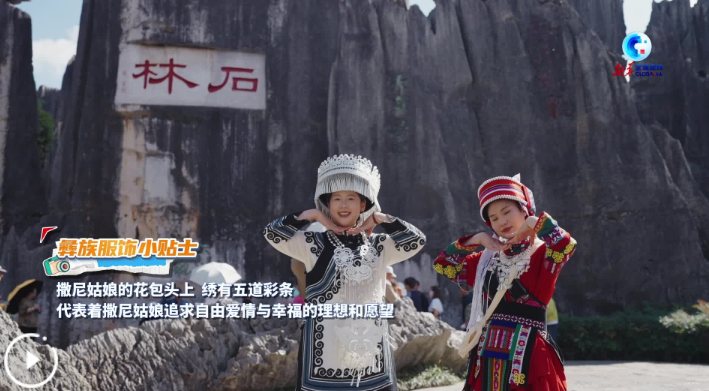
全球连线丨跳民族舞、找阿诗玛,泰国姑娘探访世界遗产地云南石林
Xin Hua She· 2026-01-23 07:49
Group 1 - The Stone Forest, located in Shilin Yi Autonomous County of Kunming, is a significant example of karst topography formed over 270 million years and is listed as a UNESCO World Heritage site [2] - The unique rock formations in the Stone Forest attract tourists, with visitors expressing admiration for the natural beauty and diversity of the landscape [2] - Cultural experiences, such as wearing Yi ethnic clothing and dancing with locals, enhance the visitor experience, showcasing the integration of culture and nature [3] Group 2 - The journey to find "Ashima" symbolizes a deeper connection to the cultural and natural heritage of the Stone Forest, encouraging visitors to explore and understand the historical significance of the site [3] - The appeal of the Stone Forest lies not only in its stunning scenery but also in the stories and legends associated with the landscape, inviting more friends to experience it firsthand [3]
自然与人文景观交相辉映
Xin Lang Cai Jing· 2026-01-03 19:19
Core Viewpoint - The Yunnan Stone Forest World Geopark is recognized as a unique geological wonder that showcases 2.7 billion years of Earth's evolution, featuring diverse karst landforms and significant scientific research value [12][13]. Geological Significance - The Stone Forest covers an area of 350 square kilometers and includes various karst formations such as sword-shaped and columnar limestone landscapes, which are a complete representation of global karst landforms [13]. - The park contains important geological profiles, including the Devonian system, which provides critical evidence for geological research [13]. Cultural Heritage - The local Yi ethnic group, particularly the Sani people, has a rich cultural heritage exemplified by the legend of "Ashima," which has been widely disseminated and recognized as a national intangible cultural heritage [14][15]. - Cultural tourism activities, such as traditional embroidery and festivals, attract significant visitor engagement, with related content achieving over 200 million views [15]. Tourism Development - The Stone Forest has transitioned from a sightseeing destination to a deep travel experience, with a notable increase in visitors for wellness tourism, reaching 148,600 from January to November 2025, a growth of 87.6% [15]. - Innovative cultural products, including "Ashima" themed merchandise, have seen substantial sales, contributing to the local economy with over 4 million yuan in total sales [15].

云南石林世界地质公园:自然与人文景观交相辉映
Xin Lang Cai Jing· 2026-01-03 19:18
Core Viewpoint - The Yunnan Stone Forest World Geopark is recognized as a unique geological wonder that showcases 270 million years of Earth's evolution through its diverse karst landforms and serves as a vital site for scientific research and cultural heritage [1][3][4]. Geological Significance - The Stone Forest was formed during the Permian period, originally a marine environment that transitioned to a terrestrial landscape due to tectonic uplift and erosion, resulting in a 350 square kilometer area of stunning karst formations [3][4]. - The park contains significant geological features, including the Devonian stratigraphic profiles and numerous vertebrate fossils, making it a key site for paleontological studies [4]. Cultural Heritage - The local Yi ethnic group, particularly the Sani people, contribute to the cultural landscape with their rich traditions, including the famous narrative poem "Ashima," which has been adapted into various forms of media and recognized as a national intangible cultural heritage [7][12]. - Cultural tourism activities, such as traditional embroidery and festivals, attract significant visitor engagement, with over 200 million views related to cultural events [12]. Tourism and Economic Impact - The park has developed immersive educational and tourism experiences, including AR-guided tours and themed light shows, enhancing visitor engagement and understanding of geological processes [7]. - The transition from simple sightseeing to in-depth tourism experiences has led to a substantial increase in visitor numbers, with 148,600 tourists in the first 11 months of 2025, marking an 87.6% year-on-year growth [12].
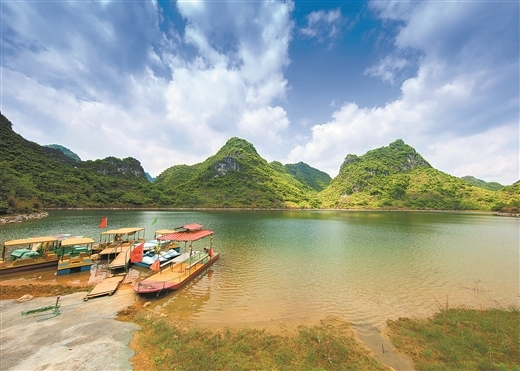
壮美广西·新山海经㊴ | 一只碧玉碗 悬于峰林间
Guang Xi Ri Bao· 2025-08-12 01:23
Core Viewpoint - The article highlights the unique geological and hydrological characteristics of Longjiao Tianchi, a karst lake in Tiandeng County, which has become a significant agricultural resource and a popular tourist attraction due to its stable water levels and scenic beauty [4][5][7]. Group 1: Geological Features - Longjiao Tianchi is situated in a karst landscape, with an average depth of 15 meters and a maximum depth of 37 meters, surrounded by mountains that elevate it over nearby villages by more than 50 meters [4]. - The lake maintains a stable water level, fluctuating only about one meter despite heavy rainfall or drought, which is unusual for karst regions where surface water typically drains quickly [5][6]. - The formation of the lake is believed to be linked to a blocked sinkhole that prevents underground water from escaping, allowing surface water to accumulate [5][6]. Group 2: Historical Context - Historical accounts suggest that Longjiao Tianchi may not have existed in its current form over 300 years ago, as noted by the traveler Xu Xiake, who did not mention the lake in his writings [6]. - Local villagers recall that a significant flood once blocked the sinkhole, leading to the lake's formation as surface water began to collect [6]. Group 3: Agricultural and Economic Importance - The lake serves as a vital irrigation source for local agriculture, rejuvenating dry fields and contributing to the community's prosperity [6][7]. - As a result of its agricultural significance and natural beauty, Longjiao Tianchi has become a well-known tourist destination, attracting visitors eager to experience its unique landscape [7].