噪声污染治理

Search documents
罚款改拘留,管理升级让噪声扰民任性不得
Guang Zhou Ri Bao· 2025-11-01 10:12
新修订的治安管理处罚法将于2026年1月1日起正式施行。其中,噪声污染处罚条例出现明显变化。新法 明确规定:社会生活噪声归公安管辖,不再警告+罚款,改为最高10日拘留。 这里有必要科普一下,归公安管辖的生活噪声,包括什么呢?比如公共场所娱乐健身噪声(如广场舞、 露天演唱),家庭及室内活动噪声(如深夜K歌、乐器演奏、装修施工),商业经营噪声(如商铺使用 高音喇叭招揽顾客),以及其他社会生活噪声(如居民区使用高音喇叭宣传、车辆鸣笛)等,但工业、 建筑、交通方面的噪声不在此列,后三类噪声仍由生态环境部门监管。 "静音令"落在法律层面,本质上是对公民安宁权与健康权的制度保障。当法律的刚性约束逐步转化为公 众的行动自觉,我们终将告别被生活噪声侵扰的日子。 管辖权限以及处罚力度的变化说明:当道德约束不力时,法律必须亮出牙齿。长期以来,生活噪声扰民 是城市生活的一块"心病",一些人只顾自己便利,不顾及他人感受,矛盾往往由此引发。譬如,家庭装 修就是邻里矛盾最常见的一个"火药桶"。敲砖拆墙、钻地截铁本来就让人心烦意乱,有人还罔顾规定, 一早就开工,半夜还在干,拼命赶工,左邻右舍不胜其烦。万一遇上油盐不进的"顽主",左邻右舍还 ...
噪声扰民问题这样化解(民生改善在身边)
Ren Min Ri Bao· 2025-09-25 22:12
"最近,深夜没有听到商场噪声,终于能睡个踏实觉了!"在福建福州市仓山区,红星国际晶品小区居民 林强满意地说。 噪声污染是环境领域集中投诉的热点之一。自2021年起,福建省生态环境厅会同公安、住建、交通、市 场监管等部门,联合开展"静夜守护"专项行动,重点整治建筑施工、社会生活、交通运输等方面的夜间 噪声扰民问题。经过持续治理,各渠道噪声投诉量较整治前下降约30%,监管机制初步实现常态长效。 福建龙岩市武平县城市管理和综合执法局人员深入调研,精准定位了28处广场舞热门场地。不罚款、不 驱赶,城管队员先和领舞的阿姨大叔们聊家常,记录活动时间、人数,科学规划"健身课表";然后告知 管理规章,活动限于早上6点半至晚上9点,保证活动不扰民;最后递上《广场舞温馨公约》:60分贝 是"白天快乐线"、50分贝是"夜晚温柔线"——这个标准成了武平广场舞参与者的一致共识。 噪声具有瞬时性,导致执法人员难以及时固定证据,不可避免面临"取证难"。为破解这一问题,福建编 制《重点领域环境噪声自动监测管理工作指南》,目前已初步建成噪声监测网络。全省布设工业企业、 建筑工地、道路交通噪声监测点位各10318个、2018个、570个;住建、 ...
2025年中国隔声屏障行业全景研判:城市化进程加速,工业和交通运输业的稳步增长,为隔声屏障行业带来广阔的市场空间[图]
Chan Ye Xin Xi Wang· 2025-06-23 01:47
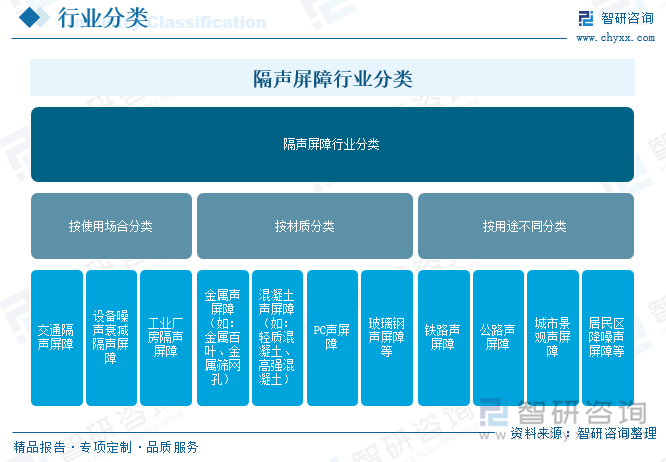
Core Viewpoint - The sound barrier industry in China is experiencing significant growth driven by urbanization, increased demand in transportation and construction sectors, and heightened public awareness of environmental issues. The production and demand for sound barriers are expected to rise steadily, with market size projected to reach 115.36 billion yuan by 2025 [1][5]. Industry Definition and Classification - Sound barriers are measures used to block direct sound between a source and a receiving point. They can be classified based on usage (traffic, equipment noise reduction, industrial), material (metal, concrete, PC, fiberglass), and purpose (railway, highway, urban landscape, residential noise reduction) [2][3]. Industry Development Status - The development of sound barriers in China began in the 1970s. The industry faces challenges due to high customization requirements and varying specifications. The production is expected to grow from 4,828 million square meters in 2024 to 5,358 million square meters in 2025, with demand following a similar upward trend [3][5]. Market Size and Growth - The market size for sound barriers in China is projected to reach 105.23 billion yuan in 2024, with significant contributions from the transportation sector (75.4 billion yuan) and industrial production (16.48 billion yuan). By 2025, the market size is expected to grow to 115.36 billion yuan [5][18]. Industry Chain - The sound barrier industry chain includes upstream raw material supply (metal materials, PC boards, glass), midstream product manufacturing, and downstream application in construction, industrial production, and urban transportation. The collaboration across these segments is crucial for industry growth [7][18]. Competitive Landscape - The sound barrier market in China is characterized by a large number of manufacturers with relatively weak overall strength. Key players include state-owned enterprises, private companies, and foreign firms, with notable participants such as Hengxiang Technology, Tibet Zhongchi Group, and Changzhou Tiansheng New Materials [9][12]. Key Companies - **Tiansheng New Materials**: Focuses on high polymer material processing, with significant patents in sound barrier products. The company reported a revenue of 531.2 million yuan in 2024 [12][13]. - **Hengxiang Technology**: Provides integrated solutions for traffic noise control and has a diverse product range including sound barriers and engineering rubber products [15][18]. Industry Development Trends - The sound barrier industry is expected to benefit from China's stable economic growth, accelerated urbanization, and advancements in technology and materials. Environmental sustainability will also play a crucial role in shaping the market [18][20].