国家化进程

Search documents
河泊所遗址:解密中华文明“多元一体”历史叙事
Huan Qiu Wang· 2025-07-19 06:48
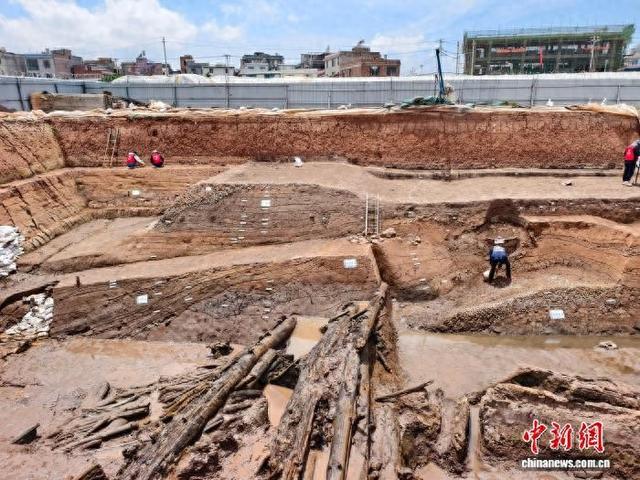
Core Viewpoint - The excavation of the Heiposuo site reveals significant historical evidence of the ancient city, contributing to the understanding of the multi-faceted history of Chinese civilization and the integration of diverse cultures in the southwestern frontier [1][3][5]. Group 1: Archaeological Findings - The Heiposuo site, located in Kunming, Yunnan Province, is the largest and most culturally rich center settlement site from the Shang to Han-Jin periods in Yunnan [3]. - Archaeological discoveries include a T-shaped road, city walls from the Wei-Jin period, and over 70 tons of construction materials such as tiles and bricks, with inscriptions confirming the site as the location of the Yizhou commandery [5][6]. - The site has yielded over 50,000 bamboo slips, including more than 14,000 with written content, providing crucial insights into governance, administrative systems, and ethnic relations during the Han dynasty [6][8]. Group 2: Historical Significance - The findings at Heiposuo fill a historical gap regarding the ancient Dian Kingdom and its integration into the Han dynasty's administrative framework, confirming the existence of the Dian Kingdom and the Yizhou commandery [3][5]. - The discovery of official seals, including those from the Dian Kingdom and Yizhou, indicates a dual administrative system where local governance retained elements of the former Dian rule under the Han central authority [5][6]. - The site exemplifies the historical narrative of China's southwestern frontier, showcasing the region's long-standing national identity and its role in the broader context of Chinese civilization's development [6][8].