国家通用语言文字推广普及

Search documents
民族团结进步促进法草案二审丰富维护国家象征和标志尊严相关内容
Xin Hua Wang· 2026-01-23 06:38
Group 1 - The draft of the Ethnic Unity and Progress Promotion Law was submitted for a second review by the Standing Committee of the National People's Congress, enriching the content related to maintaining the dignity of national symbols and signs [1] - The second draft adds provisions that citizens of the People's Republic of China should enhance their national consciousness and promote patriotism, maintaining the dignity of national symbols such as the national flag, anthem, and emblem [1] - The second draft further enriches the content related to the legal governance of ethnic affairs, emphasizing the need to strengthen constitutional and legal education to enhance national consciousness, civic awareness, and rule of law awareness among all ethnic groups [1] Group 2 - The second draft clarifies the requirement to implement an overall national security concept, coordinating development and security, and promoting high-quality development in ethnic regions [2] - The Ethnic Unity and Progress Promotion Law draft consists of a "preamble + 7 chapters" structure, totaling 62 articles, covering general principles, building a shared spiritual home, promoting exchanges and integration, advancing common prosperity, ensuring and supervising, legal responsibilities, and supplementary provisions [2]
每年9月第三周为 国家通用语言文字推广普及宣传周
Xin Lang Cai Jing· 2025-12-28 13:11
Core Viewpoint - The newly revised National Common Language and Writing Law was passed, establishing the third week of September as the National Common Language and Writing Promotion Week, aimed at enhancing the social atmosphere for learning and using the national common language and writing [1] Group 1: Legislative Changes - The revised law consists of five chapters and 32 articles, set to take effect on January 1, 2026, strengthening education in the national common language and writing [1] - The law promotes innovation in information technology related to the national common language and writing, and increases regulatory requirements for language use in cyberspace [1] Group 2: Social Impact - The current Mandarin Chinese popularity rate exceeds 80%, with over 95% of the literate population using standardized Chinese characters, and the illiteracy rate has decreased to 2.67% [1] - Establishing a dedicated promotion week is expected to foster a more conducive environment for the learning and usage of the national common language and writing [1] Group 3: Enforcement and Penalties - A separate chapter outlines legal responsibilities, specifying enforcement agencies and detailing penalties for violations [1] - The law stipulates that interference with others' learning and use of the national common language and writing may result in criticism, correction orders, warnings, or administrative penalties if it constitutes a violation of public security management [1]
关于《中华人民共和国国家通用语言文字法(修订草案)》的说明
Xin Lang Cai Jing· 2025-12-27 12:30
Group 1 - The necessity of amending the National Common Language and Writing Law is highlighted as it is essential for national unity, ethnic solidarity, and cultural identity, with over 80% of the population now using Mandarin and a literacy rate of 97.33% [2][3] - The amendment aims to implement the decisions of the Central Committee regarding language work, emphasizing the promotion of the national common language to enhance national identity and cultural confidence [3][4] - The law revision is also intended to address new challenges in language promotion, such as imbalances in usage across different sectors and the need for regulations in digital and international contexts [4][5] Group 2 - The guiding principles for the amendment are based on Xi Jinping's thoughts and the spirit of the 20th National Congress, aiming to strengthen the legal status of the national common language and enhance its role in cultural transmission and national unity [5][6] - The legislative process involved extensive consultations with representatives, experts, and various departments to ensure comprehensive input and address key issues [6] Group 3 - The draft law expands from 28 to 32 articles, emphasizing the leadership of the Communist Party and the importance of the national common language in fostering a shared cultural identity [7] - It includes provisions for education, requiring that students master the national common language by the end of compulsory education, and mandates its use in international events held in China [8] - The draft also outlines responsibilities for local governments to integrate language promotion into economic and social development plans, establishing a dedicated week for language promotion [8][9]
中华人民共和国国家通用语言文字法
Xin Lang Cai Jing· 2025-12-27 10:26
Core Points - The law aims to promote the standardization and healthy development of the national common language and script, enhancing its role in social life and cultural exchange among various ethnic groups and regions [1] - The national common language and script are defined as Mandarin and standardized Chinese characters, which are legally recognized as the national language [2] - The state is responsible for promoting and providing conditions for citizens to learn and use the national common language [4] Group 1: Promotion and Rights - The state promotes the use of the national common language and script, ensuring citizens have the right to learn and use it without interference from any organization or individual [3] - The government is required to include language and script initiatives in national economic and social development plans and allocate necessary funding [5][6] Group 2: Usage Regulations - Government agencies must use the national common language and script for official purposes, and educational institutions are required to use it as the primary medium of instruction [13] - Chinese publications must comply with the standards of the national common language, and public service sectors are encouraged to use standardized Chinese characters [15][18] Group 3: Management and Supervision - The State Council's language and script department is responsible for planning, guiding, and supervising the national common language and script work [27] - Local language and script departments manage and supervise the use of the national common language within their jurisdictions [28] Group 4: Legal Responsibilities - Violations of the regulations regarding the use of the national common language may result in criticism, correction orders, or penalties from relevant authorities [31] - Individuals or organizations interfering with others' rights to learn and use the national common language may face educational criticism and potential administrative penalties [31]
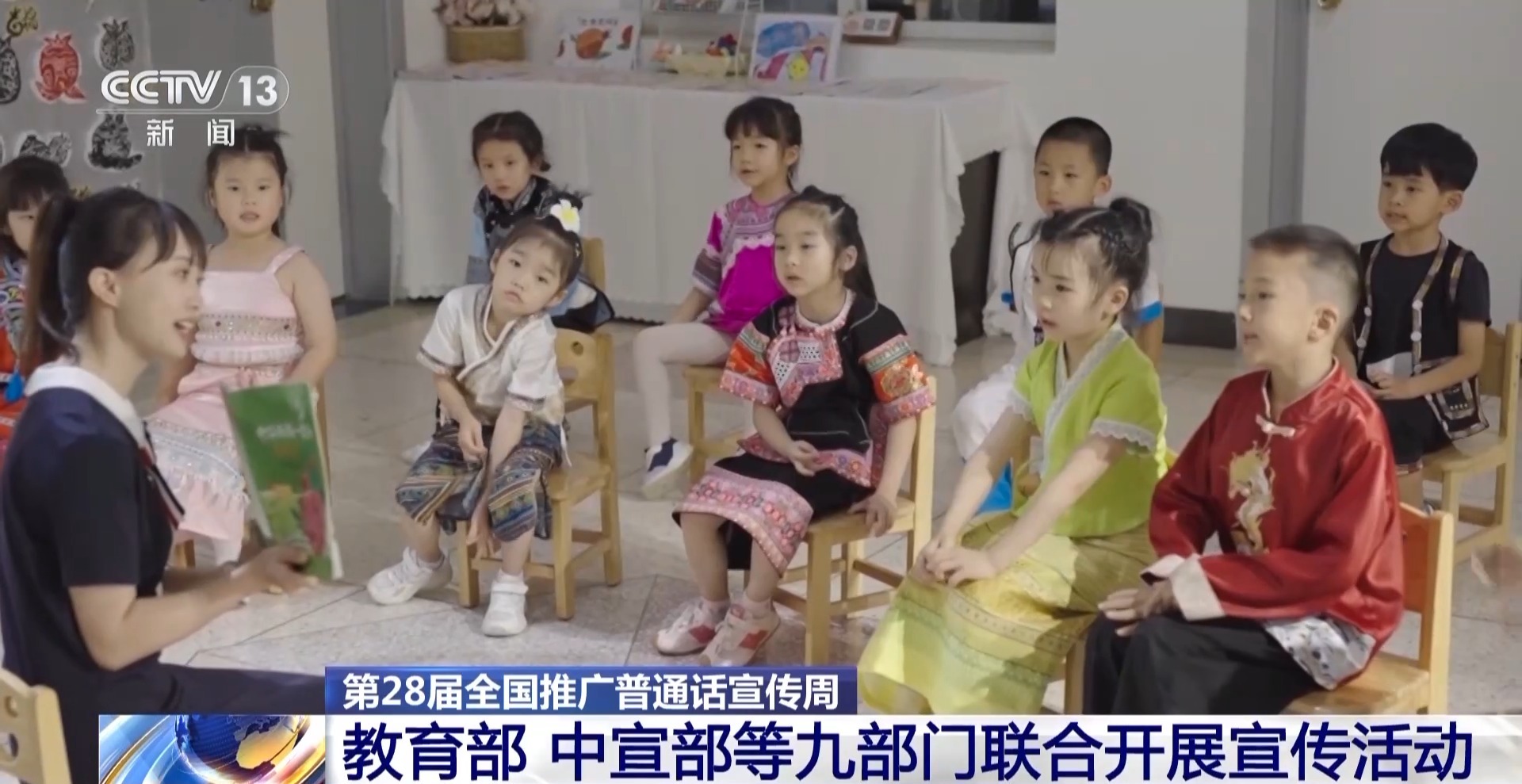
九部门联合开展第28届全国推广普通话宣传周活动
Yang Shi Xin Wen Ke Hu Duan· 2025-09-14 23:45
Group 1 - The 28th National Promotion of Mandarin Week will take place from September 15 to September 21, with the theme "Enhancing the Promotion of the National Common Language and Writing to Strengthen the Awareness of the Chinese National Community" [1] - Key activities organized by the Ministry of Education and the National Language Commission include the "Dian Yao Zhong Hua" themed reading campaign, a competition for reciting and writing classic Chinese literature, and the establishment of the first batch of national model schools for language promotion [1] - The Central Propaganda Department is promoting the achievements of the national common language and writing through central media, while the National Ethnic Affairs Commission is organizing thematic publicity activities to strengthen the awareness of the Chinese national community [3] Group 2 - The Ministry of Human Resources and Social Security is guiding local areas to actively carry out "Mandarin + Vocational Skills" promotional activities [5] - The Ministry of Culture and Tourism is leveraging public libraries, cultural venues, and museums to conduct classic recitation, language exhibitions, and Mandarin-guided services during the promotion week [7] - The Central Military Commission is organizing Mandarin training for new recruits and joint activities with local communities to enhance language education and combat readiness [9] Group 3 - The Communist Youth League is mobilizing youth students to participate in social practice volunteer services to support rural revitalization and promote Mandarin in communities [11]