国法

Search documents
家务事再难断,也有章法可循
Xin Lang Cai Jing· 2026-01-01 23:53
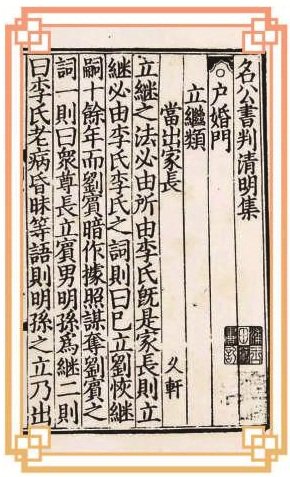
Core Viewpoint - The article discusses a case from the Southern Song Dynasty that highlights the complexities of inheritance disputes among family members, emphasizing the need for judicial officers to balance legal principles with moral considerations in their rulings [2][9]. Summary by Sections Case Background - The case involves a dispute over inheritance between biological sons and an adopted son, showcasing the intricate legal issues surrounding property, inheritance, and familial relationships during the Southern Song period [2][3]. Judicial Process - Judicial officer Hu Ying, known for his integrity and legal acumen, presided over the case, which included various legal topics such as the validity of contracts and the rights of biological sons versus an adopted son [3][4]. - The biological sons, Tan Youji, were disinherited and expelled from their home, while the adopted son, Li Ziqin, inherited all the property, raising questions about the legitimacy of the inheritance [4][5]. Evidence Examination - Hu Ying focused on two main issues: the legal validity of ten contracts submitted by Li Ziqin and whether the biological sons had the right to manage the property during their father's lifetime [5][6]. - The investigation revealed significant flaws in the contracts, including missing signatures and discrepancies in the timing of their execution, leading to doubts about their legal standing [6][7]. Ruling and Reasoning - Hu Ying concluded that the contracts were invalid due to legal violations and that the biological sons had been coerced into signing them, thus rendering the contracts void [6][8]. - The ruling emphasized the importance of familial bonds and moral obligations, ultimately deciding to distribute the property among the biological sons while giving a token share to Li Ziqin due to his long-standing relationship with the deceased [8][9]. Judicial Philosophy - The case illustrates the threefold wisdom of Song Dynasty judicial officers in resolving family disputes: accurately establishing facts, applying laws judiciously, and considering moral implications [9][10]. - Hu Ying's approach serves as a historical reference for contemporary family law, highlighting the need to balance legal norms with emotional and ethical considerations in family disputes [10][12].