国际法和国际惯例

Search documents
国防部:中国海军舰艇编队组织远海训练符合国际法和国际惯例
Yang Shi Wang· 2025-12-05 08:14
Group 1 - The core viewpoint of the article is that the Chinese Navy is conducting long-range training exercises, which are in accordance with international law and norms, and are not directed at any specific country or target [1] Group 2 - The Australian Department of Defense reported monitoring a Chinese naval fleet potentially heading towards Australia [1] - The spokesperson from the Chinese Ministry of Defense confirmed the naval exercises and emphasized their legitimacy under international standards [1]
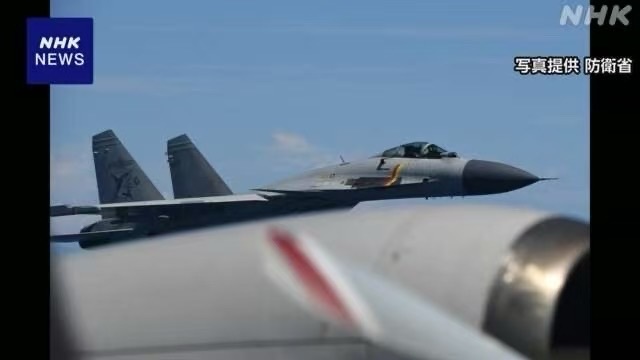
炒作渲染现场画面!日方监视追踪中方舰机,反抱怨山东舰舰载机“异常接近”
Huan Qiu Wang· 2025-06-12 00:32
Group 1 - The Japanese Ministry of Defense expressed serious concerns over the close encounters between Chinese aircraft and Japanese surveillance planes, indicating potential risks of misjudgment and conflict [1][3] - Japanese Self-Defense Forces reported that on July 7 and 8, their P-3C patrol aircraft were closely tracked by Chinese J-15 fighter jets, with distances as close as approximately 45 meters for durations of 40 and 80 minutes respectively [3] - The Chinese Ministry of Defense criticized Japan's close monitoring as dangerous and urged Japan to cease what it termed as unnecessary interference that could harm bilateral relations and regional stability [3][4] Group 2 - Chinese naval operations involving the Liaoning and Shandong aircraft carriers in the Western Pacific are routine training exercises aimed at enhancing defense capabilities, conducted in accordance with international law [3][4] - The Chinese government maintains a defensive military policy and encourages Japan to adopt a more objective and rational perspective regarding China's naval activities [4]