地区紧张局势

Search documents
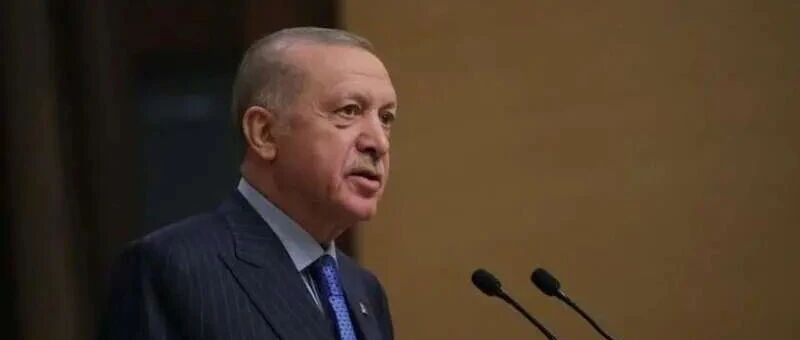
土耳其总统说中东局势已达到“恐怖程度”
21世纪经济报道· 2026-03-06 04:51
Group 1 - The core viewpoint of the article highlights the escalating tensions in the Middle East, described by Turkish President Erdogan as reaching a "terror level" [1] - Turkey is actively engaging in diplomatic efforts to prevent the escalation of bloodshed and to bring the Iranian issue back to the negotiation table [1] - Erdogan emphasized Turkey's commitment to ensuring border and airspace security, stating that necessary measures will be taken in coordination with allies if Turkey's security is at risk [1]

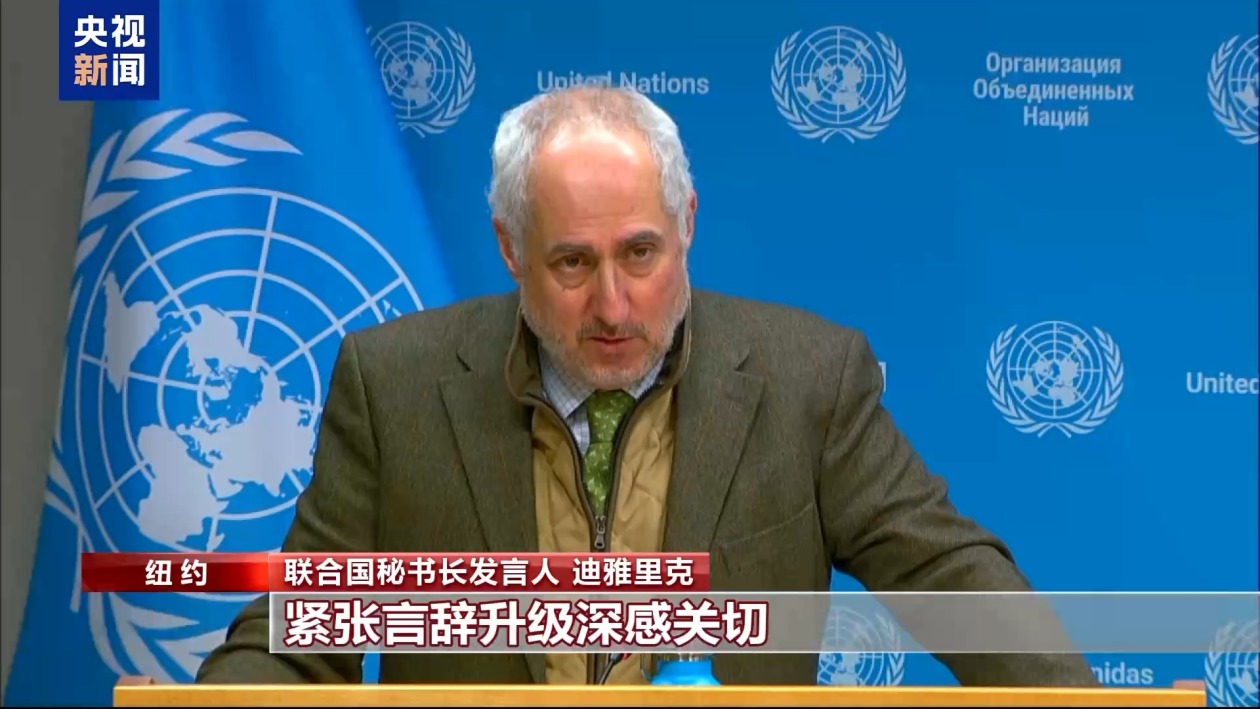
联合国:收到伊朗来信 对地区紧张局势深表关切
Yang Shi Xin Wen Ke Hu Duan· 2026-02-21 01:56
Group 1 - The UN Secretary-General Guterres has expressed serious concern over the escalation of regional tensions following a letter from Iran's permanent representative to the UN [1][4] - The UN spokesperson Dujarric highlighted concerns regarding the increase in military rhetoric, military activities, and naval presence in the region, urging the US and Iran to engage in diplomatic dialogue to resolve their differences [3] - Iran's representative, Ilahvani, stated that Iran would exercise its right to self-defense under Article 51 of the UN Charter if faced with military aggression, indicating that all bases, facilities, and assets of hostile forces in the region would be legitimate targets for Iran's defensive response [4]
伊朗总统与埃及总统通电话 讨论地区紧张局势
Yang Shi Xin Wen· 2026-02-01 05:26
Core Viewpoint - The conversation between Iranian President Raisi and Egyptian President Sisi highlights concerns over escalating regional tensions due to provocative actions by the U.S., emphasizing the need for diplomatic solutions rather than military means [1] Group 1: Regional Stability and Diplomatic Efforts - President Sisi expressed deep concern over the escalating regional tensions caused by U.S. provocations, advocating for diplomatic resolutions to conflicts [1] - Egypt is willing to support any diplomatic initiatives aimed at enhancing regional stability and reducing conflict risks, warning that any escalation would have negative consequences for the entire region [1] Group 2: Iran's Position and Response - President Raisi praised the efforts of Islamic countries to alleviate tensions and reiterated Iran's consistent policy of strengthening relations with neighboring countries and the Islamic world [1] - Raisi emphasized that the recent attempts by the U.S. and Israel to deepen hostility through pressure, sanctions, and incitement of internal unrest in Iran are counterproductive, asserting that war does not serve the interests of any party [1] - He called for "dignified diplomacy" and dialogue in a non-threatening environment to address nuclear issues and other regional hotspots, while warning that any attack on Iranian territory would be met with a decisive response [1] Group 3: Future Communication and Cooperation - Both leaders agreed to maintain close communication and consultation on issues of mutual concern to jointly safeguard regional security and stability [1]
伊朗总统:若美国寻求谈判 就必须停止挑衅
Xin Hua She· 2026-01-29 23:44
Core Viewpoint - Iranian President Ebrahim Raisi emphasized that if the U.S. seeks genuine negotiations and diplomacy, it must cease provocative actions and tensions [1] Group 1: Diplomatic Communications - President Raisi held phone conversations with Qatar's Emir Tamim and Pakistan's Prime Minister Shahbaz to discuss the regional tensions caused by U.S. destabilizing actions [1] - Raisi expressed gratitude for the support from Qatar and Pakistan, highlighting the need for enhanced unity and cooperation among Islamic nations [1] Group 2: Iran's Stance on Diplomacy - Iran supports establishing equal, win-win, and dignified diplomacy based on international law [1] - Raisi stated that Iran has never initiated war and does not welcome conflict, but will firmly defend its nation and people against threats during negotiations [1] Group 3: Support from Regional Allies - Both Emir Tamim and Prime Minister Shahbaz reaffirmed their governments' consistent support for Iran, opposing actions that undermine Iran's security, independence, and territorial integrity [1] - They emphasized the importance of diplomatic efforts to create conditions for political resolutions, warning that any tensions or conflicts could have disastrous consequences for all regional countries [1]
“地区紧张局势持续”,美英针对以色列发布旅行安全警示
Huan Qiu Wang· 2026-01-15 01:56
Group 1 - The UK Foreign Office issued a travel advisory on October 14, urging British citizens to avoid travel to Israel except for "essential travel" due to escalating regional tensions [1] - The advisory highlights that the ongoing risk of regional tensions could lead to travel disruptions and other unpredictable impacts [1] - The US Embassy in Israel also released a new security warning, advising American citizens to "reassess any travel plans" in light of the current tense regional situation [1]
地区紧张局势持续升级!我使馆最新提醒→
Zhong Guo Ji Jin Bao· 2026-01-15 01:48
Group 1 - The core viewpoint of the article highlights the increasing tensions in the region due to the U.S. escalating threats against Iran, prompting the U.S. military to evacuate personnel from the Al Udeid Air Base in Qatar by January 14 [1] - The Chinese Embassy in Qatar has issued a consular reminder for Chinese citizens and enterprises in Qatar to closely monitor news reports and enhance security precautions in light of the ongoing regional tensions [1]
地区紧张局势持续升级!我使馆最新提醒→
中国基金报· 2026-01-15 01:28
Group 1 - The article highlights the increasing tensions in the region due to the U.S. escalating threats against Iran, prompting the U.S. military to evacuate personnel from the Al Udeid Air Base in Qatar by January 14 [2] - The Chinese Embassy in Qatar advises Chinese citizens and enterprises to closely monitor news reports and enhance security measures in light of the ongoing situation [2]

美驻卡塔尔大使馆限制前往乌代德空军基地非必要旅行
Yang Shi Xin Wen· 2026-01-15 00:39
Core Viewpoint - The U.S. Embassy in Qatar maintains normal operations and consular services, while advising staff to remain vigilant and limit non-essential travel to the U.S. military base at Al Udeid due to heightened regional tensions [1] Group 1: U.S. Military Presence - The Al Udeid Air Base, located approximately 35 kilometers southwest of Doha and about 200 kilometers from the Iranian border, hosts around 10,000 U.S. military personnel [1] - It is one of the largest U.S. military bases in the Gulf region, featuring a 4,500-meter runway capable of accommodating large military aircraft such as B-52s, B-2s, and C-17s [1] Group 2: Regional Tensions - The statement from the Qatari International Media Office confirmed that some U.S. personnel at Al Udeid will be withdrawn in response to the current regional tensions [1] - On June 23, 2025, Iran launched a missile attack on the Al Udeid Air Base, firing a total of 19 missiles in two waves as retaliation for U.S. strikes on Iranian nuclear facilities [1]
英媒:英国开始从卡塔尔美军基地撤人
Xin Hua She· 2026-01-14 22:34
Core Viewpoint - The article discusses the withdrawal of some British Air Force personnel from the U.S. Al Udeid Air Base in Qatar amid rising tensions in the region, particularly concerning Iran's internal unrest and potential U.S. military intervention [1]. Group 1: Military Developments - Some British Air Force personnel have begun to withdraw from the Al Udeid Air Base in Qatar, although it is unclear if all personnel will be evacuated [1]. - The U.S. military presence at Al Udeid is significant, as it is the largest military base in the Middle East [1]. Group 2: Regional Tensions - Recent protests in Iran have led to unrest and casualties, prompting U.S. President Trump to threaten military action regarding the situation in Iran [1]. - Iranian political advisor Ali Shamkhani hinted on social media that Iran has the capability to retaliate against the Al Udeid Air Base if the U.S. attacks Iran [1]. Group 3: Historical Context - The article references a past incident in June 2025, where a military conflict initiated by an Israeli strike on Iran led to U.S. bombings of Iranian nuclear facilities, and Iran's subsequent missile strikes on the Al Udeid Air Base [1].
卡塔尔证实美军从乌代德空军基地撤人
财联社· 2026-01-14 17:08
Core Viewpoint - The article discusses the withdrawal of some U.S. military personnel from the Al Udeid Air Base in Qatar due to the current regional tensions, emphasizing Qatar's commitment to ensuring the safety of its citizens and critical infrastructure [1]. Group 1: Military Presence and Strategic Importance - The Al Udeid Air Base, located approximately 35 kilometers southwest of Doha and about 200 kilometers from the Iranian border, is home to around 10,000 U.S. troops, making it one of the largest U.S. military bases in the Gulf region [1]. - The base features a 4,500-meter runway capable of accommodating large military aircraft such as B-52s, B-2s, and C-17s [1]. Group 2: Regional Tensions and Responses - The statement from the Qatari International Media Office indicates that the withdrawal of U.S. personnel is a response to the escalating regional tensions [1]. - On June 23, 2025, Iran launched a missile attack on the Al Udeid Air Base in retaliation for U.S. strikes on Iranian nuclear facilities, firing a total of 19 missiles in two waves [1].