地照

Search documents
年度最小残月现身夜空,那一抹浅浅的清辉你看到了吗?
Xin Hua She· 2026-01-15 09:11
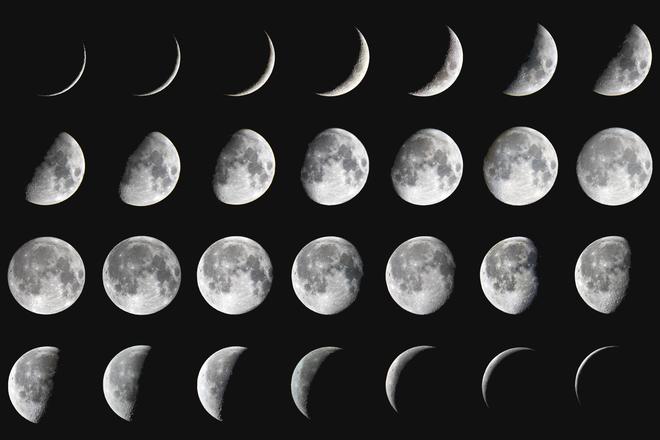
Core Viewpoint - The article highlights the appearance of the smallest waning crescent moon on January 15, 2026, which is a significant astronomical event that captivates observers with its beauty and symbolism [1][3]. Group 1: Astronomical Event Description - The waning crescent moon is observed just before dawn, marking the end of a lunar cycle, with an average change period of 29.53 days [3]. - On January 15, the crescent moon appeared with its illuminated part facing east, resembling a "C" shape, and was accompanied by the bright star Antares in the Scorpius constellation [3][4]. - The visual effect of the crescent moon alongside Antares created a romantic scene, described as a "star-moon dialogue," with a distance of only three full moons between them [3][4]. Group 2: Observations by Enthusiasts - Astronomy enthusiasts, such as Wang Junfeng and Zhang Xiaochuan, documented the event, expressing the emotional and aesthetic impact of the crescent moon against the winter sky [4][6]. - Observers noted the beauty of the crescent moon, describing it as a delicate silver hook that added a sense of tranquility to the winter morning [4][6]. Group 3: Upcoming Lunar Phases - The article mentions that the next lunar phase, the "gibbous moon," will follow shortly after the waning crescent, contrasting with its appearance by being visible in the evening sky with its illuminated part facing west [7].

抬头看!26日将迎年度最小蛾眉月
Xin Hua She· 2025-09-24 06:21
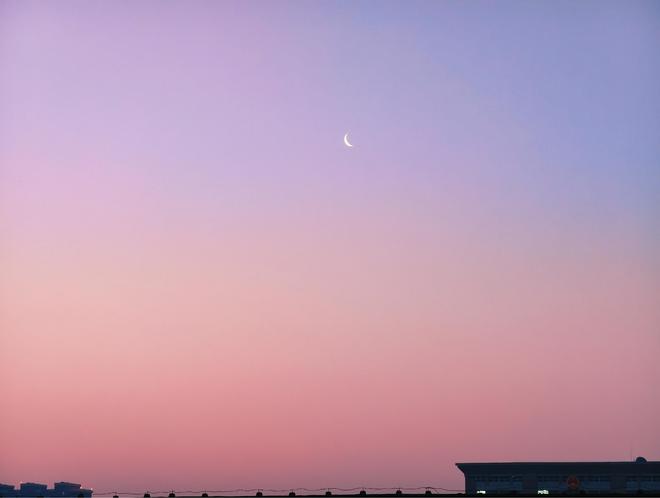
Core Points - The article discusses the occurrence of the "smallest crescent moon" on September 26, 2023, and provides details on how to observe it [1][5] - The crescent moon appears twice in each lunar month, once between the new moon and the first quarter, and again between the last quarter and the new moon [2] - The term "smallest crescent moon" refers to the crescent moon's appearance when the moon is at its apogee, resulting in a smaller visual diameter [2] Summary by Sections - **Crescent Moon Appearance** - The crescent moon appears in a thin arc shape, resembling a woman's eyebrow, with opposite orientations during its two occurrences in a lunar month [2] - **Lunar Distance and Size** - The moon's orbit around the Earth is elliptical, varying in distance from over 400,000 kilometers at apogee to less than 360,000 kilometers at perigee, a difference of about 50,000 kilometers [2] - The smallest crescent moon occurs when the moon is near apogee, while the largest occurs near perigee [2] - **Observation Recommendations** - For optimal viewing, the public is advised to look southwest during sunset on September 25 and 26, as the crescent moon will appear like a reversed letter "C" [5] - **Moonlight Reflection** - The bright part of the moon is sunlight reflected, while the dim part is illuminated by sunlight reflected from the Earth, a phenomenon known as "earthshine" or "new moon holding the old moon" [6]