
月相

Search documents
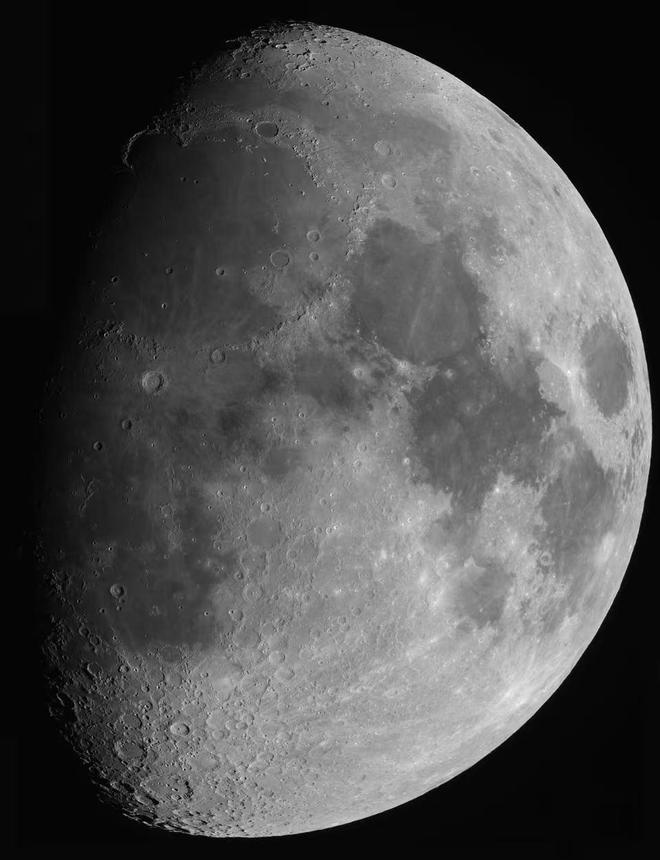
等你来赏!本年度最大盈凸月29日现身夜空
Xin Hua She· 2026-01-27 06:32
Core Viewpoint - The article discusses the upcoming largest gibbous moon of the year on January 29, highlighting its visibility and characteristics during this lunar phase [1][2]. Group 1: Lunar Phases - The gibbous moon is a transitional phase between the first quarter and full moon, typically occurring between the ninth and fourteenth day of the lunar month [1]. - The lunar phases are categorized into eight stages: new moon, crescent moon, first quarter, gibbous moon, full moon, waning gibbous, last quarter, and crescent moon [4]. Group 2: Observational Details - The gibbous moon rises before sunset and sets before sunrise, making it observable for a significant portion of the night [2]. - The largest gibbous moon occurs when the moon is near its perigee, resulting in a larger apparent diameter [2]. Group 3: Coincidental Patterns - In December 2025, there were occurrences of the second largest full moon, the smallest waning crescent, and the largest gibbous moon, which was noted to repeat in January 2026 [2][4]. - The occurrence of these lunar events is attributed to various factors including the lunar phase cycle, the area reflecting sunlight, and the moon's orbital eccentricity and speed [4].

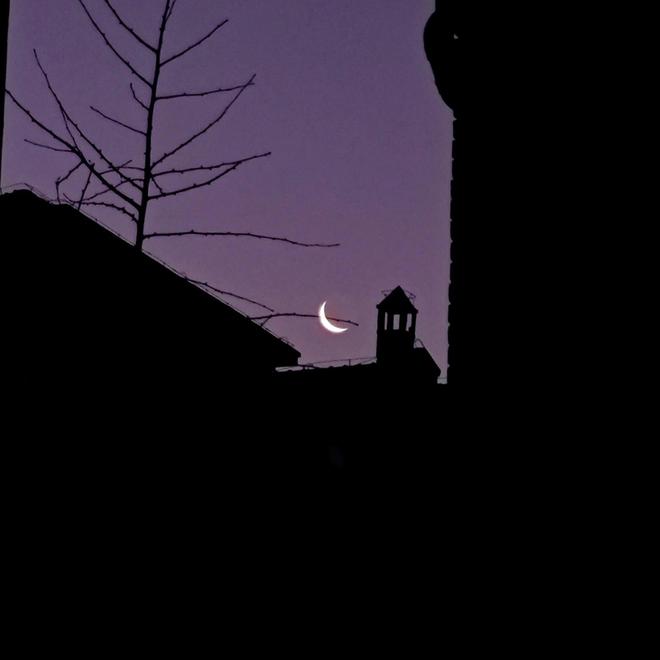
年度最小残月现身夜空,那一抹浅浅的清辉你看到了吗?
Xin Hua She· 2026-01-15 09:11
Core Viewpoint - The article highlights the appearance of the smallest waning crescent moon on January 15, 2026, which is a significant astronomical event that captivates observers with its beauty and symbolism [1][3]. Group 1: Astronomical Event Description - The waning crescent moon is observed just before dawn, marking the end of a lunar cycle, with an average change period of 29.53 days [3]. - On January 15, the crescent moon appeared with its illuminated part facing east, resembling a "C" shape, and was accompanied by the bright star Antares in the Scorpius constellation [3][4]. - The visual effect of the crescent moon alongside Antares created a romantic scene, described as a "star-moon dialogue," with a distance of only three full moons between them [3][4]. Group 2: Observations by Enthusiasts - Astronomy enthusiasts, such as Wang Junfeng and Zhang Xiaochuan, documented the event, expressing the emotional and aesthetic impact of the crescent moon against the winter sky [4][6]. - Observers noted the beauty of the crescent moon, describing it as a delicate silver hook that added a sense of tranquility to the winter morning [4][6]. Group 3: Upcoming Lunar Phases - The article mentions that the next lunar phase, the "gibbous moon," will follow shortly after the waning crescent, contrasting with its appearance by being visible in the evening sky with its illuminated part facing west [7].
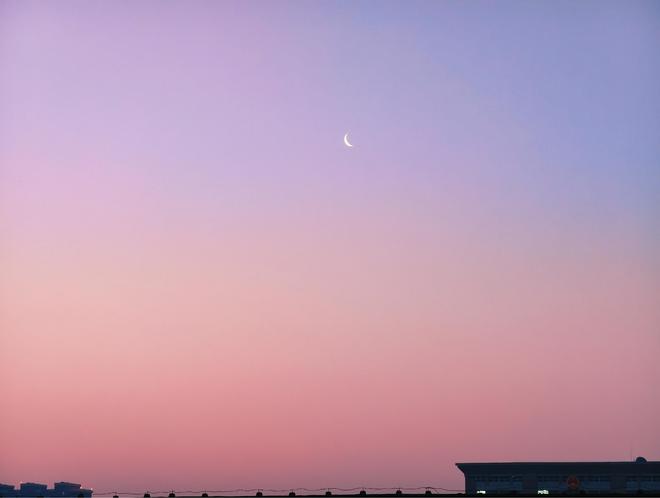
抬头看!15日凌晨将迎本年度最小残月
Xin Hua She· 2026-01-13 08:30
Group 1 - The smallest waning crescent moon of the year will occur on January 15, with the best viewing time being before dawn if the weather is clear [1] - The moon's phases, including the waning crescent, follow a cycle of approximately 29.53 days, transitioning from full moon to waning phases [1][2] - The term "annual smallest waning crescent" refers to the moon being at its farthest point from Earth, resulting in a smaller apparent size compared to other months [2] Group 2 - The public is encouraged to photograph the smallest waning crescent and compare it with the largest waning crescent later in the year for an interesting visual contrast [5] - Despite the differences in size, the visual distinction between the smallest and largest waning crescents may not be significant to the naked eye [5]
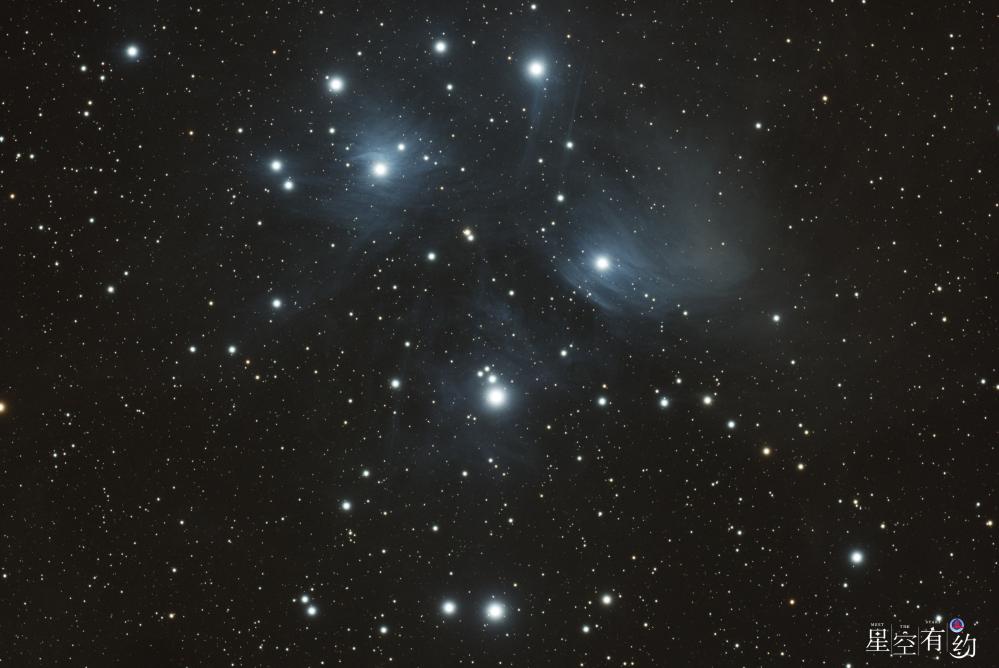
星空有约丨天象大戏“月掩昴星团”陪你跨年
Xin Hua Wang· 2025-12-29 10:00
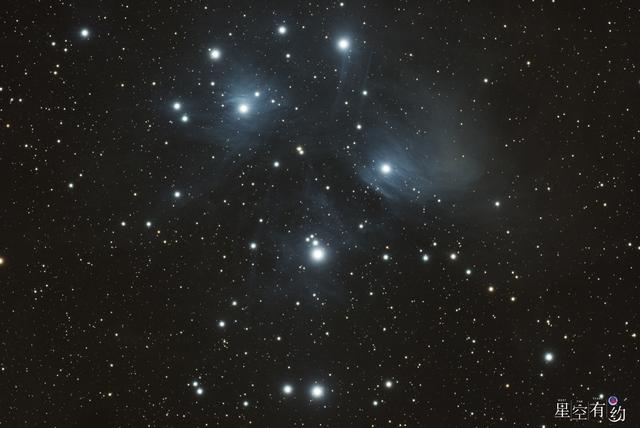
Core Viewpoint - The article discusses the astronomical event of the moon covering the Pleiades star cluster on December 31, 2025, which will be visible across China as a unique way to celebrate the New Year [1][6]. Group 1: Event Details - The Pleiades star cluster, located in Taurus, has an overall brightness of approximately 1.6 magnitude, making it easily visible to the naked eye and a favorite among astronomy enthusiasts [2]. - The moon will pass in front of the Pleiades star cluster, temporarily obscuring some of its stars, with this phenomenon occurring between 21:00 and 22:00 on December 31 [6][7]. - The moon phase on December 31 will be a gibbous moon, which means it will be bright enough to obscure the stars of the Pleiades, making it advisable for observers to use telescopes or binoculars for better visibility [7]. Group 2: Observational Conditions - There are four opportunities in 2025 to observe the moon covering the Pleiades, with the best conditions occurring on March 5 and August 16, when the moon is less bright [6]. - The brightness of the moon significantly affects the visibility of the Pleiades, with a fuller moon providing more light that can obscure the stars [6]. - For optimal viewing, it is recommended to find locations with minimal light pollution, such as rural areas, to enhance the experience of this celestial event [7].
星空有约|天象大戏“月掩昴星团”陪你跨年
Xin Lang Cai Jing· 2025-12-29 09:58
Core Points - The article discusses the astronomical event of the Moon covering the Pleiades star cluster on December 31, 2025, which will be visible to the public as a unique way to celebrate the New Year [1][10]. Group 1: Event Details - The Moon will pass in front of the Pleiades star cluster, temporarily obscuring some of its stars, creating a phenomenon known as lunar occultation [5]. - This event will occur between 21:00 and 22:00, and it will be visible nationwide in China [7]. - The lunar phase on this date will be a waxing gibbous moon, which may affect visibility due to its brightness [7]. Group 2: Observational Recommendations - To enhance the viewing experience, it is recommended to use small telescopes or binoculars, especially in areas with low light pollution [7]. - The article suggests that the best times for observing the Pleiades during the year include four specific dates, with the March 5 event having the smallest moon phase, making it less impactful on visibility [5].
星空有约|天象大戏“月掩昴星团”陪你跨年
Xin Hua She· 2025-12-29 09:30
Core Viewpoint - The article discusses the astronomical event of the Moon covering the Pleiades star cluster on December 31, 2025, which will be visible across China, providing a unique opportunity for public observation and appreciation of celestial phenomena [1][2]. Group 1: Event Details - The Moon will cover the Pleiades star cluster, an event that occurs when the Moon passes in front of the cluster, temporarily obscuring some of its stars [1]. - This event is part of a series of four occurrences in 2025, with the other dates being March 5, August 16, and November 6 [1]. - The visibility of the Pleiades will be affected by the Moon's phase, with the best viewing conditions occurring when the Moon is less bright [1]. Group 2: Observation Recommendations - On December 31, the Moon will be in the waxing gibbous phase, which may hinder visibility due to its brightness [2]. - Observers are advised to use small telescopes or binoculars for better viewing and to find locations with minimal light pollution, such as rural areas [2]. - The event is expected to take place between 21:00 and 22:00, making it accessible for nationwide observation [2].
年度最小蛾眉月来了!什么时候观赏效果最佳?
Yang Shi Xin Wen· 2025-09-25 21:33
Group 1 - The "Annual Small Crescent Moon" occurs when the moon is in the crescent phase and simultaneously at its apogee, resulting in a smaller visual diameter [3][7] - The average lunar phase cycle is approximately 29.5306 days, with the moon's appearance changing based on the relative positions of the sun, earth, and moon [5] - The distance of the moon from the earth varies, reaching over 400,000 kilometers at its farthest and less than 360,000 kilometers at its closest, creating a difference of about 50,000 kilometers [7] Group 2 - The smallest crescent moon of the year is observed on September 26, while the largest occurs on April 1 [9] - Optimal viewing times for the crescent moon are on the evenings of September 25 and 26, shortly after sunset and before moonset, particularly in the southwestern direction [10][12]
抬头看!26日将迎年度最小蛾眉月
Xin Hua She· 2025-09-24 06:21
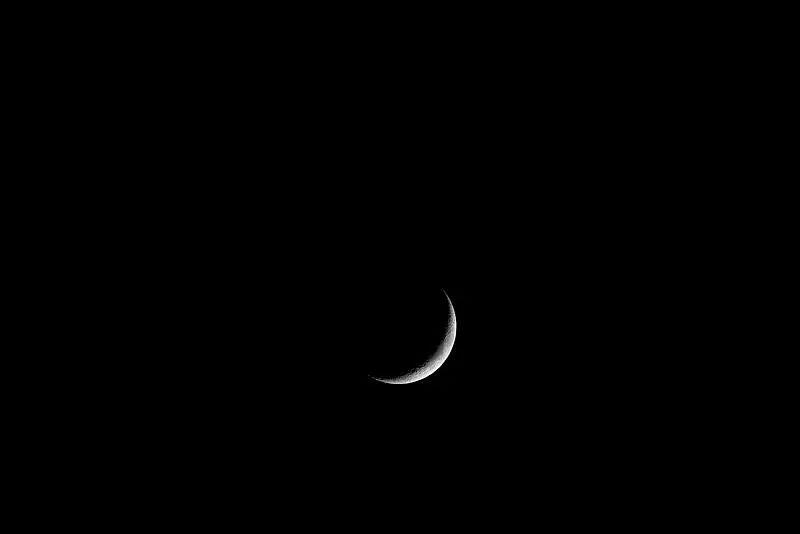
Core Points - The article discusses the occurrence of the "smallest crescent moon" on September 26, 2023, and provides details on how to observe it [1][5] - The crescent moon appears twice in each lunar month, once between the new moon and the first quarter, and again between the last quarter and the new moon [2] - The term "smallest crescent moon" refers to the crescent moon's appearance when the moon is at its apogee, resulting in a smaller visual diameter [2] Summary by Sections - **Crescent Moon Appearance** - The crescent moon appears in a thin arc shape, resembling a woman's eyebrow, with opposite orientations during its two occurrences in a lunar month [2] - **Lunar Distance and Size** - The moon's orbit around the Earth is elliptical, varying in distance from over 400,000 kilometers at apogee to less than 360,000 kilometers at perigee, a difference of about 50,000 kilometers [2] - The smallest crescent moon occurs when the moon is near apogee, while the largest occurs near perigee [2] - **Observation Recommendations** - For optimal viewing, the public is advised to look southwest during sunset on September 25 and 26, as the crescent moon will appear like a reversed letter "C" [5] - **Moonlight Reflection** - The bright part of the moon is sunlight reflected, while the dim part is illuminated by sunlight reflected from the Earth, a phenomenon known as "earthshine" or "new moon holding the old moon" [6]
年度最小上弦月和最大下弦月为啥总“挨着来”?
Xin Hua She· 2025-08-15 10:02
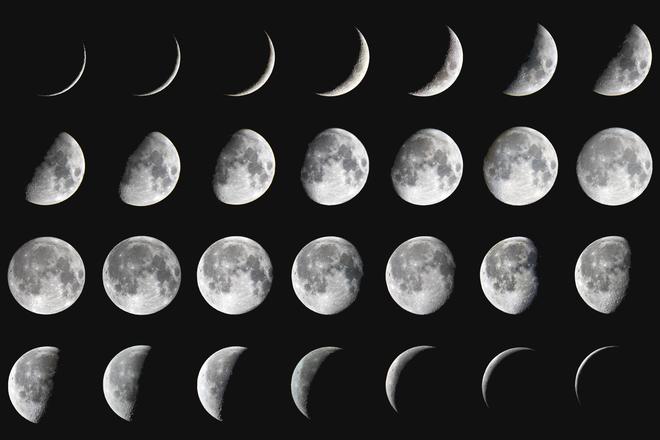
Core Viewpoint - The largest waning crescent moon of the year will occur on August 16, with the moon positioned near its perigee, approximately 370,000 kilometers from Earth [1][4]. Group 1: Moon Phases - The waning crescent moon appears as a half-moon shape and will be visible in the night sky after midnight on August 16, resembling a reversed "D" [1][7]. - The phenomenon of moon phases, including the waning crescent, is influenced by the relative positions of the sun, Earth, and moon [4][7]. Group 2: Size Comparison - The upcoming waning crescent moon is considered the "largest of the year" because it is near the perigee, making it appear larger than the smallest waning crescent moon of the year, which is about 9.2% smaller in visual diameter [7][11]. - The moon's elliptical orbit causes variations in distance from Earth, leading to the largest and smallest appearances of the waning crescent moon [7][11]. Group 3: Observation Tips - To observe the largest waning crescent moon, it is recommended to wake up early before dawn, as it rises in the late night and is best viewed before sunrise [14].
呈“D”形!年度最小上弦月8月1日现身夜空
Xin Hua She· 2025-07-30 09:26
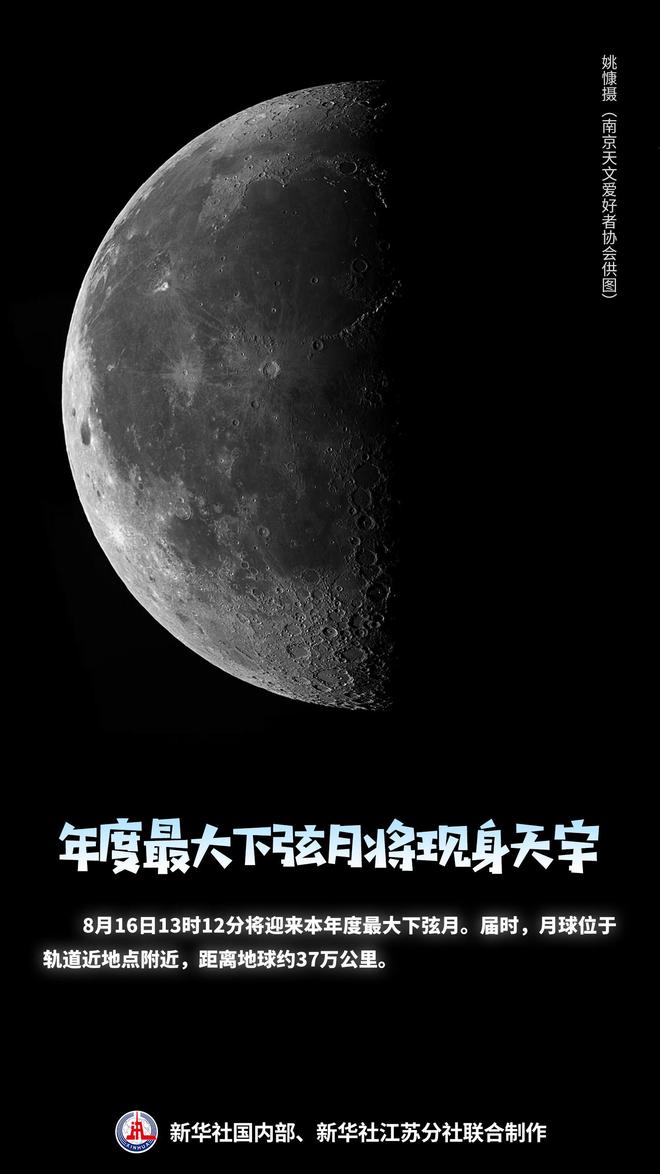
Core Viewpoint - The article discusses the occurrence of the smallest first quarter moon of the year on August 1, 2023, and provides insights into lunar phases and their significance in astronomy and culture [1][2]. Group 1: Lunar Phases - The first quarter moon appears between the 7th and 10th day of the lunar month, visible in the southwestern sky with a "D" shape [2]. - The article distinguishes between the first quarter moon and the last quarter moon, the latter appearing between the 22nd and 24th day of the lunar month, visible in the eastern sky with an inverted "D" shape [2]. Group 2: Moon's Distance and Characteristics - The moon's orbit around the Earth is elliptical, with distances varying from over 400,000 kilometers at apogee to less than 360,000 kilometers at perigee, a difference of about 50,000 kilometers [4]. - The smallest first quarter moon occurs when the moon is at its farthest point from Earth, while the largest first quarter moon occurs at its closest point [4]. Group 3: Future Lunar Events - In 2025, there will be 13 occurrences of the first quarter moon and 12 occurrences of the last quarter moon [2]. - The largest first quarter moon of the year will occur on January 7, 2025, while the smallest last quarter moon will appear on January 22, 2025 [7].