城市信用治理创新

Search documents
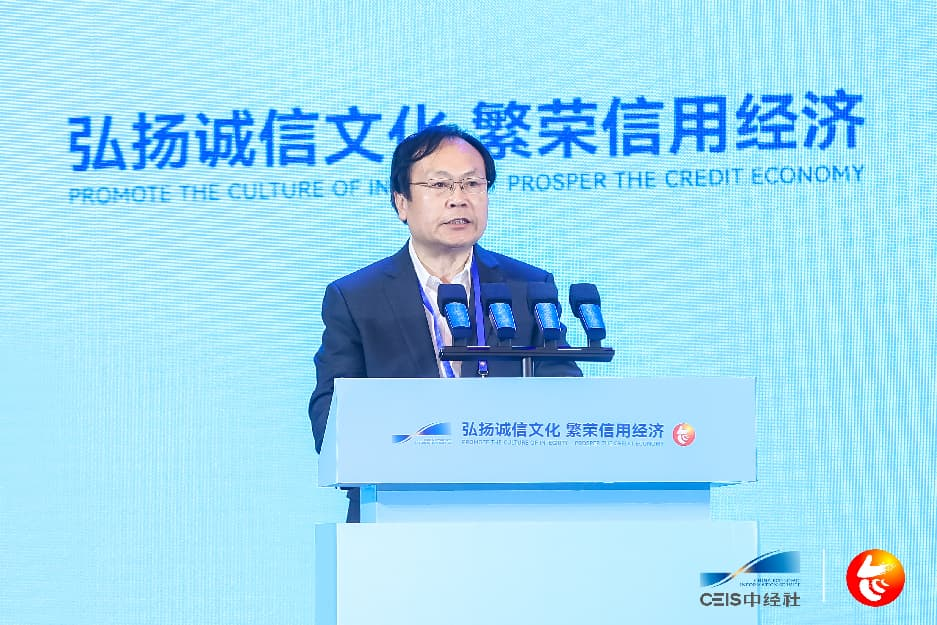
薛方:城市信用治理创新的三重维度 ——制度化、资本化和人的现代化
Xin Hua Cai Jing· 2025-12-17 03:17
Core Viewpoint - The China Urban Credit Construction Summit held from December 12 to 14 in Taizhou, Zhejiang Province, introduced a governance framework of "institutionalization, capitalization, and modernization of people" for urban credit system development in the context of Chinese-style modernization [1][3]. Group 1: Credit System Development - China's social credit system has evolved over 26 years, starting from information construction to forming a national credit information sharing platform, recognized as a foundational market economy system in the 20th National Congress report [3]. - The 14th Five-Year Plan emphasizes the equal importance of integrity construction and legal system building, focusing on developing new productive forces and establishing a unified national market [3]. Group 2: Governance Innovation - The proposed governance path addresses new challenges in the digital era, such as "credit white households," "sleeping credit assets," and "credit gaps," facilitating the modernization of cities with Chinese characteristics [3][4]. - Institutionalization focuses on legal frameworks to promote integrity values, enhance mechanisms for joint punishment, credit restoration, and supervision, preventing credit misuse [4]. Group 3: Capitalization and Economic Applications - The capitalization aspect aims to define and strengthen the value of credit as "trust capital, social capital, reputation capital, and future capital," expanding credit economic applications like "credit loans," "credit healthcare," and "pay after use" [4]. - The concept of "credit as wealth" is promoted to benefit enterprises and the public, positioning credit as a "hard currency" in the market economy [4]. Group 4: Modernization of People - The modernization of people focuses on groups such as 300 million new citizens, farmers, and small and medium enterprises, promoting digital, ecological, and inclusive credit systems to address the "credit white household" issue [4]. - It aims to fill gaps in credit services across various sectors, including agriculture, employment, marriage, food safety, elderly care, and e-commerce [4]. Group 5: Innovative Practices and Outcomes - Several innovative practices have been implemented, such as Zhejiang's "Qinghe Station" providing job-seeking accommodation for students, Shenzhen's establishment of the first "credit economy experimental zone," and Wuhan's carbon points exchange for mortgage policies [5]. - These initiatives leverage "credit + livelihood," "credit + digital," and "credit + ecology" models to enhance public services and grassroots governance modernization [5]. Group 6: Summit Objectives - The China Urban Credit Construction Summit serves as a high-level exchange platform for social credit system development, aiming to foster dialogue, build consensus, and promote practical applications in credit construction [5].