城市商业银行发展

Search documents
30年,突破60万亿!
中国基金报· 2025-11-17 15:09
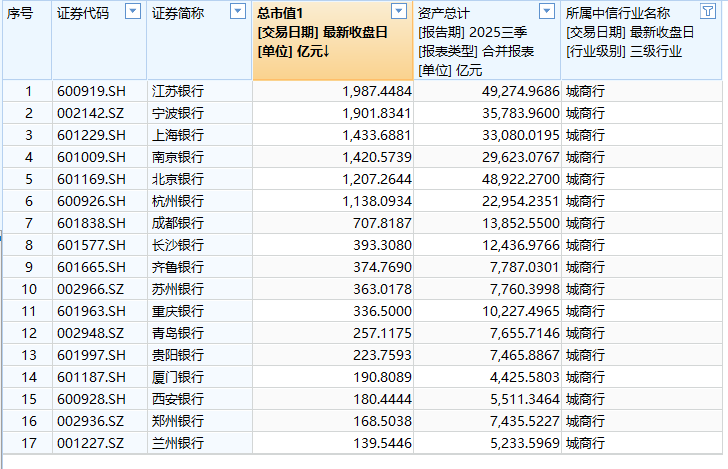
Core Viewpoint - The asset scale of urban commercial banks in China has surpassed 60 trillion yuan, marking significant growth over the past 30 years, with a 134-fold increase since 1995, and now accounting for 13.53% of the total assets of banking financial institutions [2][4]. Development of Urban Commercial Banks - Urban commercial banks have evolved into a crucial part of China's multi-tiered financial system since their establishment in 1995, with a focus on serving urban residents, small and medium-sized enterprises, and local economies [4]. - Key financial indicators for urban commercial banks show stable profitability, improved asset quality, a non-performing loan rate of 1.76%, a provision coverage ratio of 188.08%, and a capital adequacy ratio of 12.97% as of the end of 2024 [4]. Market Position and Performance - As of 2024, there are 12 urban commercial banks with asset scales exceeding 1 trillion yuan, and 5 of these banks are classified as systemically important banks in China [4]. - The market share of urban commercial banks has increased by 8.24 percentage points over the years, reflecting their growing significance in the banking sector [4]. Financial Resource Allocation - Urban commercial banks have strategically focused on high-quality development areas and sectors that align with their capabilities, continuously exploring differentiated and specialized development paths [5]. Market Capitalization of Listed Banks - Among the 17 urban commercial banks listed on the A-share market, Jiangsu Bank, Ningbo Bank, and Shanghai Bank have the highest market capitalizations, with Jiangsu Bank nearing 200 billion yuan and Ningbo Bank at 190.2 billion yuan [7][8].








30年,突破60万亿!
Zhong Guo Ji Jin Bao· 2025-11-17 14:02
Core Insights - The asset scale of urban commercial banks in China has surpassed 60 trillion yuan, reaching 60.15 trillion yuan by the end of 2024, marking a 134-fold increase since 1995 and accounting for 13.53% of the total assets of banking financial institutions [1][2] Development of Urban Commercial Banks - Urban commercial banks have evolved over 30 years, becoming a crucial part of China's multi-tiered financial system, with stable profitability and improving asset quality [2] - Key financial metrics include a non-performing loan ratio of 1.76%, a provision coverage ratio of 188.08%, and a capital adequacy ratio of 12.97% [2] - There are 12 urban commercial banks with assets exceeding 1 trillion yuan, and 5 of them are classified as systemically important banks [2] Market Position and Performance - Among the 17 urban commercial banks listed on the A-share market, Jiangsu Bank, Ningbo Bank, and Shanghai Bank have the highest market capitalizations, with Jiangsu Bank nearing 200 billion yuan [4][5] - Jiangsu Bank and Beijing Bank both have asset scales of approximately 4.9 trillion yuan, while Ningbo Bank and Shanghai Bank exceed 3 trillion yuan [4][5] Strategic Focus - Urban commercial banks have focused on serving urban and rural residents, small and medium-sized enterprises, and local economies, enhancing their service channels and offering diverse financial products [2][3] - They have aligned their financial resources with high-quality development strategies and key sectors, exploring differentiated and specialized development paths [3]