城市存量发展

Search documents
从一座园到一座城:成都破局“存量之困”激发城市发展新动能
Mei Ri Jing Ji Xin Wen· 2025-11-24 13:38
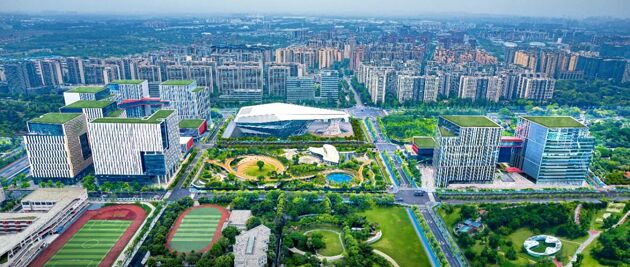
Core Insights - The article emphasizes the transition of urbanization in China from rapid growth to stable development, focusing on enhancing existing urban spaces rather than expanding them [2] - It highlights the need for cities to adapt to a new development logic that prioritizes quality over quantity, particularly in the context of land use and urban governance [2] Group 1: Urban Development Strategy - The 2025 Central Urban Work Conference indicates a shift in urban development from large-scale expansion to improving existing urban quality and governance efficiency [2] - The Sichuan Provincial Urban Work Conference has set a direction for developing a "park city" with unique characteristics, emphasizing quality of life and urban renewal [2][3] Group 2: Real Estate Market Measures - Qingyang District has introduced measures to promote healthy development in the real estate market, focusing on family needs and ensuring a positive market cycle through initiatives like educational guarantees and rental subsidies [3][5] - The new policies aim to alleviate concerns for families, such as providing educational access upon purchasing a home, which has increased inquiries from potential buyers [6][5] Group 3: Land Use and Urban Planning - The auction of four plots of state-owned land in Qingyang marks a significant step in urban planning, with a focus on integrated development of commercial, residential, and public service functions [7][9] - The approach of "combined land transfer" allows for a more cohesive urban function, moving away from fragmented development to a more unified urban structure [9][12] Group 4: Industrial Integration and Innovation - Qingyang is redefining industrial space organization by integrating industries with urban living, particularly in the Qingyang Aviation New City, which supports high-tech industries within limited land resources [13][15] - The area has attracted 265 aviation-related enterprises, contributing significantly to the local economy and demonstrating the effectiveness of vertical industrial models [15][17] Group 5: Future Urban Development Paradigm - Qingyang's strategy represents a new urban development paradigm that does not rely on new land but instead focuses on policy guidance, land restructuring, and optimized industrial layout [17] - This approach addresses the challenges of urban growth in the context of limited land availability and aims to enhance living quality while fostering industrial development [17]