基金投资长期化

Search documents
基金实时估值叫停 灰色工具售卖暗流涌动 谁在贩卖投资焦虑?
Nan Fang Du Shi Bao· 2026-02-12 23:13
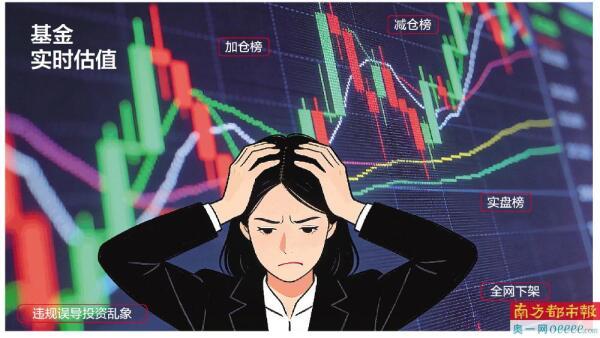
Core Viewpoint - The China Securities Regulatory Commission (CSRC) has issued a notice mandating the removal of real-time fund valuation tools and related features from major platforms, aiming to rectify misleading practices in the fund industry and promote long-term investment strategies [2][6][16] Regulatory Actions - The CSRC's notice on January 29 clearly delineated compliance boundaries for fund sales, requiring the removal of features like "real-time valuation," "buying list," and "real trading list" from sales platforms and third-party networks [2][3] - Major platforms, including Ant Wealth, JD Finance, and Tencent Licai, swiftly complied by removing these functionalities, indicating a rapid and extensive industry response to regulatory demands [3][4] Market Reactions - The removal of real-time valuation tools has sparked significant discussion among investors on social media, with many expressing confusion and concern over how to assess fund performance without these tools [4][5] - Some experienced investors feel the loss of a critical market sentiment observation tool, while novice investors are particularly perplexed by the difference between "valuation" and "net value" [5][6] Expert Insights - Experts suggest that the regulatory crackdown aims to correct the distorted investment ecosystem characterized by short-term speculation and to guide investors back to the fundamental nature of fund investments [6][7] - Real-time valuations are based on outdated quarterly reports and do not reflect the dynamic adjustments made by fund managers, leading to potential misinterpretations and investment risks [7][8] Investment Risks - The average deviation between real-time valuations and actual net values can reach 0.8%, with extreme cases exceeding 3%, posing significant risks for investors who rely on these estimates for decision-making [7][8] - Investors using real-time valuations for trading decisions may incur losses due to discrepancies between estimated and actual net values, highlighting the dangers of short-term trading strategies in a long-term investment context [8][14] Gray Market Developments - Despite the regulatory actions, a gray market for real-time valuation tools has emerged on social media platforms, where users seek alternative, often unregulated, solutions to fulfill their information needs [9][10] - Platforms like Xiaohongshu have become hotspots for the sale of these tools, with users being directed to private groups for access to unofficial valuation services [10][12] Underlying Investor Psychology - The persistence of gray market demand reflects deep-seated investor anxieties about information asymmetry and a desire for control over their investments, often leading to reliance on unofficial data sources [12][13] - Many investors have developed a habit of monitoring real-time data, which has become their primary method for evaluating fund performance, despite the risks associated with such practices [13][14] Recommendations for Investors - Experts recommend that investors shift their focus from short-term data to long-term evaluation metrics, emphasizing the importance of understanding fund performance through comprehensive analysis rather than relying on real-time valuations [16] - Suggested strategies include focusing on risk-adjusted returns, maximum drawdown recovery capabilities, and long-term excess returns against benchmarks to better assess fund managers' performance [16]