复工复产安全

Search documents
复工复产关键期,注意→
Xin Lang Cai Jing· 2026-02-27 10:13
Group 1 - The article emphasizes the importance of fire safety management in factories, particularly during the dry spring season, highlighting that labor-intensive enterprises, petrochemical companies, and warehouses are at higher risk [1][2] - Labor-intensive enterprises such as textile, toy, food, and daily necessities industries are noted for their vulnerabilities due to the presence of flammable materials and inadequate fire safety facilities [1] - Petrochemical companies are characterized by complex production processes and the use of flammable and toxic materials, making them particularly hazardous [1] Group 2 - Warehouses are identified as high-risk areas due to the concentration of materials, high fire loads, and insufficient fire safety equipment, which can lead to significant economic losses in the event of a fire [2] - As companies resume operations, it is crucial to implement safety measures tailored to their specific circumstances to ensure safe production [2] - The article suggests that companies should develop post-holiday safety plans and emergency response strategies, along with conducting safety drills [10][49]

节后复工复产安全提示,请查收!
Xin Lang Cai Jing· 2026-02-23 02:13
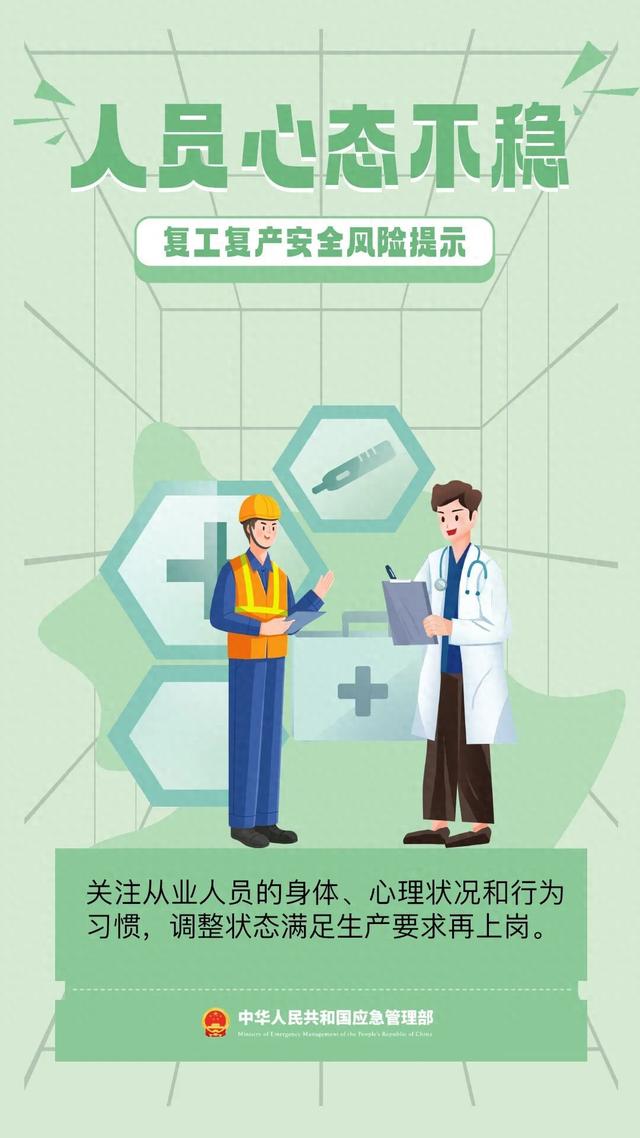
Core Viewpoint - The article emphasizes the importance of safety measures during the post-holiday resumption of work and production, highlighting the increased risks of accidents due to equipment checks, employee mindset, and the pressure to meet production deadlines. Group 1: Company Responsibilities - Companies should develop comprehensive resumption plans and emergency response plans, including conducting emergency drills [1] - A thorough inspection, testing, maintenance, and cleaning of all machinery, vehicles, pipelines, and equipment must be conducted to ensure safe operation [1] - Companies are required to implement safety education for all employees, particularly new and transferred staff, and provide psychological support to help employees adjust [1] - Strict on-site management is necessary, prohibiting production or construction beyond capacity, and ensuring compliance with special operation approval systems [1] Group 2: Employee Responsibilities - Employees should promptly adjust their mental and physical states to transition from holiday mode to work mode [2] - Participation in safety training and emergency drills organized by the company is essential to familiarize themselves with job risks and emergency measures [2] - Employees must adhere strictly to operational procedures, avoiding any violations or risky operations [2] - Any equipment malfunctions, environmental anomalies, or other safety hazards should be reported immediately to management without attempting to handle them independently [2] Group 3: Safety Risk Awareness - Companies must be vigilant about safety risks during the resumption of work and production, tailoring safety prevention measures to their specific circumstances [3] - The article provides a safety reminder for companies to be aware of potential risks and to implement necessary safety measures [3] Group 4: "Six Essentials" for Resumption - Companies should hold a safety production meeting led by top management to arrange safety work for resumption [18] - The resumption plan should include arrangements for resumption, training, safety inspections, and emergency response [19] - Safety education and training should be reinforced to enhance employees' safety responsibilities and emergency response capabilities [20] - Focus on safety risks, precautions, and emergency measures during training, especially for new and transferred employees, ensuring that training is mandatory for all [22] - Companies must develop emergency response plans based on potential safety incidents and conduct emergency drills [23] - A comprehensive safety check should be conducted before resumption, assessing personnel readiness, training, and emergency preparedness [24]