夏文化

Search documents
中国首次全景式展示华夏第一王朝文化脉络
Xin Lang Cai Jing· 2026-02-08 10:18
Core Viewpoint - The "China in the Xia Period" exhibition opened at the Shanxi Bronze Museum, showcasing over 250 cultural relics from 31 cultural heritage institutions across China, marking the first comprehensive display of Xia culture [1][3]. Group 1: Exhibition Overview - The exhibition is divided into three sections: "Civilization Formation," "Rise of the Dynasty," and "Hua Xia Coexistence," each highlighting different aspects of Xia culture and its historical context [3]. - The "Civilization Formation" section presents the diverse cultural landscape before the establishment of the Xia Dynasty, focusing on key archaeological sites such as Taosi and Shijia [3]. - The "Rise of the Dynasty" section reveals the establishment and development of the Xia Dynasty through significant relics from the Erlitou site [3]. - The "Hua Xia Coexistence" section explains the influence of Xia culture on surrounding regions, outlining early Chinese civilizational consensus [3]. Group 2: Archaeological Discoveries - The exhibition features several new archaeological findings and cutting-edge research results, including artifacts from the Zhongcun burial site, which was excavated recently [3]. - Notable artifacts include turquoise, scallops, and pottery vessels, indicating cultural exchanges with the Erlitou site and the high status of the burial site's owner [3]. - The exhibition also highlights the earliest bronze ritual vessels discovered at the Erlitou site, marking the beginning of China's Bronze Age [3]. Group 3: Exhibition Duration - The exhibition is set to run until May 10, providing a concentrated and systematic display of archaeological achievements related to Xia culture [3].

器以载道:博物馆里的中华文明基因图谱(上)
Xin Lang Cai Jing· 2026-01-12 18:00
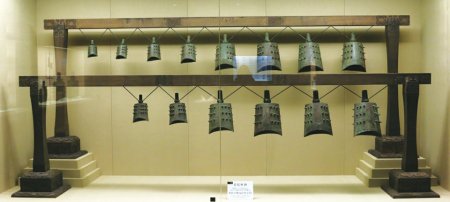
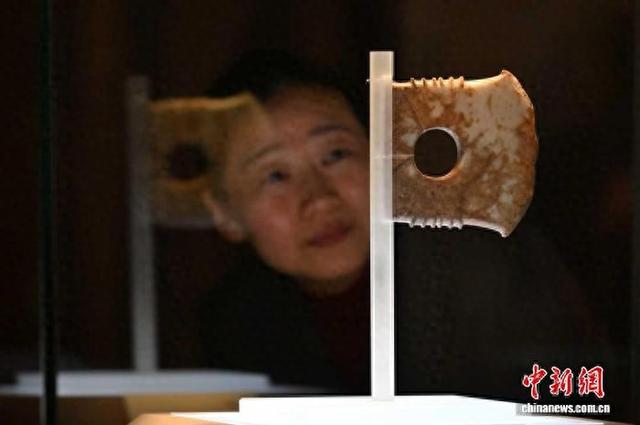
Group 1 - The core idea of the articles revolves around the significance of ancient artifacts, particularly jade and bronze objects, in reflecting the social structure and power dynamics of ancient Chinese civilization [2][3][4] - The discovery of the jade "Yazhang" from the Erlitou site highlights its role as a symbol of power and its evolution from agricultural use to a ceremonial object during the Xia and Shang dynasties [3][4] - The Erlitou culture, dating back approximately 3800 to 3500 years, is identified as a pivotal point in the development of a centralized state in ancient China, influencing surrounding regions and marking the transition from diverse ancient states to a more unified civilization [4][5] Group 2 - The ongoing archaeological research at the Erlitou site has clarified the layout and structure of the ancient capital, indicating a complex urban planning that supports the notion of a dynasty [5][6] - The jade Yazhang found in Shaanxi serves as a critical artifact for understanding the Xia dynasty, filling gaps in archaeological records and providing insights into the political and cultural practices of the time [7] - The "Renlongwen" jade Zhang from the Guo state exemplifies the maturity of jade ceremonial practices during the Western Zhou period, showcasing intricate designs and the significance of jade in rituals [8][9] Group 3 - The Jiahu bone flute, dating back 8000 years, is recognized as the earliest known musical instrument capable of producing a complete seven-note scale, challenging previous assumptions about the timeline of Chinese music [10][11][12] - The discovery of multiple bone flutes at the Jiahu site indicates a high level of musical sophistication and cultural development during the Neolithic period [11][12] - The artifacts from the Jiahu site contribute to a broader understanding of ancient Chinese culture and its philosophical connections to harmony and nature [10][12] Group 4 - The Jin Hou Su Bell, a unique bronze artifact, is noted for its historical significance and craftsmanship, with inscriptions that document military achievements and provide insights into the political landscape of the Western Zhou period [13][14] - The bell's construction from various sets of bells reflects a practice of repurposing and commemorating victories, illustrating the complex nature of ancient Chinese ceremonial objects [14] - The ability of the Jin Hou Su Bell to produce multiple tones demonstrates advanced knowledge of acoustics among ancient craftsmen, aligning with historical texts on musical practices [14]