存量空间提质增效

Search documents
浙江:2026年计划供应建设用地30万亩以上
Zhong Guo Xin Wen Wang· 2026-01-09 14:24
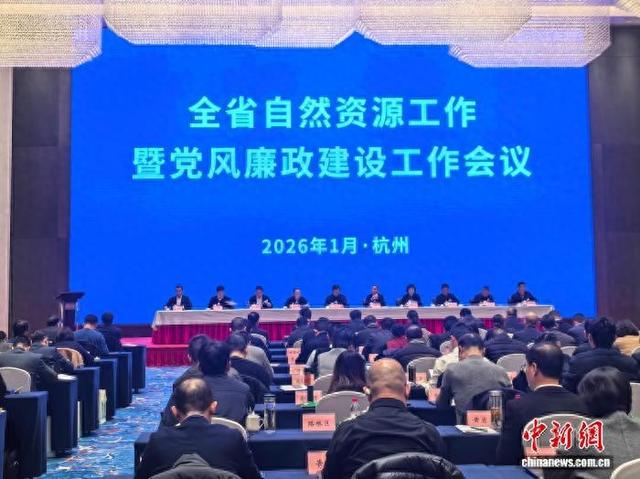
Core Insights - The Zhejiang Provincial Natural Resources Work Conference held on January 9, 2023, aims to enhance the quality and efficiency of existing land resources by 2026, supporting the construction of an innovative Zhejiang and a modern industrial system [1][3]. Group 1: Land Supply and Industrial Development - The province plans to establish a differentiated supply mechanism for industrial land based on per-acre benefits, with a target of supplying over 300,000 acres of construction land by 2026, where industrial land will account for over 30% of the land offered [3]. - At least 80% of the industrial land will support private investment projects, reflecting a strong focus on fostering private sector participation in industrial development [3]. Group 2: Strategic Actions and Policy Implementation - In 2022, the Zhejiang Natural Resources Department implemented major strategies and actions to support significant industrial projects, small and medium-sized private enterprises, and rural revitalization, optimizing resource allocation policies [3]. - The province aims to supply 372,600 acres of construction land by 2025, with mineral rights for fluorite mining reaching a ten-year high [3]. Group 3: Urbanization and Spatial Governance - China's urbanization is transitioning from rapid growth to stable development, with a focus on improving existing urban spaces rather than expanding them [3]. - The key goals for land space governance include achieving a more coordinated and orderly land space pattern, precise resource protection and utilization, and a resilient ecological security barrier [4]. Group 4: Future Goals and Technological Integration - By 2030, Zhejiang aims to achieve significant progress in modernizing land space governance, enhancing governance systems, and improving service support for high-quality development [5]. - The province plans to establish a legal and intelligent system for natural resource management, integrating artificial intelligence into spatial governance [5].