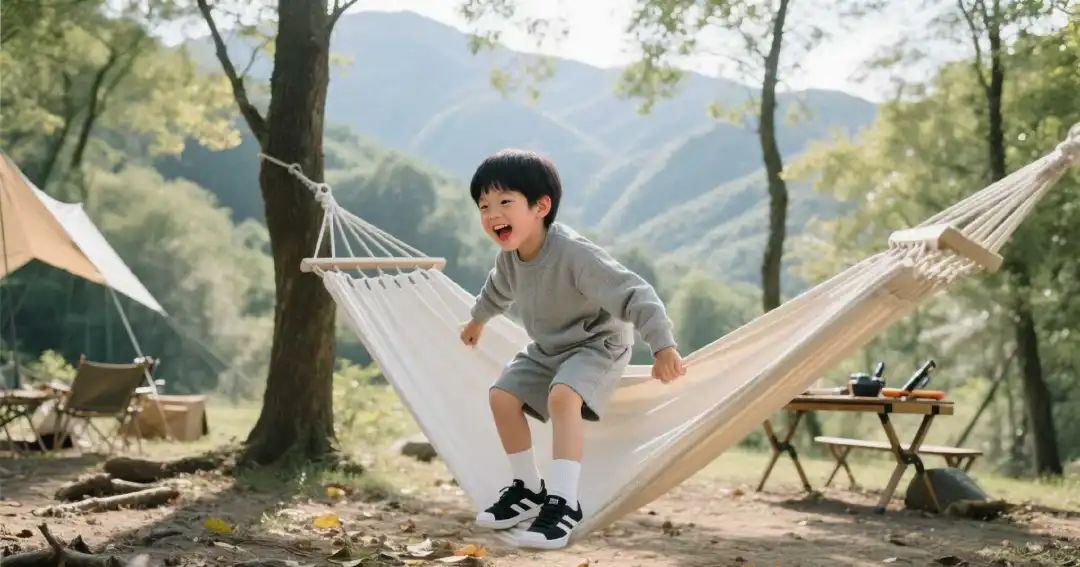
孩子接触自然

Search documents
这届新手奶爸奶妈,“野养”自己家娃
3 6 Ke· 2025-06-03 00:19
Core Viewpoint - The article discusses a shift in parenting philosophy among young parents, emphasizing the importance of outdoor experiences and personal growth over traditional academic achievements [2][3][4]. Group 1: Parenting Philosophy - Young parents, like Yuejie, prioritize their children's happiness and personal experiences over academic pressure, believing that joy leads to better learning [2][3]. - The trend of "wild parenting" is gaining popularity, where parents encourage outdoor activities and limit screen time to foster a more fulfilling childhood [3][4]. Group 2: Outdoor Activities - Parents are increasingly taking their children to nature, with activities such as camping and exploring parks becoming common, as seen with parents like Daling who prefer local parks for convenience [5][10]. - Engaging in outdoor activities is viewed as a way to recharge and bond with children, providing a break from urban life and promoting a slower pace [10]. Group 3: Return to Roots - Parents like Cheng are implementing "return to village" plans, allowing their children to experience rural life and traditional activities, which they believe are essential for holistic development [12][14]. - This approach helps children develop social skills and a connection to nature, contrasting with the digital distractions prevalent in urban settings [14]. Group 4: Physical Activities - Parents such as Rujie advocate for outdoor sports and physical challenges, believing that these experiences build resilience and confidence in children [15][17]. - Participation in events like parent-child marathons is encouraged to foster a sense of achievement and teamwork [17]. Group 5: Experiential Learning - Parents like Lu emphasize the importance of experiential learning through travel, believing that real-world experiences enhance children's understanding of academic subjects [19][20]. - Traveling to historical sites and engaging with different cultures is seen as a way to deepen children's knowledge and interest in learning [19][20].