害虫绿色防治

Search documents
辛勤耕耘 铸魂育人
Xin Lang Cai Jing· 2026-02-15 17:59
Core Viewpoint - The article highlights the dedication of Gou Changqing, a young scholar at Tarim University, in the field of integrated pest management, focusing on innovative and sustainable agricultural practices to support local farming in Xinjiang [2][5]. Group 1: Research Focus - Gou Changqing's research targets the green control of the grasshopper pest, which can cause a yield reduction of 20%-30% in cotton and fruit trees, potentially leading to total crop failure [3]. - The research involves exploring the energy storage mechanisms of the pest before winter, identifying key regulatory genes, and utilizing dsRNA spraying technology to interfere with gene expression, thereby reducing the pest's overwintering survival rate [3][4]. Group 2: Educational Contributions - Gou emphasizes the importance of engaging students in practical learning experiences, integrating field investigations of pest dynamics and hands-on activities to enhance their understanding of pest management [4][5]. - He aims to cultivate practical talents who are rooted in southern Xinjiang, providing guidance in experimental design and thesis writing while encouraging independent exploration among students [4][5]. Group 3: Future Aspirations - Gou plans to continue focusing on significant agricultural pests in southern Xinjiang, conducting applied research while enhancing his teaching capabilities to nurture more youth who understand and care for agriculture and rural communities [5].

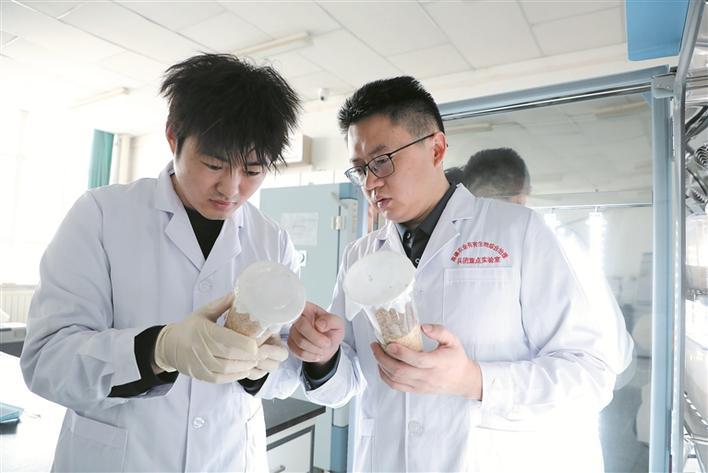
【科技日报】抑制信息素释放 实现害虫绿色防治
Ke Ji Ri Bao· 2025-07-09 01:00
Group 1 - The research team successfully elucidated the complete production process of the locust aggregation pheromone (4VA) and identified the key enzymes responsible for its synthesis, which are crucial for understanding and intervening in locust behavior [1][2] - The study revealed that locusts utilize phenylalanine, the most abundant amino acid in plants, as the primary raw material for synthesizing 4VA, which is then rapidly converted through two steps [1] - A small molecule inhibitor was designed to precisely regulate the synthesis and release of 4VA, effectively disrupting locust aggregation behavior [2] Group 2 - The two key enzymes, 4VPMT1 and 4VPMT2, are identified as excellent targets for preventing locust aggregation, and the inhibitor can successfully interfere with locusts, preventing effective gathering [2] - This research provides a new approach for pest control by disrupting insect communication rather than relying on traditional pesticides, promoting sustainable agricultural pest management [2] - The findings have significant implications for ensuring food security and ecological safety by advancing pest control methods towards greener solutions [2]