
植物保护

Search documents
辛勤耕耘 铸魂育人
Xin Lang Cai Jing· 2026-02-15 17:59
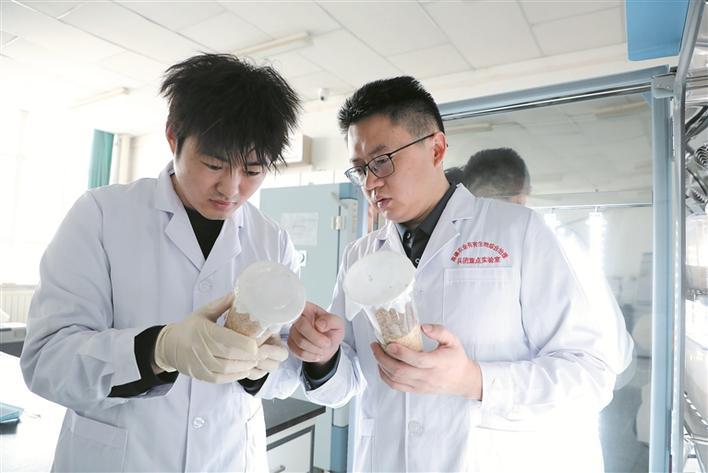
Core Viewpoint - The article highlights the dedication of Gou Changqing, a young scholar at Tarim University, in the field of integrated pest management, focusing on innovative and sustainable agricultural practices to support local farming in Xinjiang [2][5]. Group 1: Research Focus - Gou Changqing's research targets the green control of the grasshopper pest, which can cause a yield reduction of 20%-30% in cotton and fruit trees, potentially leading to total crop failure [3]. - The research involves exploring the energy storage mechanisms of the pest before winter, identifying key regulatory genes, and utilizing dsRNA spraying technology to interfere with gene expression, thereby reducing the pest's overwintering survival rate [3][4]. Group 2: Educational Contributions - Gou emphasizes the importance of engaging students in practical learning experiences, integrating field investigations of pest dynamics and hands-on activities to enhance their understanding of pest management [4][5]. - He aims to cultivate practical talents who are rooted in southern Xinjiang, providing guidance in experimental design and thesis writing while encouraging independent exploration among students [4][5]. Group 3: Future Aspirations - Gou plans to continue focusing on significant agricultural pests in southern Xinjiang, conducting applied research while enhancing his teaching capabilities to nurture more youth who understand and care for agriculture and rural communities [5].

英国邱园兰花节首次选择中国为主题
Yang Shi Xin Wen Ke Hu Duan· 2026-02-12 23:17
Core Points - The 2026 Orchid Festival at the Royal Botanic Gardens, Kew, officially opened on February 11 and will run until March 8, coinciding with the Chinese Lunar New Year. This year's festival is themed around China for the first time in its 30-year history, showcasing China's rich biodiversity, traditional cultural elements, and the long-term cooperation between China and the UK in plant sciences [1][2] - The main exhibition area features a giant "dragon" made from plant materials, alongside representations of pandas, phoenixes, and storks, with orchids complementing lanterns and sculptures [1] - Richard Deverell, the director of Kew Gardens, stated that the choice of China as the theme reflects its status as one of the most biodiverse countries in the world and aims to present two narrative threads: "nature and culture" [1] - Deverell emphasized that orchids are considered the "canary in the coal mine" for biodiversity, as they are highly sensitive to environmental changes, thus highlighting the importance of plant conservation and the value of international scientific collaboration [1] Industry Insights - Chinese Ambassador to the UK, Zheng Zeguang, noted that orchids are beloved in both China and the UK, symbolizing integrity, resilience, and purity in Chinese traditional culture, often referenced in poetry [2] - Under the guiding principle of "lucid waters and lush mountains are invaluable assets," China is accelerating its green and low-carbon transition while enhancing environmental protection [2]
英媒:猴面包树正从刚果(金)首都市区彻底消失
Huan Qiu Shi Bao· 2026-01-07 22:45
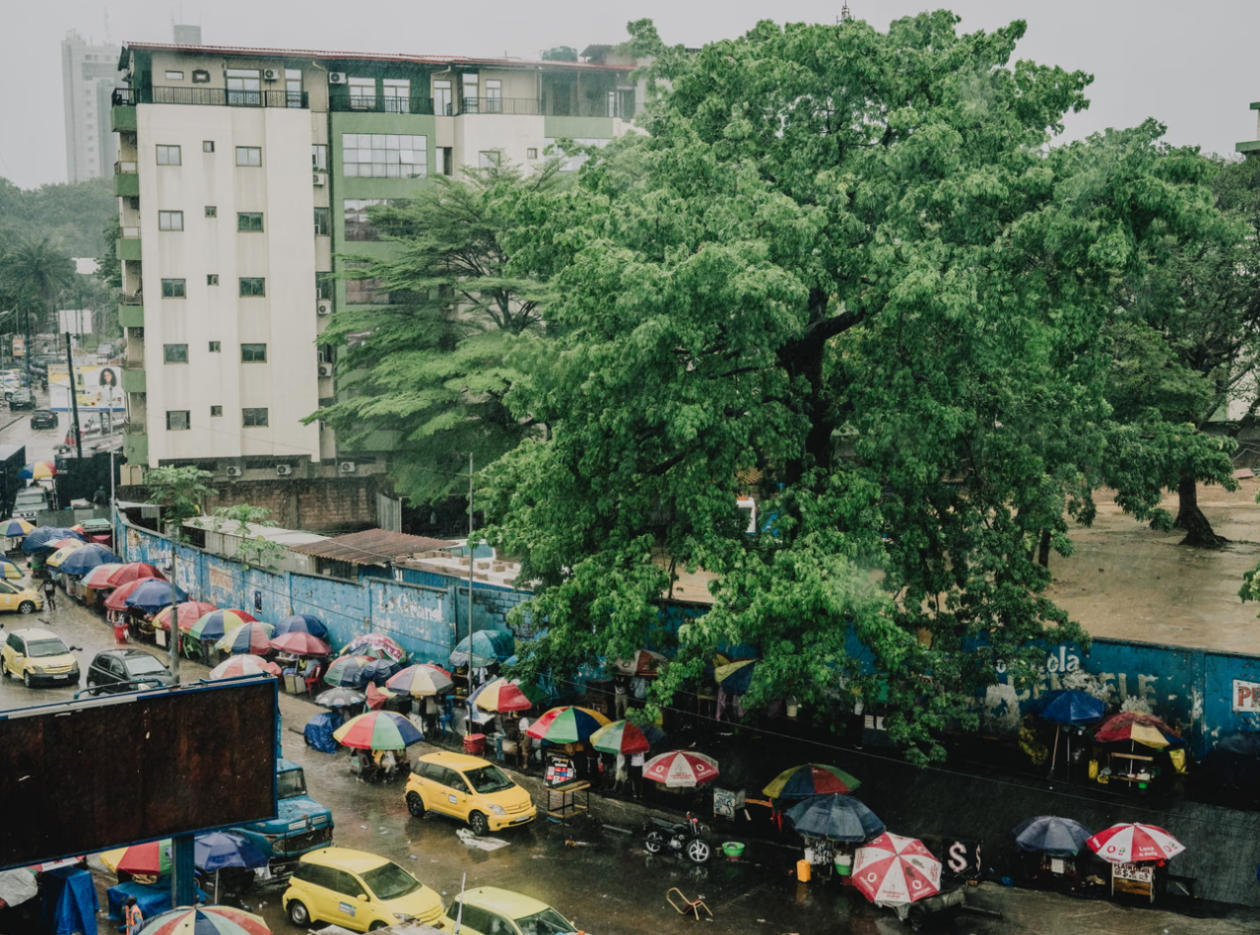
Core Viewpoint - The last baobab tree in Kinshasa, Democratic Republic of the Congo, is at risk of being cut down due to land development, prompting environmentalists to take action to protect it [1][3]. Group 1: Environmental Significance - The baobab tree, known as the "Tree of Life," holds significant cultural importance in the region and is referred to as the "African treasure tree" due to its robust trunk and edible fruits and leaves [1][3]. - The tree is approximately 100 years old and is located near the old city center ferry terminal, making it a symbol of the city [3]. Group 2: Development Threat - The land on which the baobab tree stands is owned by a state-owned enterprise, and it is set to be sold to a private developer in 2024, leading to concerns about the tree's fate as construction is imminent [3]. - Local merchants currently sell fabrics on this land, indicating economic activity that may conflict with conservation efforts [3]. Group 3: Conservation Efforts - Environmentalist Mangali has established a plant protection organization to lead efforts in saving the baobab tree [3]. - The director of the Congolese Tourism Board, Mukubu, has expressed support for the conservation efforts, emphasizing the tree's representation of "the strength of Congolese culture" and its historical significance [3].
建德:走过三亿年,幸得新安江滋养
Hang Zhou Ri Bao· 2025-09-25 03:01
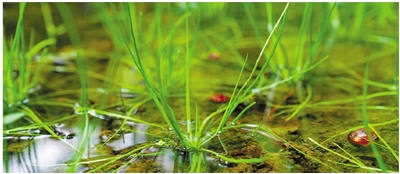
Core Viewpoint - The article highlights the significance of the Chinese Water Leek as a critically endangered plant species, emphasizing its ecological importance and the conservation efforts being undertaken to protect it [2][4]. Group 1: Conservation Efforts - A research team from Wuhan University discovered the Chinese Water Leek over 30 years ago, leading to increased attention and conservation efforts [4]. - Since 2019, the Xin'anjiang Forest Farm has been responsible for the protection of the Chinese Water Leek, creating a 60 square meter nursery for its cultivation [4]. - In 2020, 993 plants were collected from their native habitat and relocated for protection and breeding, achieving a survival rate of over 95% in their new environment by 2022 [4][5]. Group 2: Habitat and Growth Conditions - The Chinese Water Leek thrives in a specific environment characterized by clean water sources, with the Xin'anjiang water maintaining a constant temperature of 17°C and meeting national drinking water standards [2][4]. - The plant reproduces through spores rather than seeds, relying on water flow and birds for its propagation, and is highly sensitive to environmental conditions [2][4]. Group 3: Future Research and Collaboration - The Xin'anjiang Forest Farm is now the only demonstration site for the relocation and protection of the Chinese Water Leek in Zhejiang Province [6]. - There is a need for further research on the plant's ecological relationships and conservation methods, with hopes to collaborate with more research teams to ensure the survival of this endangered species [6].
百山祖冷杉移苗忙 全球濒危植物“儿孙满堂”
Zhong Guo Xin Wen Wang· 2025-05-19 01:57
Core Viewpoint - The article highlights the conservation efforts for the critically endangered Baishanzu fir, emphasizing its ecological significance and the ongoing work to protect and cultivate this unique species in the Baishanzu National Park [1][2][3] Group 1: Conservation Efforts - The Baishanzu fir is a relic plant from the Quaternary glacial period and is listed as one of the 12 most endangered plants globally by the World Conservation Union [1] - Conservationists have been engaged in long-term protection and cultivation efforts since the species was first discovered in 1963, including techniques like grafting and artificial pollination [1] - Over 5,000 Baishanzu fir seedlings have been successfully cultivated and returned to the wild, showcasing the success of these conservation initiatives [3] Group 2: Ecological Importance - The Baishanzu National Park hosts a well-preserved subtropical forest ecosystem, serving as a habitat for numerous rare and endangered species [2] - The park is recognized as one of the richest areas in China for wild large fungi genetic resources, highlighting its biodiversity [2] - A comprehensive monitoring and protection system has been established in the park, utilizing advanced technology to safeguard ecological and species resources [2]