家庭数据中心

Search documents
华为家庭存储图库同步模式正式上线,支持直接使用家庭存储照片、视频
Xin Lang Cai Jing· 2026-01-27 12:24
Core Viewpoint - Huawei has officially launched the synchronization feature for its home storage device's gallery, enhancing user experience with seamless backup capabilities across devices running HarmonyOS [1][9]. Group 1: New Features - The home storage device has completed the adaptation for HarmonyOS 6, introducing new functionalities such as seamless gallery backup with HarmonyOS NEXT devices including phones, tablets, and computers [4][12]. - Users can now choose to back up cloud albums to cloud space or only to home storage via the Huawei Gallery App, along with features for cleaning and merging duplicate photos and files [4][12]. Group 2: Product Specifications - Huawei launched its first HarmonyOS home data center, the Huawei Home Storage, in 2022, offering storage options of 4TB, 8TB, 16TB, and a no-disk version [6][14]. - The home storage device supports custom configurations, allowing for a maximum storage capacity of 40TB (20TB + 20TB) [6][14].


机构:2024年中国家用网络存储设备市场出货量同比增长33%
Huan Qiu Wang Zi Xun· 2025-08-20 04:54
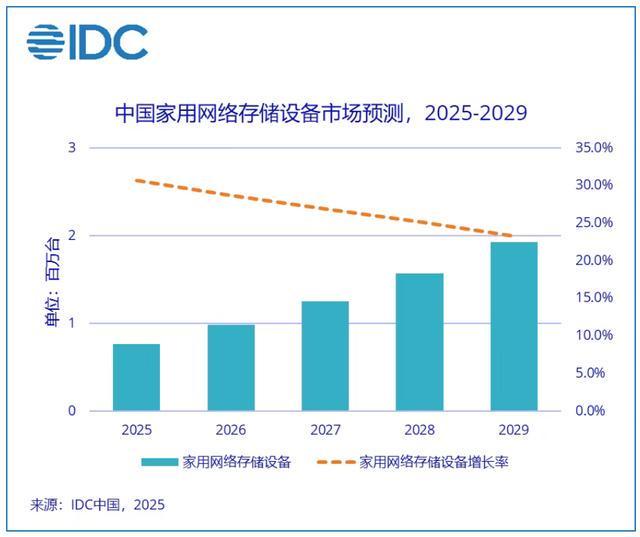
Core Insights - The Chinese home network storage (HomeNAS) device market is projected to see a shipment volume exceeding 585,000 units in 2024, representing a year-on-year growth of 33%, with sales surpassing 1.2 billion RMB [1] - By 2029, the market size for home network storage devices in China is expected to exceed 1.92 million units, with a five-year compound annual growth rate (CAGR) of over 26% [1] Market Dynamics - Major brands in the Chinese HomeNAS device market include Ugreen, Jikongjian, Synology, QNAP, Huawei, Lenovo, and Hikvision, collectively holding over 85% market share [3] - The rapid accumulation of data in home scenarios is driving the demand for home network storage devices, providing significant market opportunities [3] - The proliferation of smart home devices, including cameras, robotic vacuums, AR/VR devices, smart headphones, and smart glasses, is contributing to the massive growth of user data [3] - Traditional storage solutions like USB drives and cloud storage are increasingly inadequate for users' core needs, leading to the rise of HomeNAS products since 2020, supported by the advancement of commercial storage technologies [3]