导弹项目

Search documents
美国建议美商船远离伊朗领海,伊朗两大谈判核心“红线” 更多细节公布!美军从加勒比海一直追到印度洋,拦截了一艘油轮
Mei Ri Jing Ji Xin Wen· 2026-02-10 05:50
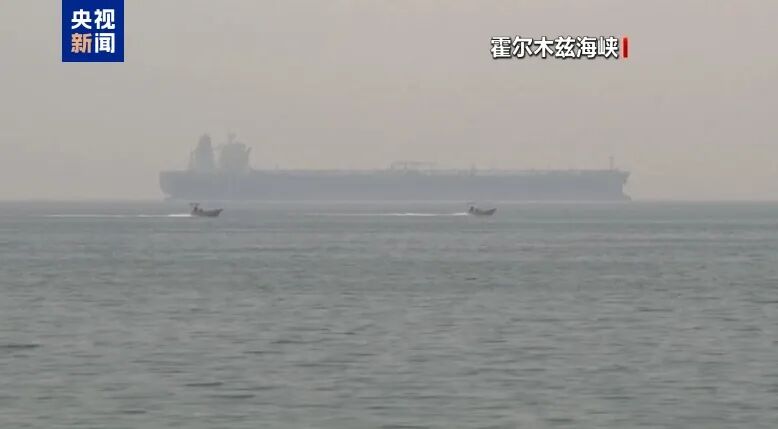
Group 1 - The U.S. has issued new guidelines for commercial vessels passing through the Strait of Hormuz, advising them to stay as far away from Iranian territorial waters as possible and to verbally refuse boarding by Iranian forces if requested [1][3] - The Strait of Hormuz is a critical shipping route for Middle Eastern oil supplies, and tensions in the region have led Iran to threaten its closure multiple times [3][12] - The first round of nuclear negotiations between the U.S. and Iran took place on February 6, with no clear date or location for the second round yet [3][12] Group 2 - Iran's nuclear negotiation "red lines" include the non-negotiability of uranium enrichment rights and missile programs [7][9] - Iran's Atomic Energy Organization Chairman, Eslami, stated that Iran could dilute enriched uranium only if all sanctions against it are lifted [6][8] - The Turkish Foreign Minister indicated that both the U.S. and Iran show willingness to continue negotiations, but there is a mix of genuine negotiation and time-wasting tactics [11][12] Group 3 - Israel has expressed a firm stance against Iran's negotiation "red lines," particularly regarding missile capabilities, which they view as an existential threat [12][15] - Israeli Prime Minister Netanyahu is scheduled to visit the U.S. to discuss Iran's nuclear program and to push for restrictions on Iran's missile capabilities [14][15] - Iran possesses the largest ballistic missile arsenal in the Middle East, with approximately 2,000 medium-range missiles capable of reaching Israel [18][20] Group 4 - Iran's missile capabilities are seen as a significant bargaining chip in negotiations with the U.S., and the country is unlikely to compromise on this issue [20][22] - The limitations of Israel's missile defense systems have led them to seek more advanced systems and to push for stricter conditions on Iran during negotiations [22] - The U.S. military recently intercepted a tanker in the Indian Ocean that violated sanctions, highlighting ongoing tensions and enforcement of sanctions against Iran [23]

伊朗对美划定两条“红线”
中国能源报· 2026-02-08 02:08
Core Views - The Iranian Foreign Minister Zarif has defined two "red lines" regarding the country's core national interests during recent indirect talks with the U.S. [1] Group 1: Indirect Talks with the U.S. - Zarif described the indirect dialogue held in Oman as a "good start," but emphasized that building mutual trust between Iran and the U.S. will take a "long way" due to historical grievances [3] - The discussions were strictly limited to the "nuclear field" and did not cover other political issues [3] Group 2: Core "Red Lines" - **Red Line One: Right to Enrich Uranium** Zarif asserted that the right to enrich uranium is an inalienable right of Iran that must continue. He warned that Iran's nuclear capabilities are deeply entrenched, stating that "even bombing cannot destroy our nuclear capabilities" [4] - **Red Line Two: Missile Program Negotiation Refusal** Zarif categorically rejected any negotiations regarding Iran's missile program, asserting that it falls under Iran's national defense sovereignty. He stated that Iran will continue to develop its defensive capabilities to ensure national security, with no room for compromise [5]