弹道导弹

Search documents
美国、以色列、伊朗公布最新战果
第一财经· 2026-03-23 00:12
Group 1 - Iran's military strategy has shifted from defensive to offensive, with adjustments in battlefield tactics [1] - Iranian armed forces successfully intercepted an enemy F-15 fighter jet using missiles near the southern coast and around Hormuz Island [1] - The Iranian Revolutionary Guard Corps announced strikes on multiple Israeli cities and U.S. military bases in the region using various missiles and drones during the "Real Commitment-4" operation [1] Group 2 - The Israeli Defense Forces Chief of Staff stated that the military operation against Iran, in collaboration with the U.S., is halfway through and has achieved systemic successes in military, economic, and governmental aspects, leaving Iran in a more dangerous position with diminished air defense capabilities [2] - U.S. President Trump demanded that Iran open the Strait of Hormuz within 48 hours or face strikes on its power plants [3] - The U.S. Central Command reported the destruction of a fortified underground facility along the Iranian coastline, which housed anti-ship cruise missiles and mobile missile launchers, using multiple bombs weighing 5,000 pounds (2.27 tons) [3]


伊朗:成功打击美军第五舰队
第一财经· 2026-03-22 00:20
Group 1 - The Iranian Islamic Revolutionary Guard Corps announced the launch of the "Real Commitment-4" operation, marking the 72nd wave of attacks targeting Israel and the U.S. Navy's Fifth Fleet [1] - The operation involved the use of various missiles, including "Qader" and "Imad," to strike targets in northern and central Israel, as well as the U.S. Navy's Fifth Fleet [1] - The Iranian military claims that the upgraded domestic defense system will yield more successful outcomes in future operations, emphasizing that no force should underestimate Iran's defensive capabilities [1] Group 2 - Iranian naval commander Ali Reza Tangsiri reported the destruction of facilities at the Al Minhad Air Base in the UAE and the Ali Salem Air Base in Kuwait, along with U.S. and Israeli aircraft hangars and fuel depots [1] - On the evening of the 21st, Israel's southern region sounded air raid alarms, confirming that Iranian missiles were launched towards Israel, with the defense systems actively engaged [4][6] - The city of Dimona in southern Israel was directly hit by missiles, resulting in the collapse of a building and injuring 39 people, with the area housing sensitive nuclear facilities [7]

伊朗:能打至少6个月高强度战争;已配备重型导弹、弹道导弹、巡航导弹、各类无人机和攻击舰艇等武器装备
中国能源报· 2026-03-08 12:52
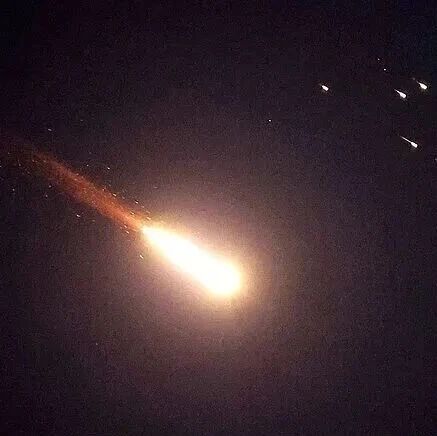
Group 1 - Iran's armed forces are capable of sustaining high-intensity warfare for at least six months at the current pace [1] - The Iranian military has equipped itself with heavy missiles, ballistic missiles, cruise missiles, various drones, and attack vessels to meet the demands of a large-scale, long-term war [1] - Iran is currently utilizing first and second-generation missiles, with plans to employ new attack methods in the coming days, including advanced long-range missiles for more targeted strikes against enemies [1]
伊朗:具备进行超半年高强度战争能力,未来几天将采用新的攻击方式,敌人将面临更为沉重的打击
第一财经· 2026-03-08 08:31
Core Viewpoint - Iran's Islamic Revolutionary Guard Corps (IRGC) has announced its preparedness for a large-scale and prolonged war, equipped with a wide array of weaponry including heavy missiles, ballistic missiles, cruise missiles, various drones, and attack vessels [3]. Group 1 - The IRGC spokesperson, Naini, stated that Iran has the capability to sustain at least six months of high-intensity warfare at the current pace [3]. - The missiles currently in use by Iran primarily belong to the first and second generation [3]. - In the coming days, Iran plans to adopt new offensive strategies utilizing advanced missiles with longer ranges that have been less frequently deployed, indicating a shift towards more targeted and heavier strikes against adversaries [3].
美军:击中伊朗“航母”
中国能源报· 2026-03-06 06:27
Core Viewpoint - The U.S. military has successfully targeted and destroyed over 30 Iranian naval vessels, including an Iranian drone carrier, significantly reducing Iran's missile and drone attack capabilities [1]. Group 1: Military Actions - The U.S. Central Command reported the destruction of more than 30 Iranian military ships and specifically mentioned hitting an Iranian drone carrier comparable in size to World War II aircraft carriers [1]. - The U.S. military has achieved a 90% reduction in Iranian ballistic missile attacks and an 83% reduction in drone attacks since the commencement of their operations [1]. Group 2: Future Operations - The U.S. plans to systematically destroy Iran's future missile production capabilities as part of the next phase of their military operations [1]. - The U.S. military has established complete air and sea dominance over the region, having eliminated most of the Iranian Navy's capabilities [1]. Group 3: Military Readiness - The U.S. Secretary of Defense stated that the military has sufficient ammunition and a robust stockpile of both defensive and offensive weapons to support ongoing operations [1].

伊朗、美国、以色列公布最新战况
21世纪经济报道· 2026-03-04 22:30
Core Viewpoint - The ongoing military conflict between the US, Israel, and Iran has escalated, with significant casualties and strategic military actions reported from both sides [1][2][3]. Iran - The farewell ceremony for the late Supreme Leader Khamenei has been postponed due to an expected large turnout of mourners [2]. - Iran has identified several candidates for the Supreme Leader position, with elections potentially delayed until next week [2]. - The Iranian military claims to have shot down 35 US and Israeli drones in the past 24 hours, along with a US F-15 fighter jet [2]. - The conflict has reportedly resulted in 1,045 Iranian casualties due to US and Israeli military actions [2]. United States - US Defense Secretary Hagel stated that the US and Israel aim to "completely control" Iranian airspace within a week [3]. - The US military has conducted nearly 100 hours of operations against Iran, targeting around 2,000 sites and destroying 17 Iranian naval vessels [3]. Israel - The Israeli Air Force has conducted extensive bombing campaigns, dropping approximately 4,000 bombs and destroying around 300 Iranian missile launchers [4]. - Israel has targeted multiple command centers and a secret underground nuclear weapons development site in Iran [5]. - Israeli Defense Minister Katz warned that any new Supreme Leader of Iran opposing Israel and the US would be considered a "target for elimination" [5]. Iraq - Reports indicate that US facilities near Baghdad International Airport were attacked by drones, although details remain unconfirmed [6]. Qatar - The Qatari Defense Ministry reported intercepting 10 drones and 2 cruise missiles launched from Iran, with one missile hitting a US base without causing casualties [7]. Lebanon - Israeli airstrikes in Lebanon resulted in at least 10 deaths, with attacks on various locations including residential buildings [8]. France - France has deployed the aircraft carrier Charles de Gaulle to the Mediterranean, accompanied by air and naval forces [9]. Turkey - A ballistic missile launched from Iran was intercepted by NATO defense systems as it approached Turkish airspace, with no casualties reported [10]. International Atomic Energy Agency - The IAEA Director General stated there is no evidence of Iran actively manufacturing nuclear weapons, although concerns remain regarding Iran's uranium enrichment activities [11]. ASEAN - ASEAN foreign ministers called for an immediate cessation of hostilities in the Middle East and urged all parties to exercise maximum restraint and resolve differences through dialogue [12]. South Africa - South African President Ramaphosa expressed willingness to mediate in the conflict, advocating for an immediate ceasefire and dialogue as the best approach [14].

美伊“极限施压”与军事对峙态势
制裁名单· 2026-02-26 23:02
Group 1 - The core viewpoint of the article is that the Trump administration is initiating a dual-track approach of "economic strangulation" and "military deterrence" against Iran, aiming to cut off its funding sources and military capabilities while setting a strong military backdrop for nuclear negotiations in Geneva [1] Group 2 - The new sanctions are targeted, focusing on Iran's "shadow economy" and its military supply chains, rather than a broad blockade [2] - The sanctions will specifically target the "shadow oil tanker" fleet registered in offshore locations like Panama and the Marshall Islands, aiming to seize vessels and cut off hundreds of millions in oil revenue [2] - The military strategy has shifted from a defensive posture to an offensive pre-positioning, with significant naval deployments including the "Abraham Lincoln" aircraft carrier in the Gulf of Oman and a second carrier in the Mediterranean [5] Group 3 - The U.S. military presence in the Middle East has fundamentally changed, moving away from a strategy of avoidance to direct military coordination with Israel [5] - The deployment includes 13 missile destroyers, marking the largest naval assembly in 20 years, and advanced missile defense systems like THAAD and Patriot being sent to Jordan, Kuwait, and Saudi Arabia [5] Group 4 - The Geneva talks between the U.S. and Iran are currently at a structural impasse, with the U.S. demanding the permanent dismantling of key nuclear facilities and the surrender of all enriched uranium, while Iran insists on retaining its enrichment rights [7] - Iran is under pressure to lift sanctions to quell domestic unrest due to economic weakness, but the U.S. maintains a "compliance first, sanctions relief later" stance [7]

伊朗拒谈导弹成最大隐患?鲁比奥疑似发出“最后通牒”
Jin Shi Shu Ju· 2026-02-26 07:09
Group 1 - The core issue highlighted is Iran's refusal to discuss its ballistic missile program, which U.S. Secretary of State Rubio considers a significant problem ahead of negotiations aimed at preventing military action against Iran [1] - Rubio emphasized that Iran possesses "thousands of short-range ballistic missiles" that threaten U.S. forces and allies in the region, along with naval assets that could threaten shipping and U.S. naval operations [1] - The upcoming negotiations in Geneva will primarily focus on Iran's nuclear program, with the U.S. hoping to make progress despite the challenges posed by Iran's missile program [1] Group 2 - Rubio criticized Iran's pursuit of uranium enrichment, asserting that the country does not need nuclear energy given its abundant natural gas resources [2] - Iran maintains that its nuclear program is for peaceful purposes and insists on its right to enrich uranium under the Non-Proliferation Treaty, while refusing to agree to U.S. demands to limit its ballistic missile program [2] - An internal Iranian source indicated that Iran has adjusted its strategy to impose significant costs on U.S. forces in the event of conflict, while still hoping for a new nuclear agreement to prevent U.S. attacks [3]
泽连斯基签署法令对俄“影子舰队”实施制裁:针对225名参与出口俄罗斯石油产品的船只船长,涉及来自11个国家的公民
Xin Lang Cai Jing· 2026-02-21 15:13
Group 1 - The core point of the article is that Ukraine's President Zelensky has signed decrees to implement new sanctions against Russia's "shadow fleet" and military enterprises, following decisions made by the National Security and Defense Council of Ukraine [1] - The sanctions target 225 captains of ships involved in exporting Russian oil products, with individuals from 11 countries, including Russia, India, and the Philippines, being affected [1] - Additionally, sanctions have been imposed on 46 Russian citizens, 2 Iranian citizens, and 44 Russian companies that support the Russian military-industrial complex, particularly in areas related to electronic warfare systems and components [1] Group 2 - The Ukrainian government plans to share relevant information with partners to promote synchronized sanctions and will continue to expand sanctions against individuals and entities assisting Russian military operations [1] - Western countries have accused Russia of using commercial vessels, referred to as the "shadow fleet," to evade Western sanctions [1]
美国或对伊朗发动打击,德黑兰备战细节曝光
Xin Lang Cai Jing· 2026-02-20 09:50
Core Insights - Iran is demonstrating a state of military readiness in response to the ongoing military buildup by the United States in the Middle East, including the fortification of nuclear facilities and the reconstruction of missile production bases [3][14][26] Facility Reconstruction - Following an Israeli attack in June last year that destroyed parts of Iran's nuclear facilities and severely damaged missile production bases, Iran has reportedly rebuilt several key missile facilities [4][17] - Satellite imagery from January 5 shows that out of over ten buildings at the Imam Ali missile base, three have been rebuilt, one repaired, and three are under construction, indicating ongoing military infrastructure development [17] - The Shahroud solid-fuel missile production facility, which is crucial for rapid deployment of long-range missiles, has been quickly reconstructed, potentially increasing its production capacity beyond pre-conflict levels [18][21] Nuclear Facility Fortification - Iran is rapidly reinforcing multiple nuclear facilities using concrete and earth to enhance their resilience against airstrikes, as indicated by recent satellite images [6][19] - The Natanz underground nuclear facility is undergoing significant fortification, with new concrete being poured at tunnel entrances to improve its defensive capabilities [19] - The "Tir 7 Industrial Park," involved in uranium enrichment component production, has also seen reconstruction of damaged buildings, despite being under UN sanctions [19] Power Structure Restructuring - The conflict with Israel last year exposed weaknesses in Iran's command structure, prompting a reorganization that includes the establishment of a new Defense Committee to oversee wartime governance [21][22] - Ali Shamkhani, a veteran military figure, has been appointed as the secretary of this new committee, indicating a strategic shift towards enhancing national defense readiness [21][22] - The Iranian regime is reportedly preparing for potential U.S. "decapitation strikes," reflecting heightened internal security measures and vigilance against perceived threats [22] Military Exercises - Concurrently with negotiations in Geneva, Iran conducted naval exercises in the Persian Gulf, showcasing its capabilities to disrupt maritime operations, particularly in the strategically vital Strait of Hormuz [10][23] - The Iranian Navy also engaged in joint exercises with Russia, further emphasizing its military collaboration in the region [25] - U.S. military presence in the area has increased, with two aircraft carriers deployed, indicating escalating tensions and potential for conflict [25][26]