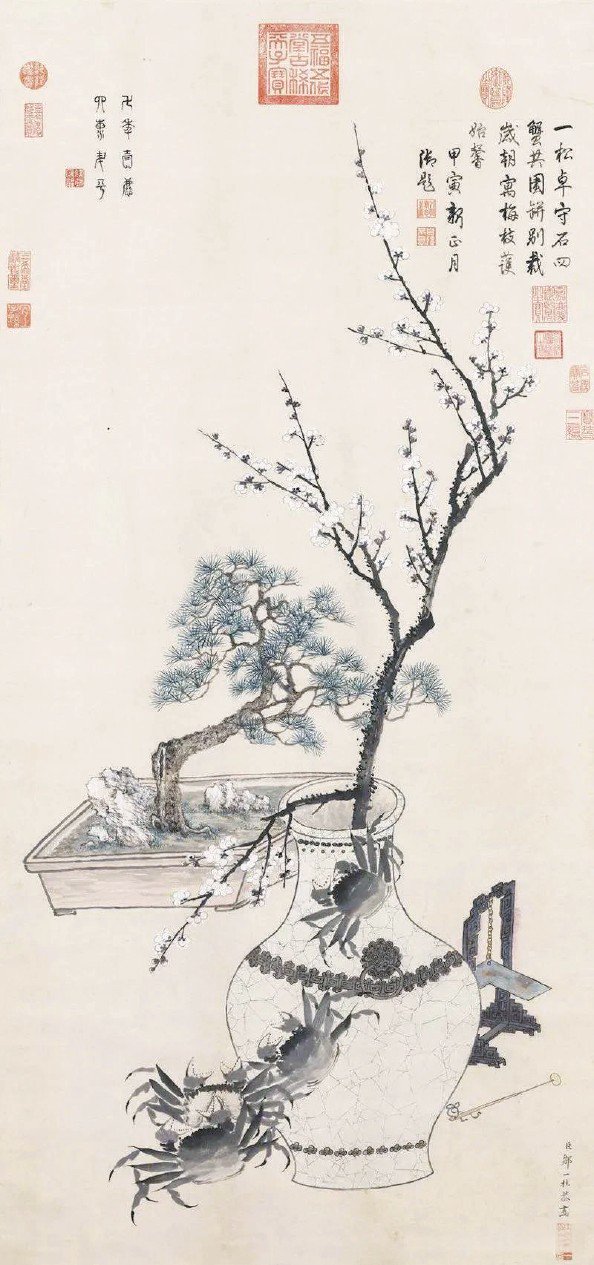
岁朝清供

Search documents
《岁朝图》里的新年意象
Xin Lang Cai Jing· 2026-01-17 07:28
Core Viewpoint - The article discusses the significance and cultural heritage of the "New Year's Picture" (岁朝图) in Chinese tradition, particularly during the Qing Dynasty, highlighting its role in celebrating the Lunar New Year and conveying auspicious wishes through artistic expression [3][4][5]. Group 1: Historical Context - The "New Year's Picture" genre emerged in the Song Dynasty and became popular during the Northern Song period, favored by artists across generations [4]. - These artworks often feature still life elements, using winter flowers, plants, and fruits to symbolize the arrival of spring and convey New Year blessings through homophones and cultural meanings [4]. Group 2: Cultural Significance - The "New Year's Picture" serves as a visual representation of auspicious symbols, such as double persimmons for "everything goes well" and vases for "everlasting peace," enhancing the festive atmosphere [4]. - The Qing Dynasty emperors, particularly Qianlong, held the "New Year's Picture" in high regard, commissioning numerous works to celebrate the New Year and promote national prosperity [4][5]. Group 3: Artistic Elements - Qianlong's "New Year's Pictures" often included auspicious items like vases, potted plants, and various symbols of good fortune, accompanied by poetry and seals to enhance their artistic value [5]. - The integration of poetry and painting in these artworks not only elevated their artistic significance but also added to the celebratory spirit of the New Year [4].