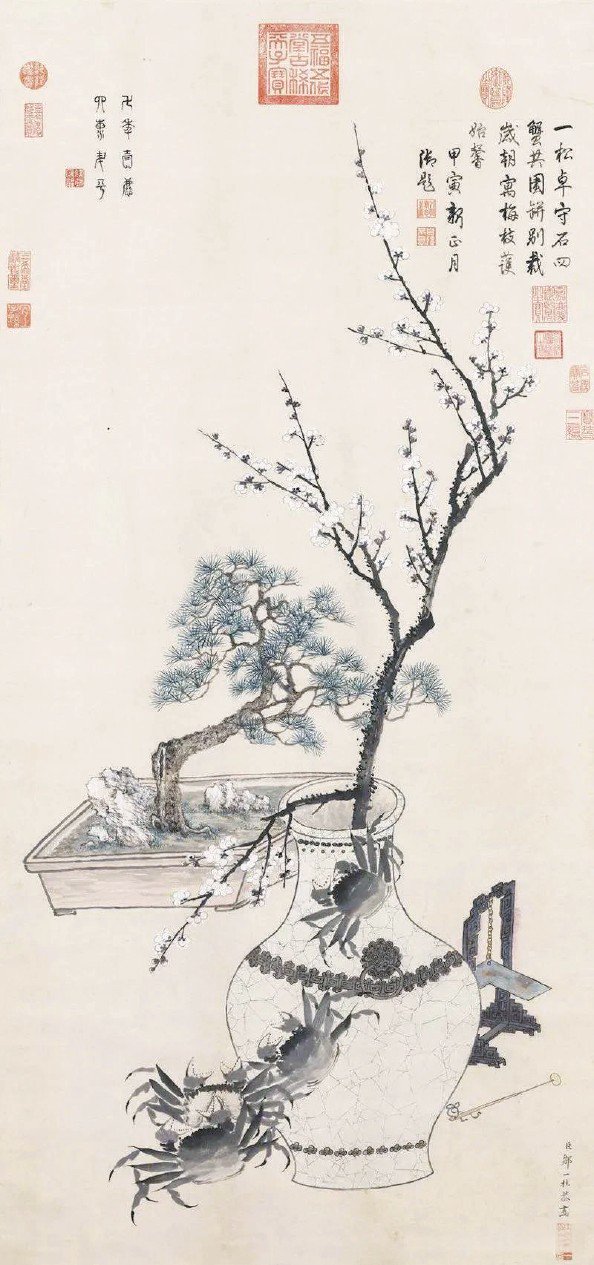
《岁朝图》

Search documents
粤朗倾听|以诗为媒,寻古画里的第一缕春
Xin Lang Cai Jing· 2026-02-04 15:22
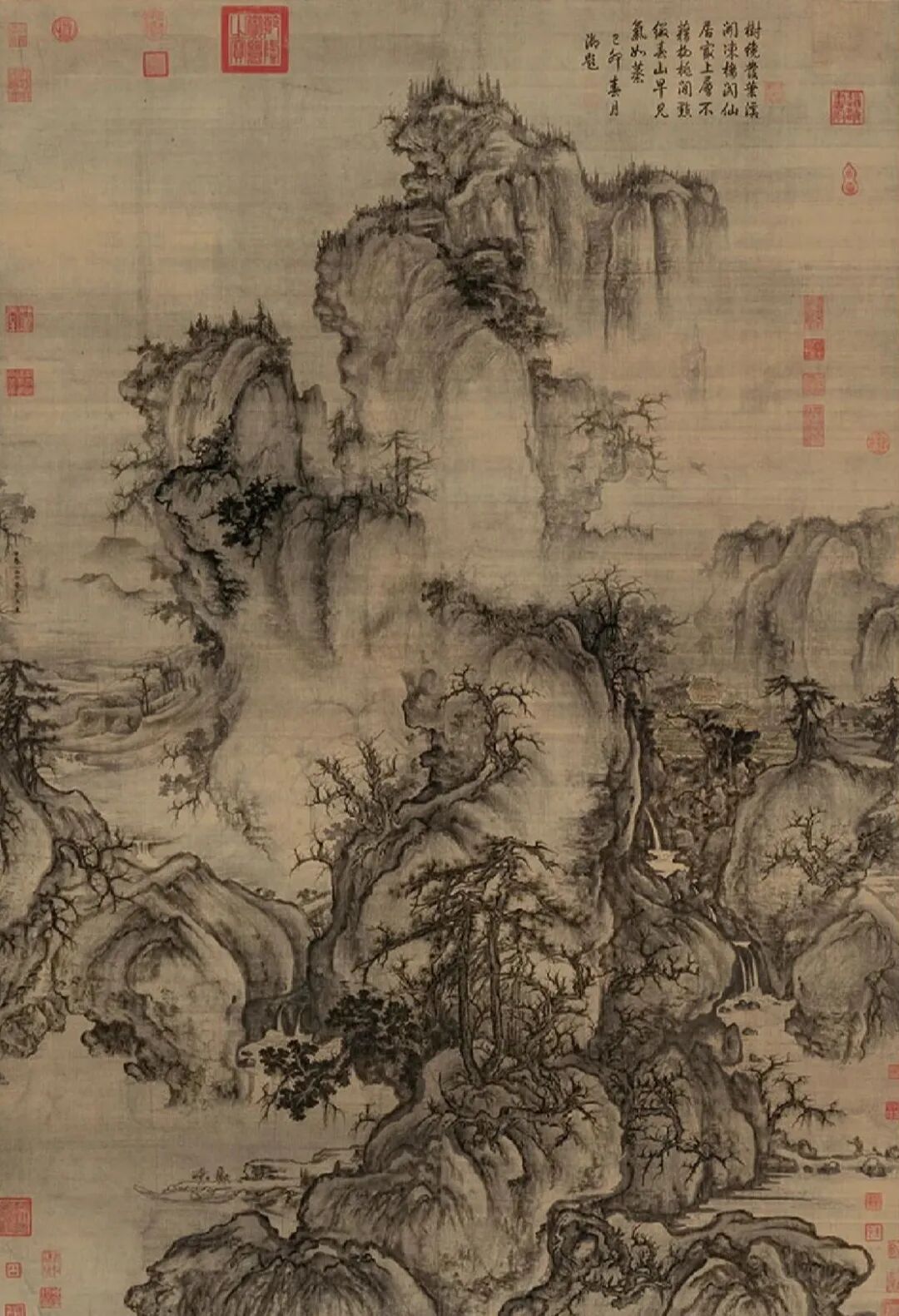
Core Viewpoint - The article celebrates the arrival of spring, highlighting the connection between poetry and traditional Chinese paintings that depict the season's beauty and vitality [1]. Group 1: Poetry and Art - The poem "On the Morning of the Beginning of Spring" by Zhang Jiuling captures the surprise of snow coexisting with the arrival of spring, illustrated through various ancient paintings [1]. - The Northern Song painting "Early Spring" by Guo Xi uses the "three distances" technique to depict the tranquility and vitality of a snowy landscape [4]. - The Ming Dynasty painting "New Year's Morning" by Tang Yin portrays the warmth and ceremonial aspects of spring's return [6]. Group 2: Spring Imagery - The poem "Spring Begins" by Luo Yin expresses the vitality of spring with straightforward verses, complemented by the Northern Song painting "Sketch of Apricot Blossoms" by Zhao Chang, which vividly captures the blooming of apricot flowers [9][12]. - The painting "Smoke Trees on the Sandbank" by Hui Chong reflects the hazy beauty of spring, aligning with the imagery of returning geese and fish breaking through the ice [14]. - The Southern Song painting "Plum and Bamboo in the Snow" by Xu Yugong captures the elegance of a courtyard in spring, emphasizing the lushness of bamboo and blooming plum trees [10]. Group 3: Themes of Growth and Renewal - The poem "Spring Begins" by Zhang Zhi conveys the warmth of spring, illustrated by the Ming painting "A Sleeping Tour" by Shen Zhou, which depicts the lively awakening of nature [15][17]. - The painting "Peach Blossom Spring" by Qiu Ying uses meticulous detail to portray the flourishing scenery of spring, encapsulating the essence of life and warmth [20]. - The article concludes with a reflection on the love and expectations of ancient people for spring, encouraging a mindful appreciation of new growth and warmth in the present [21].

《岁朝图》里的新年意象
Xin Lang Cai Jing· 2026-01-17 07:28
Core Viewpoint - The article discusses the significance and cultural heritage of the "New Year's Picture" (岁朝图) in Chinese tradition, particularly during the Qing Dynasty, highlighting its role in celebrating the Lunar New Year and conveying auspicious wishes through artistic expression [3][4][5]. Group 1: Historical Context - The "New Year's Picture" genre emerged in the Song Dynasty and became popular during the Northern Song period, favored by artists across generations [4]. - These artworks often feature still life elements, using winter flowers, plants, and fruits to symbolize the arrival of spring and convey New Year blessings through homophones and cultural meanings [4]. Group 2: Cultural Significance - The "New Year's Picture" serves as a visual representation of auspicious symbols, such as double persimmons for "everything goes well" and vases for "everlasting peace," enhancing the festive atmosphere [4]. - The Qing Dynasty emperors, particularly Qianlong, held the "New Year's Picture" in high regard, commissioning numerous works to celebrate the New Year and promote national prosperity [4][5]. Group 3: Artistic Elements - Qianlong's "New Year's Pictures" often included auspicious items like vases, potted plants, and various symbols of good fortune, accompanied by poetry and seals to enhance their artistic value [5]. - The integration of poetry and painting in these artworks not only elevated their artistic significance but also added to the celebratory spirit of the New Year [4].