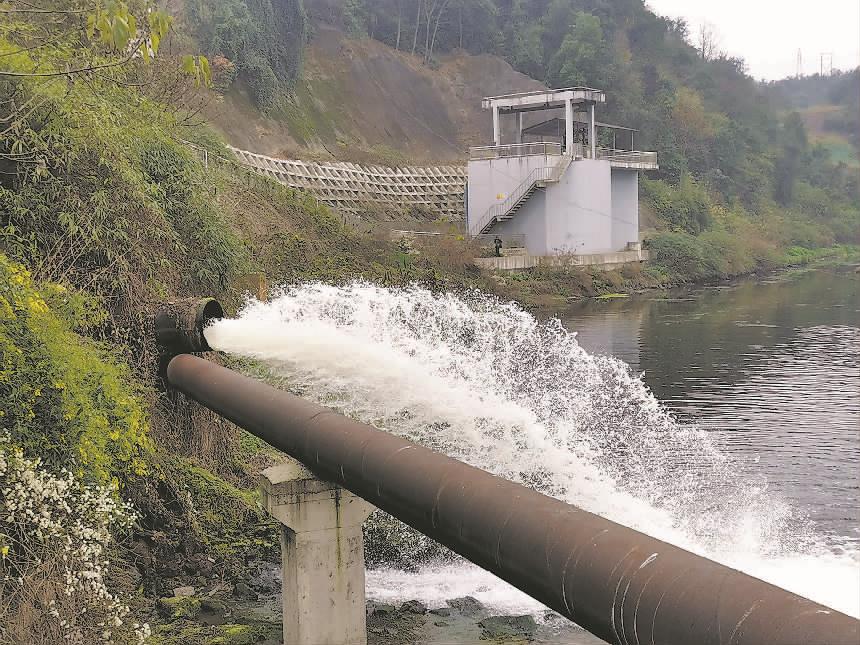
岩溶治污

Search documents
“追踪—探测—截排”创新技术破解岩溶治污难题
Zhong Guo Huan Jing Bao· 2025-06-11 02:16
Core Viewpoint The Guizhou Geological and Mineral Exploration and Development Bureau 114 Geological Team has established itself as a comprehensive geological technical service unit with significant achievements in geological exploration, engineering design, and pollution prevention, particularly in karst areas. Group 1: Company Overview - The 114 Geological Team was established in 1965 and has developed into a comprehensive geological technical service unit with a wide range of services including geological exploration, engineering design, construction, supervision, technical assessment, and scientific research [1] - The team has participated in major national projects such as the Three Gorges Water Conservancy Project and the post-Wenchuan earthquake geological survey, receiving over 120 provincial and ministerial awards [1] - The team has 235 professional technical personnel, including 159 with intermediate and senior titles and 45 with various registered qualifications [1][2] Group 2: Technical Innovation - In 2024, the team established the Guizhou Provincial Hydrogeology Academician Workstation and has created five technical innovation platforms, contributing to the compilation of technical literature and publishing over 630 academic papers [1][2] - The team has developed 30 patented technologies, including groundwater pollution prevention techniques that have been evaluated as having a good technical level [1] Group 3: Project Overview - The Pingqiao underground river has faced severe pollution since 2004, with ammonia nitrogen levels reaching 76 mg/L to 143.6 mg/L, exceeding standards by 152 to 287 times, and manganese levels at 14.206 mg/L to 21.31 mg/L, exceeding standards by 142 to 213 times [3] - The pollution prevention pilot project was selected for central water pollution prevention funding in 2021 and received budget approval from the Guizhou Provincial Finance Department [3] Group 4: Project Scale and Techniques - The pollution prevention project employs a "source control - process interruption - end treatment" technical route, implementing three major engineering measures [4] - Key techniques include rapid screening and tracking of pollution sources, precise detection of pollution pathways, and near-source interception and drainage technology [5][6] Group 5: Project Benefits - The project has significantly reduced pollution concentrations, with ammonia nitrogen levels dropping from 76 mg/L to 143.6 mg/L to 14.4 mg/L to 58.6 mg/L, and manganese levels from 14.206 mg/L to 21.31 mg/L to 2.38 mg/L to 6.39 mg/L, achieving a reduction of 66% to 78% [7] - The project has resulted in improved ecological and socio-economic benefits, including a reduction in water quality degradation in downstream rivers and annual savings of 567,000 yuan from reused groundwater [7][9]