
巴渝文化

Search documents
这一年,重庆考古挖到哪些宝贝?
Xin Lang Cai Jing· 2026-02-08 17:26
Core Insights - The recent archaeological discoveries in Chongqing reveal significant findings that span over 2000 years of history, showcasing the evolution of salt production, animal husbandry, and cultural practices in the region [1] Group 1: Salt Production Discoveries - The first discovery of pre-Qin salt production sites in the Wujiang River basin has been made, dating back over 2000 years to the Warring States period, filling a critical gap in the history of salt production technology in the Sichuan Basin [2] - Excavations revealed various relics including salt kilns, wells, and a cultural accumulation layer over 10 meters thick, demonstrating a continuous development of salt production from the Warring States to modern times [2] - The well-preserved "dragon kiln" from the Warring States period indicates a mature salt production technique, contributing to the understanding of salt industry evolution and cultural interactions in the region [2] Group 2: Fauna and Ecology Insights - The discovery of the first skeletal remains of the spotted civet in Chongqing provides valuable evidence for reconstructing the natural environment and animal populations during the Han Dynasty [3] - Analysis of animal bones from the site indicates a shift from hunting to agriculture and animal husbandry, reflecting the long-term interaction between humans and their environment [3][4] - The presence of various domesticated and wild animals illustrates the transition from reliance on wild game to a more stable agricultural society, marking significant advancements in agricultural practices during the Han Dynasty [4] Group 3: Cultural and Ritual Findings - The excavation of bronze artifacts from a cache in Wulong, including a ceremonial bell and a ritual vessel, offers insights into the spiritual and cultural practices of the Ba people during the Eastern Han period [5] - These artifacts, well-preserved and contextually significant, provide a rare glimpse into the ceremonial life and belief systems of ancient societies in the Ba region [5] - The findings contribute to the understanding of the diverse cultural heritage and the historical continuity of civilization in the area [5]
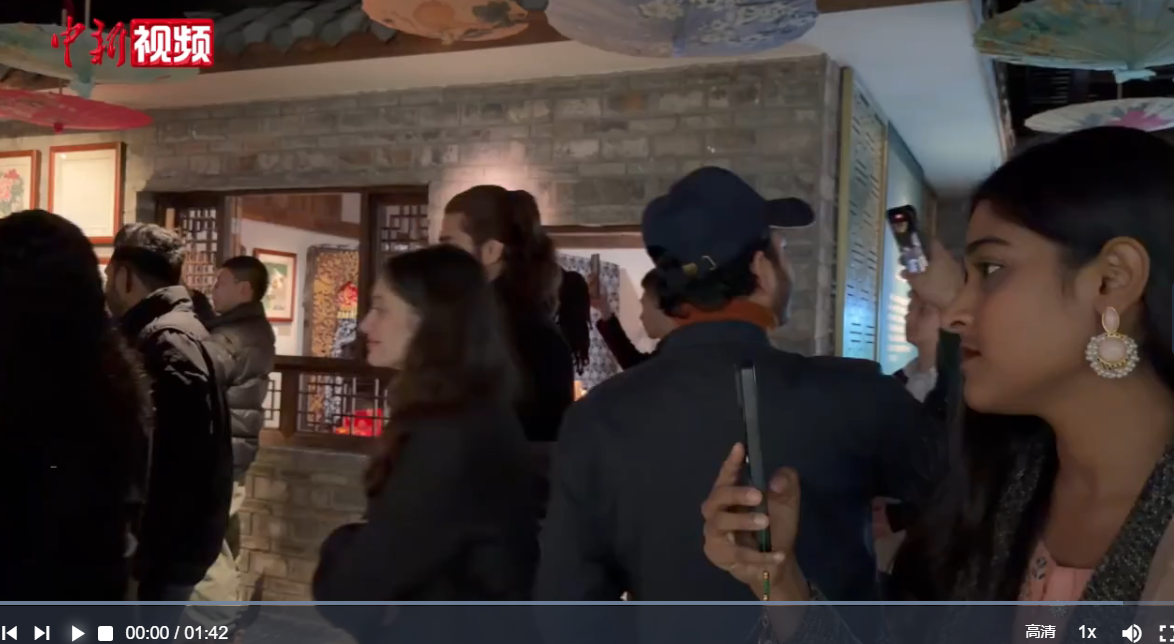
【新春纪事】唱山歌、剪窗花、磨豆花 外国友人在重庆沉浸式体验“中国年”
Zhong Guo Xin Wen Wang· 2026-02-04 07:11
Core Viewpoint - The event in Chongqing Ba'nan showcased the unique cultural experiences of the Chinese Spring Festival, engaging foreign teachers and students from over ten countries through traditional activities and culinary experiences [1] Group 1: Cultural Engagement - Foreign participants learned to sing the Mudu Mountain Song under the guidance of a national intangible cultural heritage representative, Qin Xiaoyue, highlighting the charm of Bayu culture [1] - The atmosphere was lively as students actively participated in singing and clapping along to the music, demonstrating their engagement with the local culture [1] Group 2: Traditional Activities - Participants experienced various traditional customs such as paper-cutting, writing "Fu" characters, and making lucky bags, guided by volunteers [1] - The event included a culinary segment where foreign friends participated in making traditional foods like grinding soybeans, preparing tofu pudding, and making glutinous rice cakes, emphasizing the cultural significance of these dishes during the Spring Festival [1]

到重庆中国三峡博物馆,见证巴渝文化的璀璨造物
Jing Ji Guan Cha Bao· 2025-09-15 00:29
Core Viewpoint - The Chongqing China Three Gorges Museum showcases the rich cultural heritage of the Bayu region, featuring over 115,000 cultural relics, including significant bronze artifacts that highlight the area's historical significance [1]. Group 1: Museum Overview - The museum is recognized as a national first-class museum and houses more than 115,000 sets of cultural relics, with individual items exceeding 280,000 [1]. - The collection includes over 18,000 precious ancient books and covers 23 categories of cultural relics, emphasizing the diversity of the exhibits [1]. Group 2: Notable Artifacts - The bronze tiger-nosed chime, known as the "King of Chimes," is the largest of its kind discovered in China, dating back to the Warring States period, and is intricately designed with clear carvings and multiple decorative motifs [2]. - The bronze bird-shaped vessel features a unique design that incorporates characteristics from various animals, showcasing the advanced casting techniques of the Bayu people [3]. Group 3: Additional Cultural Relics - The museum also displays a variety of artifacts from different historical periods, including Neolithic pottery, bronze vessels from the Shang and Zhou dynasties, and ceramics from the Tang and Song dynasties, reflecting the evolution of craftsmanship over time [4][5].