
市场时机选择

Search documents
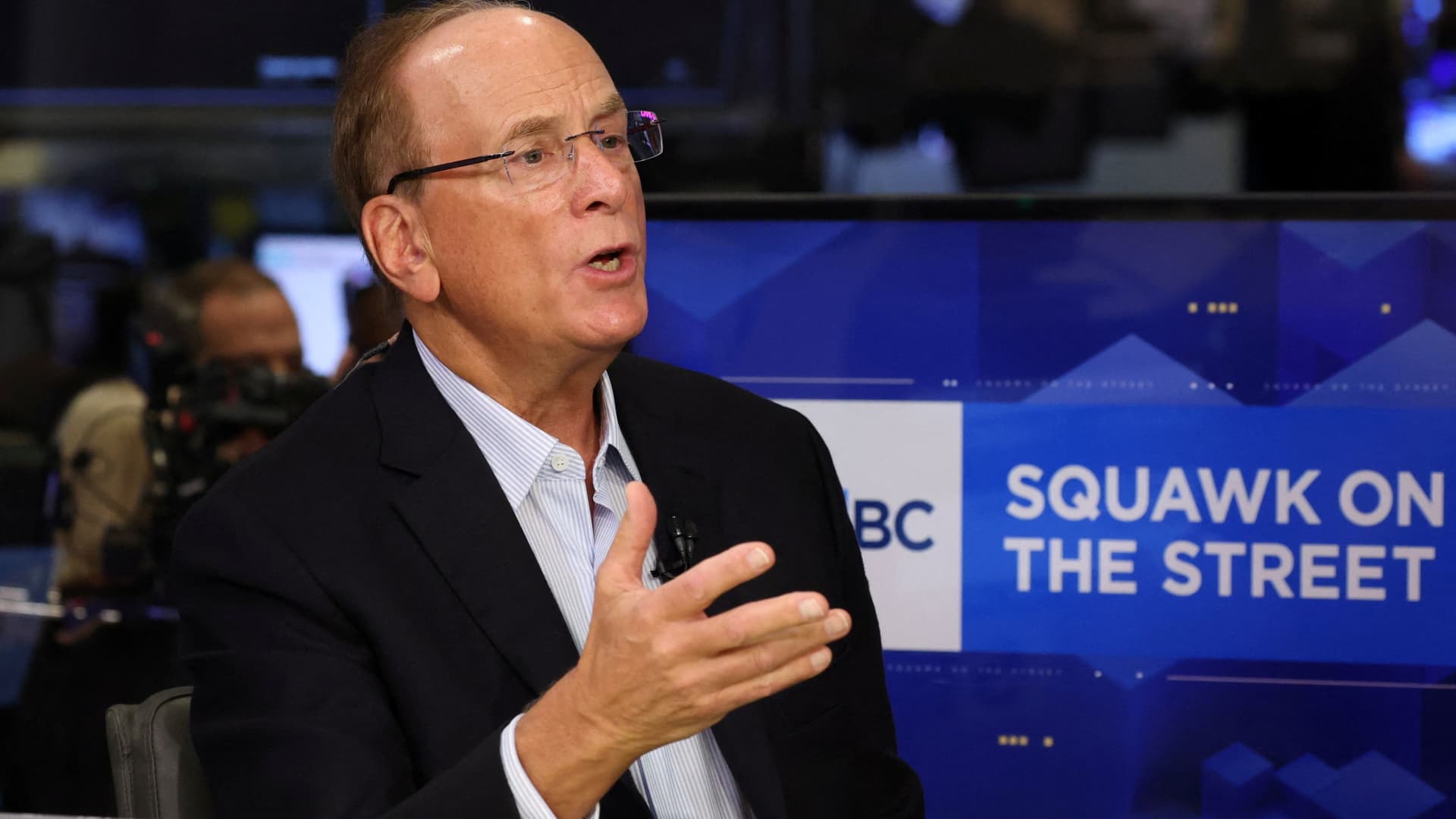
BlackRock’s Larry Fink warns against market timing, says missing best days can halve returns
CNBC· 2026-03-23 14:06
Core Viewpoint - BlackRock CEO Larry Fink emphasizes the importance of staying invested in the market rather than attempting to time it, as historical data shows that long-term investment yields better returns [2][3]. Group 1: Investment Strategy - Fink highlights that over the past two decades, every dollar invested in the S&P 500 has grown more than eightfold, while missing just the 10 best days would have resulted in earning less than half as much [2]. - The current market is influenced by rapid sentiment shifts related to geopolitics, inflation, and technological changes, which can lead to volatility [3]. Group 2: Economic Trends - Fink warns that the traditional model of global capitalism is fracturing, with countries investing heavily to achieve self-reliance in energy, defense, and technology [4]. - The rise of artificial intelligence is expected to exacerbate wealth inequality, benefiting those who already own financial assets while leaving others behind [5]. Group 3: Market Dynamics - Companies associated with artificial intelligence have significantly contributed to recent equity market gains, resulting in concentrated returns among a limited number of firms and their shareholders [6]. - BlackRock, as the world's largest asset manager, manages $14 trillion in assets as of the end of 2025, indicating its substantial influence in the investment landscape [4].


The Best Index ETF to Invest $1,000 in Right Now
The Motley Fool· 2025-11-11 09:50
Core Insights - The Vanguard S&P 500 ETF is recommended as a strong investment option despite recent market fluctuations [1][2] - A dollar-cost averaging strategy is suggested for long-term wealth building, emphasizing consistent monthly investments [3][4] - Historical data indicates that market timing can be detrimental, as missing key market days significantly impacts returns [5][6] Investment Strategy - Investing in the Vanguard S&P 500 ETF allows exposure to the 500 largest U.S. companies, balancing growth and value stocks [9][10] - The ETF's performance is driven by a market capitalization-weighted index, benefiting larger companies over time [10] - The Vanguard S&P 500 ETF has achieved an average annual return of 14.6% over the past decade, supporting long-term investment strategies [13] Market Analysis - Recent earnings reports have led to volatility, with some sectors like SaaS and restaurants losing favor [1] - J.P. Morgan's analysis shows that all-time highs in the market are common, occurring on about 7% of trading days, with many not experiencing subsequent declines [5] - The study also highlights that 42% of stocks in the Russell 3000 Index had negative returns from 1980 to 2020, underscoring the importance of investing in a diversified index like the S&P 500 [11]

Time in the market is more powerful than timing the market
Yahoo Finance· 2025-10-22 13:00
Core Insights - The primary risk in investing is not market volatility but the reaction to it, emphasizing the importance of maintaining a long-term perspective during turbulent times [1] - Historical data shows that significant market declines occur frequently, yet the S&P 500 has a high success rate for long-term investors, reinforcing the value of staying invested [2] Group 1: Market Behavior - Market cycles are inherent to investing, with significant declines of at least 5% occurring in 92 out of 98 years since 1928 [2] - The S&P 500 has been positive 79% of the time over one-year periods, and this success rate increases to 100% for those who remain invested for 11 years or more [2] - Despite a sharp selloff in April due to tariff fears, the S&P 500 rebounded more than 30% [2] Group 2: Investment Strategies - Avoid attempting to time the market, as staying invested through cycles allows for potential growth despite short-term fluctuations [4] - Regular contributions to savings and investments, such as through retirement plans or IRAs, are crucial for long-term success, especially when asset prices dip [5] - Diversification is essential for stabilizing a portfolio, as it prevents all assets from moving in the same direction during market shifts [6]