希格斯粒子

Search documents
追忆杨振宁:一段跨度50年对“物理学的未来”的思考
2 1 Shi Ji Jing Ji Bao Dao· 2025-10-21 12:48
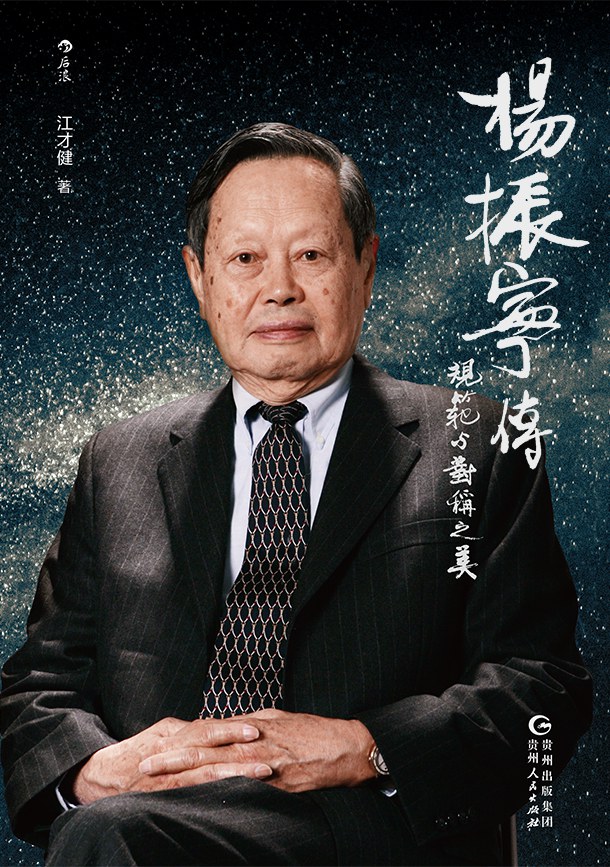
Core Viewpoint - The article commemorates the life and contributions of renowned physicist Yang Zhenning, who passed away at the age of 103, highlighting his scientific explorations and reflections on the future of physics [1]. Group 1: Yang Zhenning's Life and Work - Yang Zhenning returned to Beijing in December 2003 after spending 58 years in the United States, marking a significant transition in his life [3]. - He continued to publish high-quality papers in leading journals, focusing on statistical physics, a field he had previously set aside due to a lack of experimental validation [3]. - Yang expressed gratitude for being able to work at the forefront of science at an advanced age, a rarity in scientific history [4]. Group 2: Contributions to Education and Innovation - After returning to China, Yang became involved in broader educational, cultural, and political issues, frequently giving public lectures across China and in other Chinese-speaking regions [4]. - He identified four types of innovation, emphasizing the importance of certain types for contemporary China, particularly those akin to the innovations of Bill Gates and Nintendo [4]. Group 3: Publications and Reflections - Yang Zhenning's book "Dawn Collection," published in 2018, reflects on significant changes in China and the world over the past decade, indicating a shift from darkness to dawn [6]. - The collection includes essays that showcase his views on the value of physics and its future, emphasizing the importance of conceptual development in the field [6][7]. - In his writings, Yang discussed the evolution of physics in the 20th century and the challenges faced in the post-World War II era, particularly regarding the extension of observable experiences into non-physical realms [10][11]. Group 4: Philosophical Insights on Physics - Yang Zhenning articulated his belief that the ultimate judgment in physics must be grounded in reality, contrasting the roles of physicists with those of mathematicians and artists [11]. - He expressed skepticism about the future of physics, suggesting that while significant advancements have been made, deeper conceptual layers remain to be explored [13]. - Yang's reflections on the cultural differences in scientific perspectives highlight the influence of traditional Chinese thought on his worldview [16].