帕金森病病理进程

Search documents
青年博士的科研路:在深耕中凝练方向 在思辨中突破桎梏
Huan Qiu Wang Zi Xun· 2025-05-04 14:04
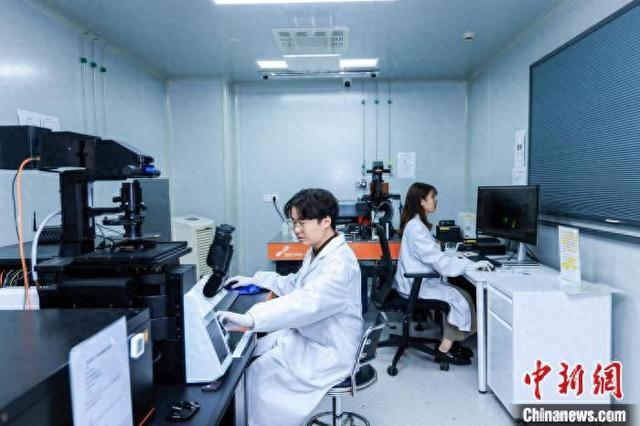
Core Viewpoint - The research team led by Professor Xu Haoxin at Liangzhu Laboratory published significant findings in the journal "Cell," identifying the protein SLC7A11 as a key target in ferroptosis and its role in lysosomal H+ leakage, which regulates lysosomal degradation and the pathology of Parkinson's disease [1]. Group 1: Research Findings - The study utilized a high-throughput screening of a library of small molecules combined with a knockout cell library to discover the molecular basis of the lysosomal slow H+ leakage pathway (Lyso-H2) [1]. - SLC7A11 mediates H+ efflux to maintain acidic homeostasis, influencing cellular iron death and the progression of Parkinson's disease [1]. Group 2: Academic Environment - Liangzhu Laboratory fosters an open and innovative research environment, allowing for deep integration of basic research and clinical practice [2]. - Regular academic forums and seminars provide opportunities for interdisciplinary dialogue, broadening research perspectives [2]. Group 3: Research Challenges and Innovations - Initial research faced challenges in measuring current, leading to difficulties in progress [2][4]. - The team developed innovative fluorescence imaging techniques to directly demonstrate the function of the H+ leakage channel [4]. Group 4: Collaboration and Resources - The laboratory collaborates with hospitals to access valuable resources for studying Parkinson's disease, facilitating the exploration of SLC7A11's role in neurodegenerative disease pathology [4].