细胞铁死亡

Search documents
华人学者一天发表了8篇Nature论文
生物世界· 2025-11-06 09:00
Core Insights - On November 5, 2025, a total of 26 papers were published in the prestigious journal Nature, with 8 authored by Chinese scholars, highlighting the significant contribution of Chinese researchers to global scientific discourse [2][4][7][9][11][13][15][17]. Group 1: Research Contributions - The paper titled "Adenosine signalling drives antidepressant actions of ketamine and ECT" was co-authored by researchers from Beijing Brain Science and Brain-like Research Institute and the Changchun Institute of Applied Chemistry, focusing on the mechanisms of antidepressant effects [2]. - A study on "Transcriptomic and spatial organization of telencephalic GABAergic neurons" was published by researchers from the Allen Institute for Brain Science, contributing to the understanding of GABAergic neuron organization [4]. - The research "Spatial dynamics of brain development and neuroinflammation" from Yale University explores the interplay between brain development and neuroinflammation [7]. - Another significant paper from the Allen Institute discusses "Continuous cell-type diversification in mouse visual cortex development," shedding light on the diversity of cell types during visual cortex development [9]. - The paper "Fair human-centric image dataset for ethical AI benchmarking" from Sony AI addresses ethical considerations in AI through the development of a new image dataset [11]. - Research on "Vector-stimuli-responsive magnetorheological fibrous materials" from Hong Kong Polytechnic University presents innovative materials with potential applications in various fields [13]. - The study "Targeting FSP1 triggers ferroptosis in lung cancer" from NYU Grossman School of Medicine investigates a novel approach to induce cell death in lung cancer [15]. - A paper titled "Myriad Aryne Derivatives from Carboxylic Acids" from the University of Minnesota discusses the synthesis of various aromatic compounds, contributing to the field of organic chemistry [17].


青年博士的科研路:在深耕中凝练方向 在思辨中突破桎梏
Huan Qiu Wang Zi Xun· 2025-05-04 14:04
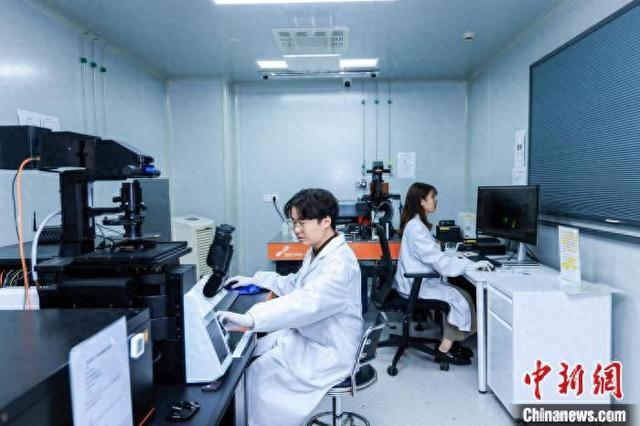
Core Viewpoint - The research team led by Professor Xu Haoxin at Liangzhu Laboratory published significant findings in the journal "Cell," identifying the protein SLC7A11 as a key target in ferroptosis and its role in lysosomal H+ leakage, which regulates lysosomal degradation and the pathology of Parkinson's disease [1]. Group 1: Research Findings - The study utilized a high-throughput screening of a library of small molecules combined with a knockout cell library to discover the molecular basis of the lysosomal slow H+ leakage pathway (Lyso-H2) [1]. - SLC7A11 mediates H+ efflux to maintain acidic homeostasis, influencing cellular iron death and the progression of Parkinson's disease [1]. Group 2: Academic Environment - Liangzhu Laboratory fosters an open and innovative research environment, allowing for deep integration of basic research and clinical practice [2]. - Regular academic forums and seminars provide opportunities for interdisciplinary dialogue, broadening research perspectives [2]. Group 3: Research Challenges and Innovations - Initial research faced challenges in measuring current, leading to difficulties in progress [2][4]. - The team developed innovative fluorescence imaging techniques to directly demonstrate the function of the H+ leakage channel [4]. Group 4: Collaboration and Resources - The laboratory collaborates with hospitals to access valuable resources for studying Parkinson's disease, facilitating the exploration of SLC7A11's role in neurodegenerative disease pathology [4].