平台设计有害

Search documents
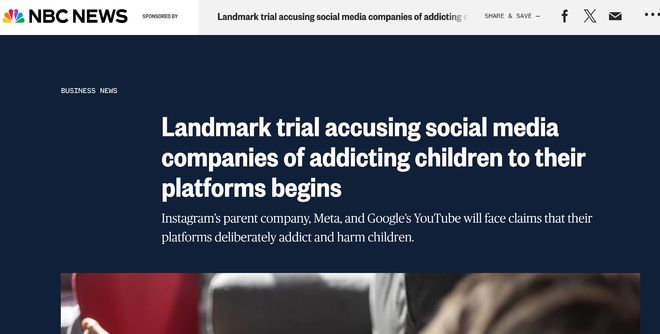
诱导未成年人网络沉迷 Meta、YouTube 被推上被告席
Huan Qiu Wang Zi Xun· 2026-02-12 03:31
Core Viewpoint - The lawsuit against Meta and YouTube regarding "addictive algorithms" for children is a landmark case that could redefine the legal responsibilities of tech giants in the U.S. internet industry, potentially impacting the long-standing legal immunity framework for these companies [1][4]. Group 1: Lawsuit Details - The plaintiff, Carly G.M. (pseudonym), claims that the addictive design of Meta's Facebook and Instagram, as well as YouTube, exacerbated her depression and suicidal tendencies during her teenage years, seeking accountability for her deteriorating mental health [1][3]. - The plaintiff's legal team aims to prove three main points: negligence in product design, insufficient public warnings about usage risks, and that the platform's design was a substantial factor in Carly's psychological harm [3]. Group 2: Legal Implications - The case challenges the existing legal protections for internet companies under Section 230 of the Communications Decency Act, which typically grants them immunity for user-generated content [4]. - A ruling against Meta and YouTube could set a precedent for similar lawsuits, as thousands of related cases are currently pending against companies like Google, Meta, TikTok, and Snap in California [4]. Group 3: Company Responses - Meta has denied the allegations, arguing that Carly's mental health issues stem from her childhood experiences, including parental divorce and abuse, rather than the use of their platforms [3]. - Meta's legal representatives assert that the company has implemented numerous measures to protect users, particularly minors, from potential risks associated with their platforms [5].