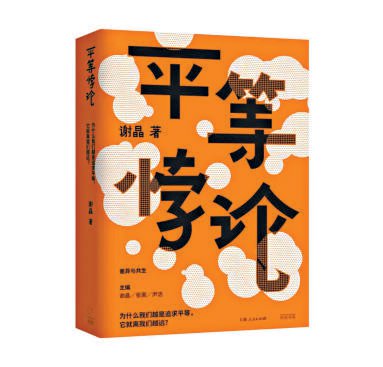
平等悖论

Search documents
为什么我们越追求平等,它就离我们越远?
Xin Lang Cai Jing· 2026-01-15 22:30
Core Argument - The book "The Paradox of Equality" by Xie Jing highlights the increasing inequality in the pursuit of equality, questioning the effectiveness of current equality ideologies and practices [3][4][5]. Group 1: Economic Inequality - The wealthiest 1% of the global population holds nearly 45% of the world's wealth, indicating extreme economic inequality [3]. - Traditional forms of inequality have not diminished but have been obscured and transformed, with new forms of inequality emerging [3][4]. Group 2: Education Inequality - While compulsory education has raised the educational baseline, the gap between different educational levels remains significant, comparable to the era of high illiteracy rates [3][4]. - Quality educational resources are highly concentrated in major cities and prestigious institutions, masking the reality of educational inequality [3][4]. Group 3: Gender Inequality - The success of a small number of women in breaking the "glass ceiling" often comes at the expense of other women, shifting the inequality from gender to class among women [3][4]. Group 4: Critique of Equality Ideologies - The author challenges the foundational concepts of equality, suggesting that our understanding may inadvertently uphold hierarchies and domination [4][5]. - The notion of "natural state" and "property rights" is critiqued as social constructs that justify inequality [4][5]. - The belief in "unlimited progress" leading to universal benefits is questioned, revealing the hidden costs of technological and economic advancements [4][5]. Group 5: Historical Context and Personal Reflection - The book provides a broad historical perspective, revisiting classical theories and contemporary discussions on equality [6]. - It addresses real-life issues such as anxiety, meritocracy, gender discrimination, and class stratification, encouraging personal action to challenge these structures [6][7]. - The author calls for a deeper reflection on the concept of equality, questioning whether it has become an absolute value that overshadows other important values [7].