开源智能体(Agent)框架

Search documents
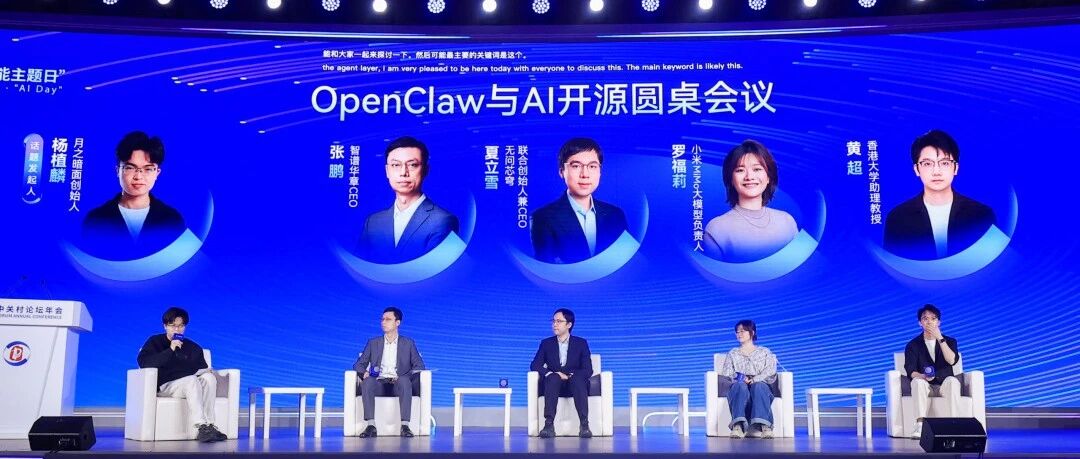
杨植麟、张鹏、罗福莉首度对谈
21世纪经济报道· 2026-03-29 12:30
Core Insights - The article discusses the emergence of the open-source AI agent "OpenClaw" and its implications for the AI industry, highlighting a shift in expectations for large models and their capabilities [1][4]. Group 1: OpenClaw and Its Impact - OpenClaw represents a significant evolution in AI agents, breaking barriers that previously limited their use to tech enthusiasts, allowing ordinary users to leverage advanced programming and execution capabilities [4]. - The introduction of OpenClaw has led to a dramatic increase in token consumption, with some companies reporting a tenfold increase in token usage within a short period, reminiscent of the rapid growth seen during the 3G mobile era [8]. - The agent framework has activated the latent capabilities of pre-trained models, enabling them to handle more complex tasks and longer contexts, which is now a competitive focus in the industry [5][9]. Group 2: Infrastructure and Model Architecture - The rapid growth in token demand necessitates urgent changes in computational infrastructure and model architecture, with companies needing to rethink their systems to better support AI demands [8]. - Current infrastructures are primarily designed for human engineers rather than AI, indicating a need for evolution towards self-iterating intelligent organizations that can autonomously manage computational resources [8]. - The competition in model architecture is intensifying, with a focus on efficient training and low-cost inference, particularly as models are required to manage longer contexts and more complex tasks [9]. Group 3: Challenges to Adoption - Despite the excitement surrounding AI agents, there are significant technical hurdles that must be overcome for widespread adoption, including planning capabilities, memory management, and the quality of the ecosystem [12][13]. - The experience of using OpenClaw has improved, but underlying issues remain unresolved, indicating that the current enthusiasm may still be in a novelty phase rather than a fully mature stage [12][13]. - A holistic approach involving collaboration across the software and hardware ecosystem is essential for AI agents to transition from experimental to practical applications in production environments [13].