MiMo大模型

Search documents
杨植麟、张鹏、罗福莉首度对谈
21世纪经济报道· 2026-03-29 12:30
Core Insights - The article discusses the emergence of the open-source AI agent "OpenClaw" and its implications for the AI industry, highlighting a shift in expectations for large models and their capabilities [1][4]. Group 1: OpenClaw and Its Impact - OpenClaw represents a significant evolution in AI agents, breaking barriers that previously limited their use to tech enthusiasts, allowing ordinary users to leverage advanced programming and execution capabilities [4]. - The introduction of OpenClaw has led to a dramatic increase in token consumption, with some companies reporting a tenfold increase in token usage within a short period, reminiscent of the rapid growth seen during the 3G mobile era [8]. - The agent framework has activated the latent capabilities of pre-trained models, enabling them to handle more complex tasks and longer contexts, which is now a competitive focus in the industry [5][9]. Group 2: Infrastructure and Model Architecture - The rapid growth in token demand necessitates urgent changes in computational infrastructure and model architecture, with companies needing to rethink their systems to better support AI demands [8]. - Current infrastructures are primarily designed for human engineers rather than AI, indicating a need for evolution towards self-iterating intelligent organizations that can autonomously manage computational resources [8]. - The competition in model architecture is intensifying, with a focus on efficient training and low-cost inference, particularly as models are required to manage longer contexts and more complex tasks [9]. Group 3: Challenges to Adoption - Despite the excitement surrounding AI agents, there are significant technical hurdles that must be overcome for widespread adoption, including planning capabilities, memory management, and the quality of the ecosystem [12][13]. - The experience of using OpenClaw has improved, but underlying issues remain unresolved, indicating that the current enthusiasm may still be in a novelty phase rather than a fully mature stage [12][13]. - A holistic approach involving collaboration across the software and hardware ecosystem is essential for AI agents to transition from experimental to practical applications in production environments [13].

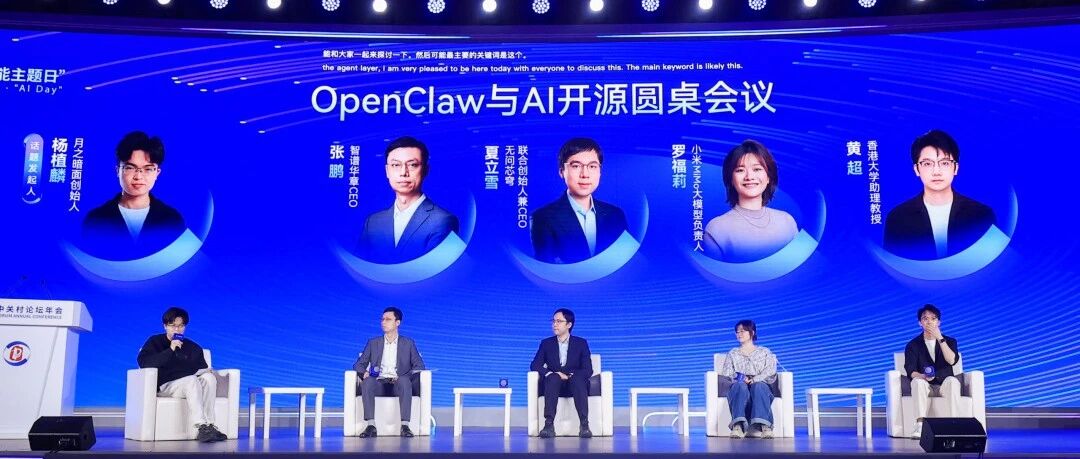
中国有机会成为世界Token工厂?月之暗面、智谱、无问芯穹、小米这么说……
证券时报· 2026-03-27 10:25
Core Insights - The article discusses the transformative impact of OpenClaw on the AI industry in China, highlighting a significant increase in token demand and the potential for China to become a global "Token factory" [1][4][13]. Group 1: OpenClaw and AI Models - OpenClaw has raised the ceiling for domestic open-source models, enabling them to perform at levels close to top-tier models like Claude [5]. - The framework of OpenClaw allows weaker models to excel in complex tasks through a sophisticated control framework and modular skills [5]. - The rapid growth in token usage, which has increased tenfold since late January, is likened to the surge in mobile data usage during the 3G era [6]. Group 2: Infrastructure and Future Challenges - The current cloud computing infrastructure is designed for human engineers rather than AI, indicating a need for future systems to evolve into intelligent agents capable of self-iteration [8]. - The challenge lies in the cost and speed of processing long contexts, which is essential for the self-evolution of models [10]. - There is a pressing need for sustainable and large-scale token production to support advanced models in various applications [11]. Group 3: Economic Implications and Global Positioning - The shift from "Made in China" to "AI Made in China" emphasizes the goal of leveraging China's advantages in energy and manufacturing to produce high-quality tokens for global distribution [13]. - The price adjustments for advanced models reflect the natural progression towards normalizing commercial value in the industry [9].
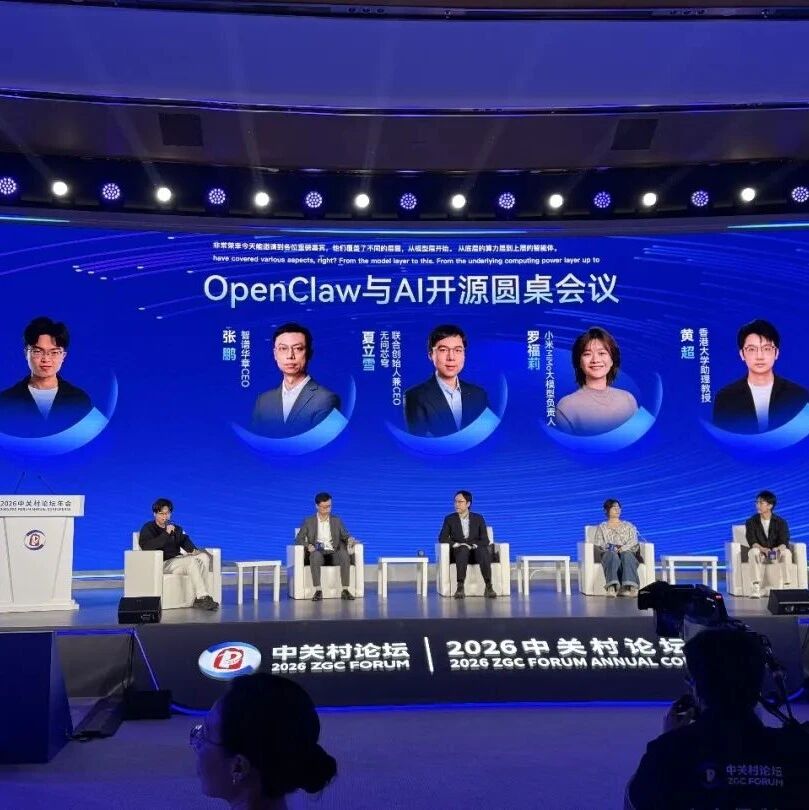
雷军,只给笔记本留了十多分钟
虎嗅APP· 2026-03-20 07:39AI Processing
以下文章来源于AGI接口 ,作者梁卡尔 这种渴望认同的情绪在讲到"18向调节运动座椅"时达到了一个微妙的顶点。 面对台下一瞬间的寂静,雷军 甚至直接喊话打破沉默:"掌声不热烈,我知道大家不知道什么叫18向调节"。在宣布价格环节,他似乎全 然忘记了台下正坐着李想和何小鹏,脱口而出了那句,"相对同行更优惠"的营销话术。 这种"进击者"的亢奋曾在早年小米手机的发布会上多次出现,而这一次在小米汽车代言人舒淇与苏炳添登 场后被推向了巅峰。然而,当狂欢褪去,转场回到那台时隔四年、"重磅回归"的小米品牌笔记本时,出现 了一丝诡异的"温差"。 雷军不再向台下索要掌声了,他开始加快语速,甚至显得有些像在例行公事地念PPT。仅用了10分钟零几 秒,这款"重磅回归"的产品便完成了陈述。紧随其后的智能手表更是被浓缩到了区区5分钟。相比之下,发 布会结尾那场例行的情怀煽情,雷军足足用了3分钟。 AGI接口 . AI卷起的财富风暴。 新品或上市就面临着竞争压 出品 | 虎嗅科技组 作者 | 梁卡尔 编辑 | 苗正卿 头图 | 视觉中国 3月19日晚,在时长近120分钟的小米新春发布会上,时间被精确地划分为两个截然不同的平行世界。 前半场 ...
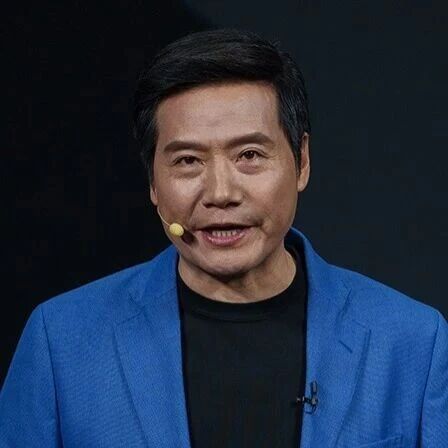
这届MWC真成了中国AI主场,小米直接把AI从对话框里拽出来接管物理世界了
量子位· 2026-03-03 04:25
Core Viewpoint - The global AI competition is shifting from a focus on technical exploration to practical application, emphasizing the importance of real-world implementation over mere model size and parameters [1][2]. Group 1: AI Landscape and Competition - The AI competition landscape is evolving, with a clear shift towards who can effectively deploy AI in real-world scenarios [2][11]. - China is emerging as a leader in this new phase due to its vast application scenarios, rich data density, and comprehensive hardware ecosystem [3][11]. - The recent MWC event showcased China's AI capabilities, highlighting the country's advancements in practical AI applications [4][25]. Group 2: Xiaomi's AI Innovations - Xiaomi demonstrated a high level of AI integration across its "people, vehicles, and home" ecosystem at MWC, showcasing AI's role in everyday life [6][15]. - The company introduced the Miloco system, which utilizes AI to create a unified decision-making hub for smart homes, enhancing user experience through automation [17][23]. - Miloco's capabilities include automatic recognition of user behavior and seamless coordination among devices, marking a significant step towards practical AI applications [18][24]. Group 3: Technological Foundations - Xiaomi's MiMo model is positioned among the top tier of global open-source models, providing a robust foundation for AI applications in real-world environments [8][29]. - The company has made significant investments in AI research, with plans to allocate approximately 75 billion yuan for AI development in 2025, focusing on integrating model capabilities with hardware ecosystems [43][44]. - The synergy between Xiaomi's advanced AI capabilities and its extensive hardware ecosystem is crucial for enabling AI to operate effectively in physical spaces [46][49]. Group 4: Market Trends and Future Outlook - The AI industry is witnessing a transition from performance-based competition to a focus on systemic capabilities and real-world applications [54][56]. - China's AI advancements are increasingly evident in various sectors, including transportation and energy, with practical applications becoming more commonplace [58][60]. - Xiaomi's comprehensive ecosystem positions it favorably in the global market, allowing for a seamless integration of AI into daily life, thus paving the way for scalable real-world applications [66][68].
小米2025:大模型怎么走向现实?答案在“人车家”
Xin Lang Cai Jing· 2026-01-07 10:52
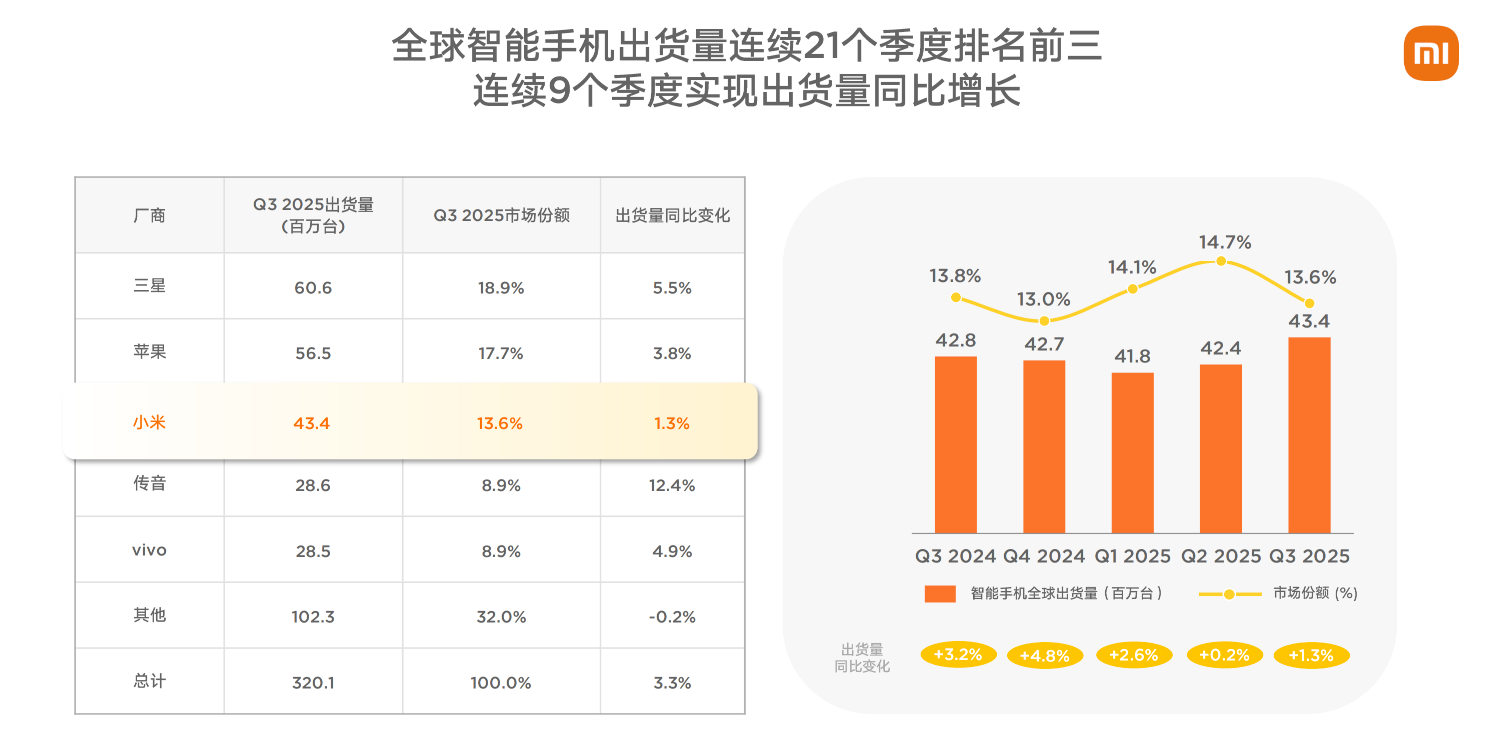
Core Insights - Xiaomi's transformation by 2025 is driven by three key factors: the density of its engineering team, long-term R&D investment capability, and the will to continue betting on uncertain directions [1][53][102] - The focus is not merely on the success of individual products but on the formation of a cohesive structure within the larger AI wave, where the competition is about having complex, real, and continuous application scenarios [1][53] Smartphone Business - Xiaomi's smartphone shipments in Q3 2025 reached 43.4 million units, maintaining a global market share of 13.6%, and showing a 1.3% year-on-year increase [3][54] - In the Chinese market, Xiaomi's sales in the 4000 yuan and above price segment rose to about 25%, indicating a shift from occasional high-end hits to a structural component of its offerings [5][56] - The smartphone has evolved from a high-cost-performance terminal to an ecological entry point, serving as a personal identity credential and a control hub for the interconnected ecosystem of vehicles and home appliances [5][56] Automotive Business - Xiaomi's electric vehicle deliveries reached a record high of 108,800 units in Q3 2025, with total deliveries exceeding 250,000 units in the first three quarters, and an annual target of over 400,000 units [8][59] - The automotive business transitioned from loss-making to operational profitability, with Q3 2025 revenue of approximately 28.3 billion yuan, nearly tripling year-on-year, and a gross margin of around 25% [11][62] - Xiaomi's self-developed intelligent driving technology has received multiple high-level driving licenses, showcasing its commitment to full-stack self-research in smart driving [13][64] AIoT Ecosystem - By Q3 2025, Xiaomi's AIoT platform connected over 1 billion devices, marking a significant increase from 624 million devices at the end of 2023 [22][73] - The AIoT ecosystem has evolved from "connecting everything" to "intelligent interconnection," with the voice assistant, Xiao Ai, upgraded to serve as a smart home hub capable of executing complex cross-device commands [23][74] - Xiaomi's AIoT devices are now part of a dynamic system that integrates user intent, cloud-based models, and home devices, enhancing the overall user experience [22][73] R&D and Manufacturing - Xiaomi's R&D investment in 2025 is projected to exceed 30 billion yuan, with a focus on building long-term capabilities rather than just optimizing functions and experiences [34][96] - The establishment of the Wuhan smart home appliance factory, with a planned annual capacity of 7 million air conditioners, represents a significant step in achieving a complete closed-loop from R&D to mass production [18][69] - Manufacturing capabilities have been enhanced through automation and digitalization, with the Beijing smartphone factory achieving high production efficiency and the automotive factory implementing advanced manufacturing techniques [41][94] Future Outlook - Xiaomi's strategy is to integrate all dispersed devices, scenarios, data, and capabilities into a cohesive system, positioning itself uniquely in the AI landscape [99][101] - The company is seen as an "ecological empire," with a complete structure that connects smartphones, vehicles, home appliances, and IoT, continuously expanding its boundaries and capabilities [50][101] - Xiaomi's long-term vision emphasizes patience in building foundational capabilities, which will support the expansion of its interconnected ecosystem [102]

2025港科股的“冰与火之歌”:AI价值兑现终究花落谁家?
Ge Long Hui· 2025-12-27 06:22
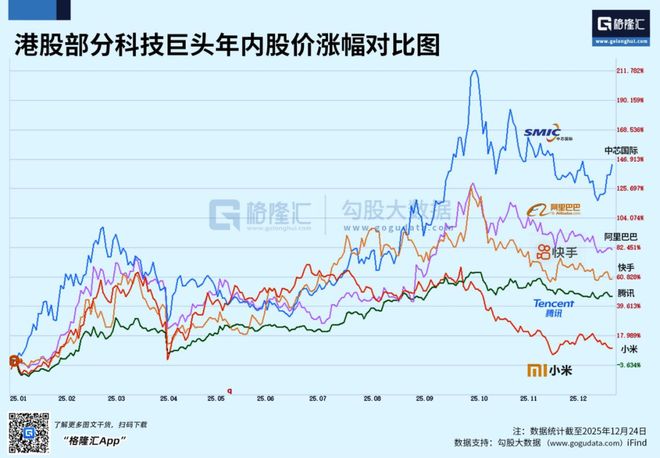
Core Viewpoint - The core narrative of the Hong Kong stock market in 2025 was driven by AI, with significant structural trends observed in the technology sector, highlighted by a notable increase in the Hang Seng Tech Index and substantial inflows of capital into AI-related stocks [2][6][33]. Group 1: AI as a Growth Driver - AI technology transitioned from a speculative concept to a value-realization phase, becoming a critical growth driver for the technology industry [6][14]. - The performance of major tech companies like Alibaba and Tencent was significantly enhanced by their AI strategies, with Alibaba's stock rising over 80% and Tencent's by over 46% due to successful AI implementations [7][9]. - The overall market sentiment towards AI remained strong, with a projected $10 trillion market opportunity for the global tech industry over the next five years due to AI penetration [13][14]. Group 2: Individual Company Performance - Alibaba's AI-related revenue saw triple-digit growth for multiple quarters, with a 34% revenue increase in Q3 2025, reflecting strong market expectations [16][18]. - Tencent's AI initiatives, including the launch of over 30 new models, contributed to a 19% year-on-year increase in adjusted net profit, although its valuation expansion was less pronounced compared to Alibaba [18][21]. - Xiaomi's stock performance lagged behind its peers, with a 13% increase, attributed to a slower realization of AI value despite significant R&D investments exceeding 100 billion RMB over five years [19][20]. Group 3: Valuation Disparities - The valuation of AI-related companies showed clear differentiation, with Alibaba's AI value fully reflected in its stock price, while Xiaomi's AI capabilities had not yet translated into market consensus [21][22]. - AI vertical companies like SenseTime experienced high valuation premiums, with stock prices increasing over 80% due to their technological advancements [18][19]. - The market has yet to fully price in the AI value of leading Hong Kong tech companies, indicating potential for upward valuation adjustments [20][21]. Group 4: Future Outlook - The investment focus for 2026 is expected to shift from "technological breakthroughs" to "commercialization," with a faster pace of value realization anticipated [33]. - Companies that can effectively integrate AI into their business models and demonstrate scalable applications are likely to continue releasing growth value [33]. - The deep integration of AI with the physical world is seen as an irreversible trend, suggesting that the Hong Kong tech sector will continue to evolve and present investment opportunities [33].

光大证券:2026年港股或迎戴维斯双击 建议聚焦四大AI主线
智通财经网· 2025-12-24 07:02
Core Viewpoint - The Hong Kong stock market is expected to experience a "Davis Double Play" in 2026, driven by valuation recovery, profit growth, and a return to main themes, with a focus on the "Four AI Main Lines" framework to identify structural opportunities in the tech sector during the AI era [1][2]. Investment Focus - The Hang Seng Index is anticipated to regain upward momentum, with the Hang Seng Tech Index expected to outperform the broader market. The tech sector, representing core assets of China's new economy, is projected to be the strongest driver of market rebound [2]. Main Line 1: Internet Giants - AI is shifting competition among internet giants from traffic to ecosystem capabilities. Cloud business is accelerating due to AI demand, with capital expenditure doubling and stable profit margins. Advertising is seeing immediate monetization benefits from AI, with click-through rates increasing by 15%-20%. Key investment targets include Tencent, Alibaba-W, and Kuaishou, which are well-positioned to leverage technology and data [3]. Main Line 2: AI Computing Power Industry Chain - Leading companies are consistently exceeding expectations, with strong capital expenditure from cloud vendors and tight chip supply countering "bubble" concerns. High infrastructure investment and high ROI are justified, indicating a robust AI industry cycle. Key opportunities include communication networking benefiting from global tech upgrades, semiconductor manufacturing for domestic substitution, and critical equipment and materials for computing power upgrades [4]. Main Line 3: AI Applications - Investment in AI applications has entered a phase where performance is paramount. Clear signals of commercialization acceleration are observed in key sectors such as SaaS, content ecosystems, and advertising. The evolution of enterprise tools into "intelligent agents" is driving ARPU growth, while AIGC is lowering creation costs, leading to synchronized user and revenue growth [5]. Main Line 4: AI End-User and Robotics - The year 2026 is projected to be pivotal for AI-defined hardware and large-scale production of robots. Hardware manufacturers like Apple and Xiaomi are enhancing AI capabilities, while tech giants like OpenAI and Google are entering hardware markets. The investment landscape includes a comprehensive mapping of the robotics industry chain, highlighting opportunities from upstream expansion and capital empowerment, with humanoid robots like Tesla's Optimus expected to reach significant production levels [6].

震惊!27岁姚顺雨任腾讯首席AI科学家,95后罗福莉掌舵小米大模型!00后、95后站上AI舞台中央
Xin Lang Cai Jing· 2025-12-19 01:44
Group 1 - Tencent announced that Yao Shunyu, a scientist from OpenAI and a Tsinghua University graduate, has been appointed as the Chief AI Scientist in the CEO's office, reporting directly to Tencent's president Liu Chiping [2][52] - Xiaomi announced that 95后 AI talent Luo Fuli has been appointed as the head of the MiMo large model, reportedly with a salary of tens of millions [5][55] - Both individuals, aged 27 and under 30, are now at the forefront of China's AI landscape, sparking discussions among parents about the implications for their own children [6][56] Group 2 - The average salary for AI talent in Silicon Valley is at least $1 million, while in China it is around 1 million RMB, with top talent earning significantly more [8][63] - The disparity in salaries is stark, with AI talent earning 16.7 times more than the average graduate salary in China, which is around 6,000 RMB per month [24][66] - The trend of young individuals leading in AI is not an anomaly; many tech founders, including those of major companies, were under 30 when they started their ventures [14][60] Group 3 - Young people are able to create disruptive innovations due to their lack of "path dependency," allowing them to explore new ideas without being constrained by past successes [21][68] - The phenomenon of "getting obsessed" with new technologies is seen as a valuable trait, encouraging young individuals to fully engage with their interests [27][72] - The current wave of AI represents a significant technological shift, and those who engage with it early can become experts as the field evolves [32][77] Group 4 - To cultivate innovative talent in the AI era, it is essential to encourage children to pursue their passions and not to hinder their enthusiasm for new technologies [33][78] - Helping children "catch the first wave" of technology involves providing them with resources and opportunities to explore their interests deeply [39][80] - The market values the ability to solve real-world problems over academic credentials, emphasizing the importance of practical skills in the current job landscape [43][83]

雷军豪赌的95后天才少女,首秀炸了!
Sou Hu Cai Jing· 2025-12-18 07:06
Core Insights - Xiaomi is making a significant push into AI, highlighted by the introduction of the MiMo-V2-Flash model at the 2025 "Human-Vehicle-Home Ecosystem" partner conference [2][4][6] - The company has shifted its strategy from skepticism about large models to a full commitment, recognizing the necessity of AI for its hardware ecosystem [10][14] Group 1: AI Model Development - The MiMo-V2-Flash model has only 309 billion parameters, with 15 billion activated parameters, yet it ranks among the top two globally in code execution capability [6][7] - The model's inference speed is three times faster than its competitor DeepSeek-V3.2, while its cost is only one-twentieth of Gemini 2.5 Pro, indicating a significant achievement in low-cost, high-speed AI [7] - Xiaomi's AI development is now closing the gap with leading international models, with only a few months' difference compared to top closed-source models [7][12] Group 2: Strategic Importance of AI - The integration of AI is crucial for Xiaomi, as it aims to transform from a hardware manufacturer to a provider of intelligent services, leveraging its vast IoT ecosystem of 1.04 billion devices [14][16] - The company is investing 200 billion yuan in R&D over the next five years, with 40 billion yuan expected in 2026, reflecting the urgency to innovate amid pressures in its smartphone and automotive sectors [14][16] - The hiring of Rofo Li, a prominent AI talent, is seen as a strategic move to enhance Xiaomi's AI capabilities and is indicative of the company's commitment to developing its own AI models [12][16] Group 3: Challenges Ahead - Despite the advancements, Xiaomi faces challenges in achieving high-level reasoning on edge devices due to physical limitations and the need to adapt traditional hardware engineers to new AI paradigms [16] - The success of Xiaomi's AI strategy will depend on whether the MiMo model can outperform existing models in usability and efficiency [14][16]
AI才女罗福莉,小米职位曝光,和大家见面的时间也定了
新华网财经· 2025-11-19 12:13
Core Viewpoint - Xiaomi is intensifying its investment in AI and big model research, highlighted by the upcoming 2025 Xiaomi Human-Vehicle-Home Ecosystem Partner Conference on December 17, 2023, and the recent recruitment of AI expert Luo Fuli [1][4][11]. Group 1: Event Announcement - The Xiaomi Human-Vehicle-Home Ecosystem Partner Conference is scheduled for December 17, 2023, with online registration now open [1]. - Key speakers at the main forum will include Xiaomi Group partners and President Lu Weibing, along with Luo Fuli, who will debut as the head of the MiMo big model team [4]. Group 2: Recruitment of Luo Fuli - Luo Fuli's recruitment has been anticipated, as Xiaomi's CEO Lei Jun previously expressed interest in hiring her with a significant salary [6]. - Luo Fuli announced her joining Xiaomi through social media, emphasizing her commitment to building a future in AI [6][9]. Group 3: Investment in AI - Xiaomi has established a big model team and is building a GPU cluster, starting with 6,500 GPU resources, to enhance its R&D capabilities in AI [11]. - The company has invested 23.5 billion yuan in R&D this year, with a quarter of that amount allocated to AI, indicating a commitment that exceeds initial expectations [11].