微改精治

Search documents
“微改精治”让城市更宜居
Xin Lang Cai Jing· 2026-02-02 18:02
Core Viewpoint - The "micro-renovation" approach in urban renewal projects aims to revitalize historical and cultural aspects of cities while enhancing livability and addressing urban issues like uniformity and lack of vitality [1][2][3] Group 1: Urban Renewal Strategy - The "micro-renovation" concept aligns with the strategic requirements of modern urban development, focusing on quality improvement and efficiency in existing urban spaces rather than large-scale expansion [1][2] - The transition from rapid urbanization to stable development emphasizes the importance of urban renewal, which is crucial for enhancing urban quality and improving citizens' well-being [1][2] Group 2: Cultural and Historical Revitalization - Revitalizing historical contexts through micro-renovation helps citizens reconnect with their city's cultural heritage, ensuring that historical symbols are preserved and activated [2] - Introducing new business models and scenes that fit the character of neighborhoods can breathe life into old buildings and stories, fostering a deeper connection to the city's roots [2] Group 3: Enhancing Community Well-being - Small changes in urban infrastructure, such as seating and lighting, reflect a shift from functionality to a people-centered approach in urban governance [2] - The key to successful micro-renovation lies in addressing community needs and transforming underutilized spaces into vital components that enhance residents' quality of life [2] Group 4: Urban Resilience and Aesthetic Improvement - The expectation is that urban renewal projects will not only improve the visual appeal of cities but also enhance the overall experience of daily life for residents, preserving local character [3]
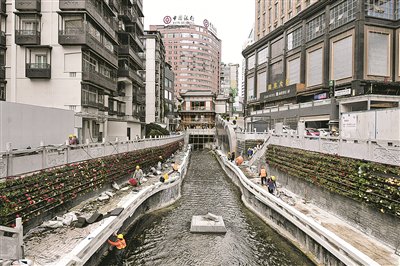
“精微手术”唤醒“玉带水街”
Xin Lang Cai Jing· 2026-02-01 22:24
Core Viewpoint - The article discusses the urban renewal project of the Guancheng River in Guiyang, emphasizing its historical significance and the multi-faceted approach to revitalizing the area, integrating ecological restoration, cultural heritage, and commercial vitality [2][3][9]. Group 1: Project Overview - The Guancheng River, a vital part of Guiyang's historical and cultural landscape, is undergoing a micro-renovation project aimed at enhancing its ecological, cultural, and commercial value [3][4]. - The project is part of a broader initiative in the Nanming District, focusing on the integration of historical culture, improved living standards, activated commercial vitality, and upgraded urban image [2][4]. Group 2: Design and Implementation - The design philosophy of the project emphasizes a blend of cultural heritage and modern design, aiming for a comprehensive integration of ecological, cultural, and commercial functions [4][5]. - The project has completed renovations over approximately 51,000 square meters, including the restoration of old residential buildings, ecological and landscape enhancements, and infrastructure upgrades [6][9]. Group 3: Cultural and Community Impact - The project incorporates cultural elements deeply into its design, ensuring that historical narratives and local culture are preserved and presented through various community activities and installations [7][10]. - Community feedback highlights significant improvements in living conditions, with residents expressing satisfaction over the enhanced environment and aesthetic appeal of the area [10][11]. Group 4: Economic Revitalization - The project aims to diversify the commercial landscape by introducing a mix of cultural, leisure, and service-oriented businesses, thereby enhancing the overall economic vitality of the area [10][11]. - A systematic approach to business development has been adopted, focusing on retaining, enhancing, and attracting various commercial entities to create a vibrant marketplace [10][11].