志愿联盟

Search documents
在乌克兰部署“多国部队”可能吗? 可以预计起码有三个困难
Xin Lang Cai Jing· 2026-01-09 23:52
Core Viewpoint - The meeting held in Paris on January 6, involving the "Volunteer Alliance" and representatives from Ukraine and the U.S., focused on security guarantees for Ukraine following a potential peace agreement with Russia, with notable intentions from the UK and France to possibly deploy troops to Ukraine for peacekeeping purposes [2][3][5]. Group 1: Meeting Outcomes - The "Volunteer Alliance," led by the UK and France, aims to provide continued support to Ukraine amidst changing U.S. policies under Trump, with over 30 countries participating [3]. - A joint declaration was signed by leaders at the meeting, emphasizing strong security guarantees for Ukraine to achieve stable and lasting peace [5]. - U.S. representatives, including Kushner, expressed strong support for establishing a robust security mechanism for Ukraine, indicating a unified stance with the "Volunteer Alliance" [6][7]. Group 2: Potential Troop Deployment - The UK and France have indicated a willingness to send troops to Ukraine post-peace agreement, with Macron suggesting the possibility of deploying "thousands" of troops, although these would not be combat forces [8][12]. - Germany's Chancellor Merz stated that any deployment of multinational forces would require a specific ceasefire agreement and Russian consent [12]. - Italy's Prime Minister Meloni confirmed that Italy would not send troops to Ukraine [9]. Group 3: Challenges to Deployment - Three main challenges to troop deployment were identified: 1. Russia's opposition to NATO troops in Ukraine, which it views as unacceptable [10][11]. 2. Internal obstacles within European countries, including public opinion and the need for parliamentary approval for troop deployment [12]. 3. Concerns regarding the reliability of U.S. support, especially given recent actions by the Trump administration that have raised doubts about transatlantic cooperation [12][13].

乌美安全协议基本就绪,俄指认“战争轴心”
Xin Hua Cai Jing· 2026-01-09 00:37
Group 1 - The bilateral security agreement text between Ukraine and the United States is nearly finalized and will be personally approved by the presidents of both countries [1][3] - Ukraine's negotiation team has discussed economic development and a framework for ending the war with allies, and has proposed a final ceasefire plan [3] - Ukraine expects feedback from Russia regarding its sincerity in wanting to end the war, while emphasizing the need for effective pressure on Russia from partners [3] Group 2 - Russia has labeled the "Volunteer Alliance," composed mainly of Western countries, and Ukraine as the "axis of war," claiming that the alliance's agreements are not aimed at achieving lasting peace [5][6] - The "Volunteer Alliance," led by the UK and France, aims to provide security guarantees for Ukraine and establish a plan to end the conflict with Russia [5][6] - The alliance plans to create a politically and legally binding security mechanism once a ceasefire is in effect, which includes a multinational force to support Ukraine's armed forces [6][7] Group 3 - The UK and France have signed a declaration to deploy troops to Ukraine if a peace agreement is reached with Russia [7] - Russian military actions have intensified, with reports of airstrikes affecting over 1 million residents in the Dnipropetrovsk region, leading to disruptions in heating and water supply [7][9] - Russia's defense ministry has stated that military units and facilities deployed by Western countries in Ukraine will be considered legitimate targets for Russian armed forces [9]
援乌“志愿联盟”密集举办多层级会议,俄官员:有关会议“滑稽可笑”,是“无能者的集会”
Huan Qiu Shi Bao· 2026-01-04 23:07
Group 1 - The core viewpoint of the news is that Ukraine is actively engaging with multiple "Volunteer Alliance" countries to discuss security guarantees, reconstruction, and achieving peace, with significant meetings scheduled in the coming days [1][2] - The "Volunteer Alliance," led by the UK and France, consists of over 30 countries aimed at supporting Ukraine, with a focus on military deployment and security arrangements [1][2] - Ukraine's President Zelensky emphasized the necessity of military presence from the UK and France in Ukraine, indicating that not all countries are prepared for such deployment [1] Group 2 - The discussions during the meeting included a "peace plan" where 90% of the content has been agreed upon, with ongoing negotiations on the details [2] - A separate military document was agreed upon between Ukraine and the US, detailing support for the Ukrainian military and logistics, as well as monitoring the execution of peace agreements [2] - The UK Prime Minister and Zelensky discussed the deployment of a multinational force to Ukraine shortly after a potential ceasefire [2] Group 3 - Russian officials criticized the meetings in Ukraine, labeling them as ineffective and highlighting the potential for increased tensions due to foreign military presence [3] - There are concerns that any security guarantees reached with the "Volunteer Alliance" may not be recognized by Russia, and the ongoing conflict remains unresolved [3][4] - Diplomatic efforts to end the conflict have accelerated, but significant disagreements remain, particularly regarding territorial control in Eastern Ukraine [3][4]
俄罗斯外长:欧洲主导的“志愿联盟”军队一旦出现在乌克兰,将成为俄军“合法目标”
Xin Lang Cai Jing· 2025-12-28 16:22
Core Viewpoint - The Russian Foreign Minister Lavrov stated that any European-led "volunteer coalition" army deployed in Ukraine would become a "legitimate target" for Russian armed forces [2] Group 1: European Military Involvement - European countries and EU leaders issued a joint statement proposing a series of security and economic support measures for Ukraine, including the formation of a European-led "multinational force" under the "volunteer coalition" framework, with support from the United States [2] - Lavrov criticized the EU for openly preparing for war with Russia and mentioned the EU's recent unsuccessful attempt to transfer frozen Russian assets to Ukraine [2] Group 2: Frozen Russian Assets - Following the escalation of the Russia-Ukraine conflict in February 2022, Western countries froze approximately $300 billion of Russian overseas assets, with the EU freezing around €210 billion of assets from the Russian central bank [2] - About 90% of the frozen Russian assets within the EU are controlled by the European Clearing Bank based in Brussels [2] - During the EU summit held on the 18th and 19th of this month, the EU failed to reach an agreement on using the frozen Russian assets to finance Ukraine [2]
北约秘书长:驻军细节正加紧制定
Xin Lang Cai Jing· 2025-12-22 17:14
Group 1 - NATO Secretary General Jens Stoltenberg stated that the EU is prepared to send troops to Ukraine if Russia violates the peace agreement, with details being rapidly developed [2] - Some European countries have expressed willingness to send troops if Ukraine requests, and a "volunteer alliance" is being formulated to discuss troop deployment and operational strategies across land, sea, and air [2] - Stoltenberg emphasized the strength of NATO compared to Russia, noting that NATO countries have a combined population of approximately 1 billion, while Russia has about 140 million [2] Group 2 - Stoltenberg outlined a three-layer security guarantee for Ukraine, which includes maintaining the readiness of the Ukrainian military, a volunteer alliance led by France and the UK for post-war support, and the involvement of the United States [2] - He mentioned that U.S. President Donald Trump expressed willingness to intervene in related issues as of August this year [2] - In response to Stoltenberg's comments about potential Russian aggression, President Putin sarcastically questioned the validity of NATO's preparations for war, pointing out that the U.S. National Security Strategy does not label Russia as an enemy [3][4]
乌克兰总统与加拿大总理通电话 讨论战场局势等问题
Yang Shi Xin Wen· 2025-10-11 15:36
Core Points - Ukrainian President Zelensky discussed the current battlefield situation and Russian attacks on Ukraine's energy facilities with Canadian Prime Minister Trudeau [1] - Both leaders explored measures to enhance the resilience of Ukraine's energy system against such attacks [1] - The conversation also included discussions on strengthening cooperation with "Volunteer Alliance" partners [1]
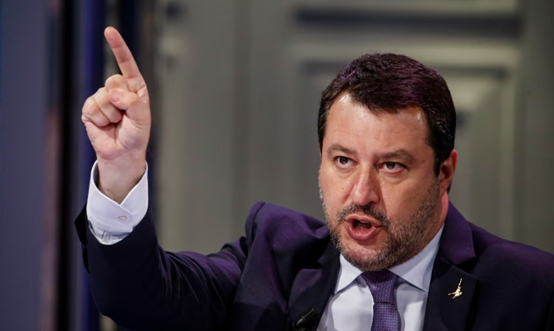
涉马克龙言论激怒法国,意副总理萨尔维尼本人发声,意外长出面“缓和关系”
Huan Qiu Wang· 2025-08-26 09:27
Group 1 - The core viewpoint of the article revolves around the diplomatic tensions between Italy and France, triggered by comments made by Italian Deputy Prime Minister Matteo Salvini regarding French President Macron's stance on Ukraine [1][3]. - Salvini stated that the French reaction to his comments was "excessive" and claimed he did not feel he had been offensive [3]. - Italian Foreign Minister Antonio Tajani emphasized that Salvini's remarks should not affect Italy-France relations and noted that foreign policy is determined by the Foreign Minister and the Prime Minister [3]. Group 2 - Salvini criticized Macron's support for sending troops to Ukraine, suggesting that Macron should personally go to Ukraine equipped for combat [4]. - Following Salvini's comments, the French Foreign Ministry summoned the Italian ambassador to express that Salvini's remarks were "unacceptable" [4]. - Salvini's party, the League, is part of the Italian ruling coalition and opposes sending Italian troops to Ukraine, while discussions are ongoing about a "volunteer alliance" led by France and the UK to provide security for Ukraine [6].
终于发声了!法国总统马克龙:欧洲必须参与乌克兰危机解决方案!
Sou Hu Cai Jing· 2025-08-11 02:22
Core Viewpoint - European leaders, particularly French President Macron, emphasize the necessity for Europe to play a central role in negotiating the resolution of the Ukraine crisis, reflecting a shift from being a follower to a leader in international discussions [1][2][4]. Group 1: European Involvement in Ukraine Crisis - Macron's statements highlight a strong reaction against the historical trend of the U.S. dominating decisions regarding Ukraine's security, with Europe often relegated to a secondary role [2][4]. - The recent phone call among leaders from the UK, Germany, and Ukraine reinforced the message that Europe must actively participate in negotiations, marking a significant shift in diplomatic strategy [2][5]. - The urgency of the situation is underscored by the rapid coordination among European leaders, indicating a desire to assert their influence before potential agreements are reached between the U.S. and Russia [7][9]. Group 2: Implications of European Unity - The collective stance taken by European leaders is crucial for maintaining their voice in the negotiations, as any division could lead to marginalization in discussions between the U.S. and Russia [9][10]. - Ukraine's firm position against territorial concessions aligns with Europe's demands, creating a unified front that complicates any potential flexible proposals from Trump [9][10]. - The recent meetings and statements reflect a growing awareness among European nations that their future security and influence depend on active participation in the resolution of the Ukraine crisis [12][25]. Group 3: Strategic Autonomy and Future Frameworks - Macron's advocacy for a "volunteer alliance" signifies a push for Europe to establish its own security framework, reducing reliance on U.S. support [20][22]. - The evolving European stance includes clear red lines regarding negotiations, such as the rejection of any changes to Ukraine's borders through force and the necessity for Ukraine's involvement in discussions [23][25]. - The increased frequency of European leaders' public statements indicates a concerted effort to assert their position in the diplomatic arena, aiming to secure a central role in future peace agreements [25].
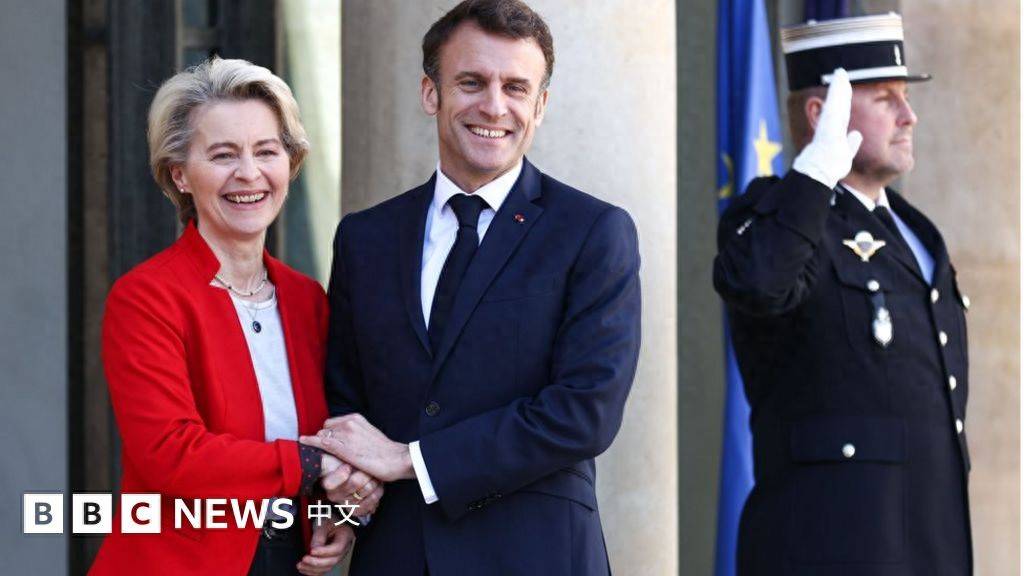
法媒:马克龙访英具有高度政治意义,双方将讨论“志愿联盟”等内容
Huan Qiu Shi Bao· 2025-07-06 22:43
Group 1 - French President Macron's state visit to the UK from October 8 to 10 is seen as an opportunity to restart political trust and pragmatic cooperation between the two countries [1][3] - Key discussion topics during the visit will include the Ukraine issue, immigration, and European defense [3] - This visit marks the first state visit by a head of an EU member state to the UK since its formal exit from the EU, highlighting its political significance [3] Group 2 - Macron is expected to discuss the situation in Gaza and the recognition of Palestine, with differing views on the speed and manner of recognition between the UK and France [3] - Over 21,000 illegal immigrants have crossed the English Channel to the UK this year, highlighting ongoing immigration issues affecting UK-France relations [3] - The two leaders are anticipated to announce new joint measures to tackle immigration, including expanding French police interception powers and promoting a Channel migrant exchange mechanism [4]