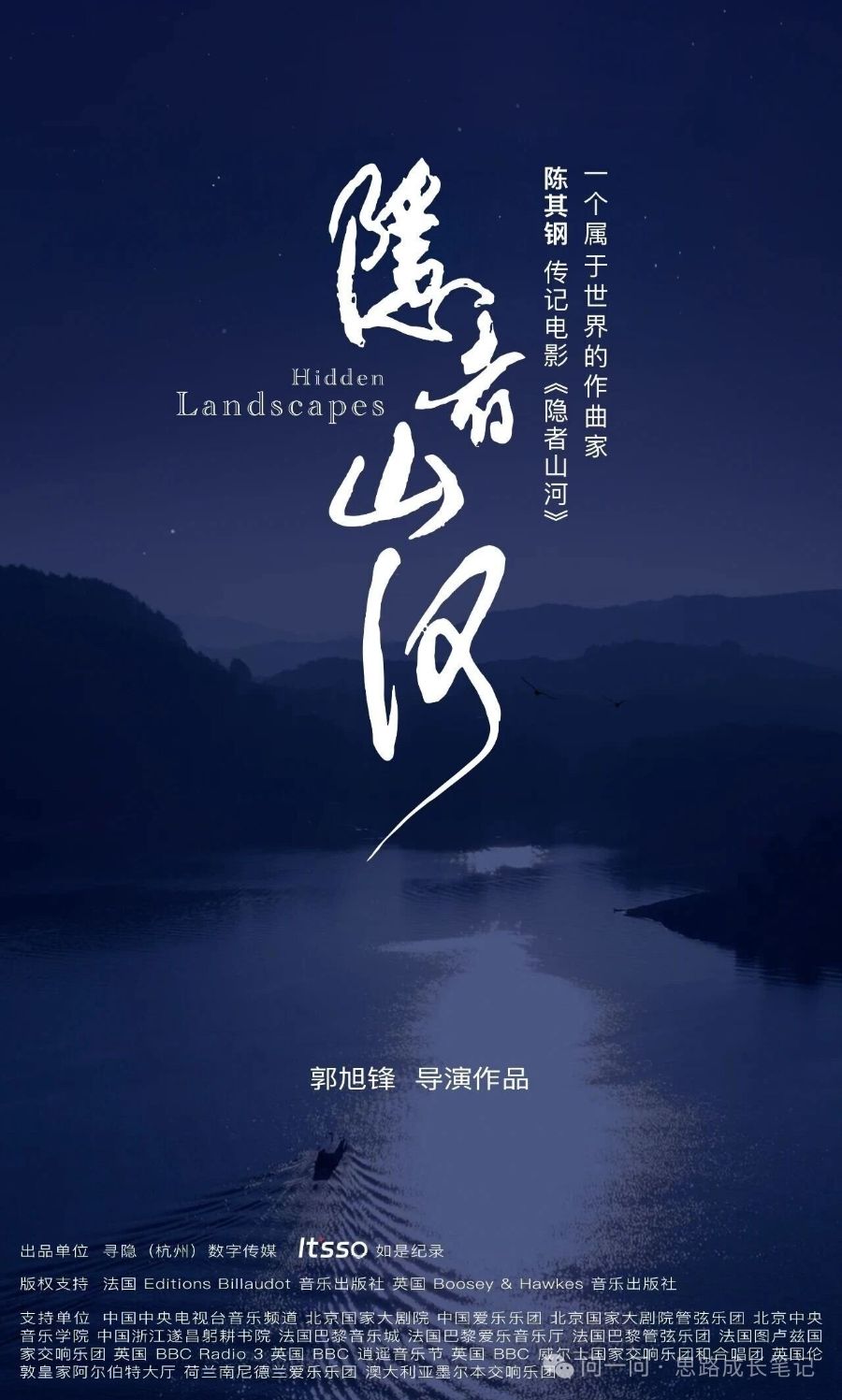
悲喜同源

Search documents
《隐者山河》:悲喜同源 从盛大回归寂静的心灵叙事丨影评
Xin Lang Cai Jing· 2025-12-26 21:02
Core Perspective - The documentary "The Hermit Mountains and Rivers" explores the life and philosophical reflections of composer Chen Qigang, emphasizing his artistic journey and personal struggles with loss and illness [1][3]. Group 1: Personal Journey - The film narrates Chen Qigang's heartfelt relationship with the world, his works, and his inner self, particularly after the tragic loss of his son, which prompts him to confront loneliness as a fundamental theme of life [2][3]. - Chen's journey from China to study in Paris and his evolution into a globally recognized composer, including his role as the music director for the 2008 Beijing Olympics, showcases his significant achievements [4]. Group 2: Artistic Expression - The music in "The Hermit Mountains and Rivers" serves as the soul and narrative of the film, with all the score composed by Chen Qigang, reflecting his life philosophy of intertwining joy and sorrow [5][6]. - Various musical pieces, such as "Er Huang," "Ten Thousand Years of Joy," and "The Source of Joy and Sorrow," highlight Chen's technical prowess and the fusion of Eastern and Western cultures [7]. - The film also features familiar film scores like "The Hawthorn Tree" and "The Return," illustrating Chen's ability to blend Western structure with Eastern expressiveness [9]. Group 3: Philosophical Themes - The piece "Jiang Cheng Zi" poignantly encapsulates Chen's grief over his son's death, merging the timeless themes of life and death with profound musical expression [9]. - Chen's violin concerto titled "The Source of Joy and Sorrow" reflects his understanding that joy and sorrow, though seemingly oppositional, originate from the same essence of life, deserving of commemoration and celebration [9].

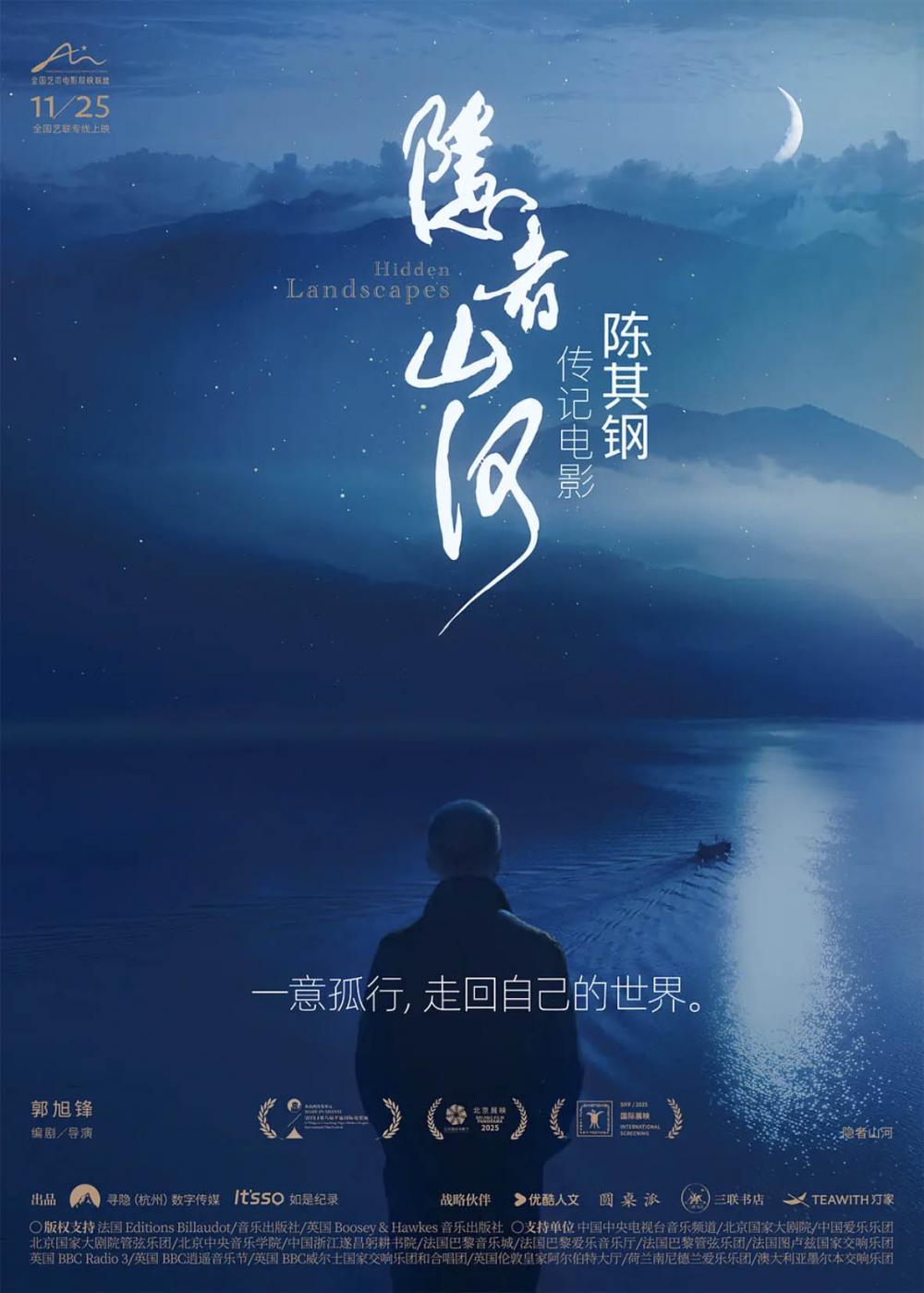
影评|《隐者山河》:悲喜同源 从盛大回归寂静的心灵叙事
Xin Lang Cai Jing· 2025-12-21 11:28
Core Perspective - The documentary "Hidden Landscapes" focuses on the life and philosophy of composer Chen Qigang, exploring themes of art, life, and death through a personal narrative that spans seven years of filming [2][3]. Group 1: Personal Journey - The film portrays Chen Qigang's emotional journey following the tragic loss of his son, emphasizing his struggle to reconnect with the world and nature while confronting solitude [2][3]. - It highlights his transition from a prominent musician to a patient battling lung cancer, symbolizing a return to simplicity and introspection in a rural setting [3]. Group 2: Musical Contributions - Chen Qigang's music serves as the soul of the documentary, with the score entirely composed of his works, reflecting his life philosophy of intertwining joy and sorrow [4][5]. - The film features notable compositions such as "Er Huang," "Ten Thousand Years of Joy," and "The Source of Joy and Sorrow," showcasing his technical prowess and the fusion of Eastern and Western musical traditions [5][6]. - Familiar film scores like "Under the Hawthorn Tree" and "The Flowers of War" are also included, illustrating his ability to blend rigorous Western structures with Eastern expressiveness [7]. Group 3: Philosophical Themes - The documentary encapsulates profound philosophical reflections on life and death, particularly through the piece "Jiang Cheng Zi," which conveys deep emotions stemming from personal loss [7]. - Chen Qigang's work "The Source of Joy and Sorrow" symbolizes the interconnectedness of contrasting emotions, suggesting that both joy and sorrow originate from the essence of life itself [7].